Inquire (

 HOME
Jewellery Box Manufacturers: Match Capability to Your Design
 Oct 14,2026

 BOYANGPACK
Jewellery box manufacturers should be compared by how well their materials, structures, decoration, and quality controls fit your design. The strongest candidate is not necessarily the company with the broadest catalog; it is the one that can explain and demonstrate a suitable manufacturing route for the proposed box.
Translate the Design Into a Capability Map
Begin by converting the concept into a list of manufacturing needs. Define the box format, dimensions, opening action, body material, covering, lining, insert, logo process, accessories, unit protection, and outer packing. Add the jewelry dimensions and presentation position because the insert and internal clearance must support the actual product.
Separate essential requirements from preferences. A required ring angle, chain restraint, tall-setting clearance, or watch cushion affects function. A preferred texture, foil shade, ribbon, or decorative sleeve may have alternatives. This distinction allows a manufacturer to propose changes without quietly weakening the function.
Mark each requirement by the capability it demands: material sourcing, cutting, molding, printing, hot stamping, wrapping, assembly, insert conversion, color matching, final inspection, or export packing. The result is a capability map that makes the shortlist specific to the design rather than to general marketing claims.
Match Box Construction to Manufacturing Processes
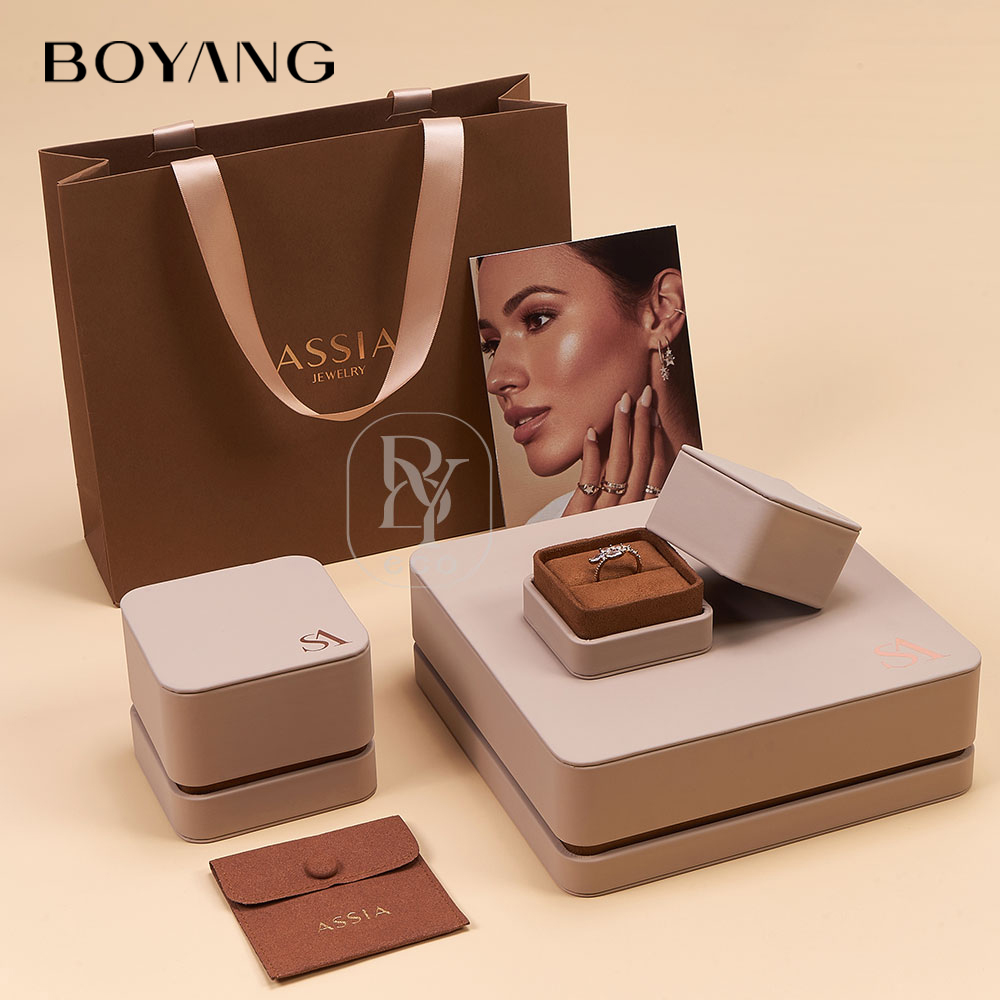
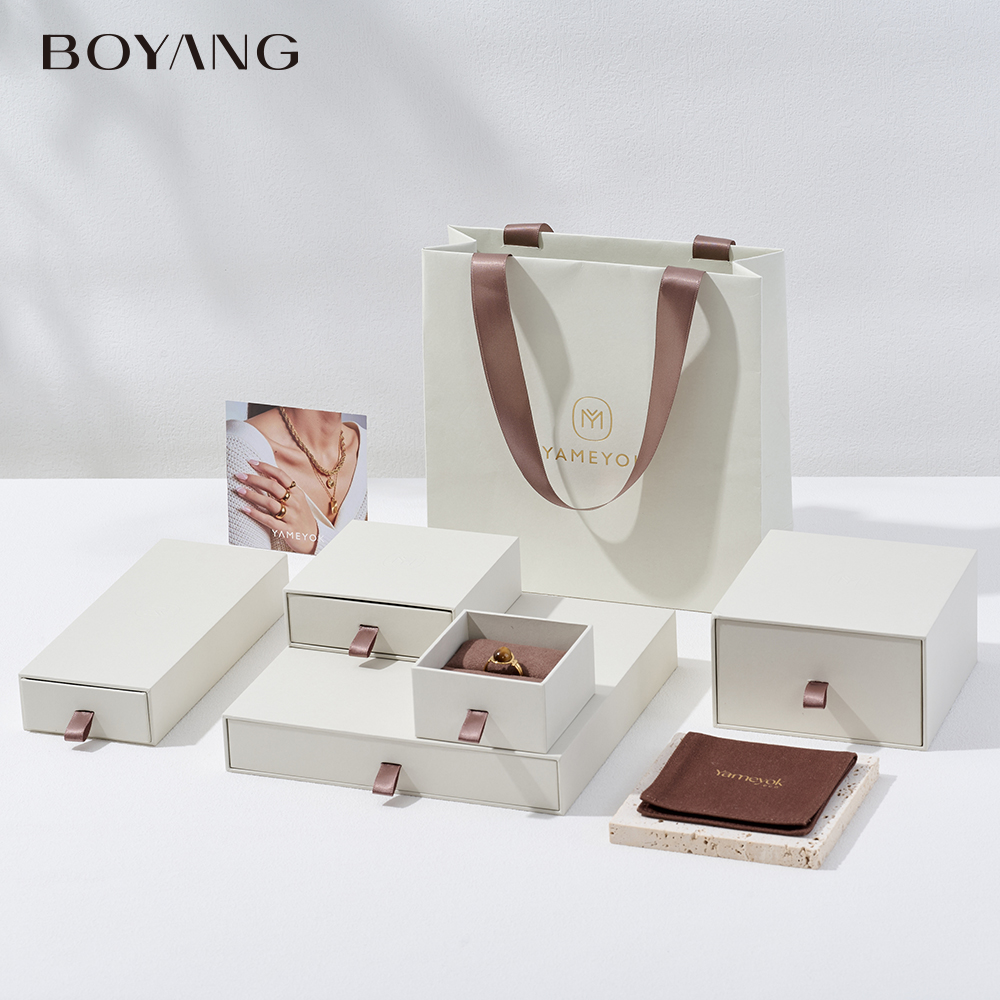
Different box families depend on different combinations of processes and controls. Review the jewelry box collection to identify relevant structures, but use the product range only as a starting point. Ask how the proposed construction is made, which operations are performed for it, and which parts come from external specialists.
| Box family | Capability to examine | Sample evidence |
|---|---|---|
| Rigid paper box | Board cutting, corner formation, wrapping, adhesive control, and surface finishing | Square corners, aligned edges, clean wrapping, and stable lid fit |
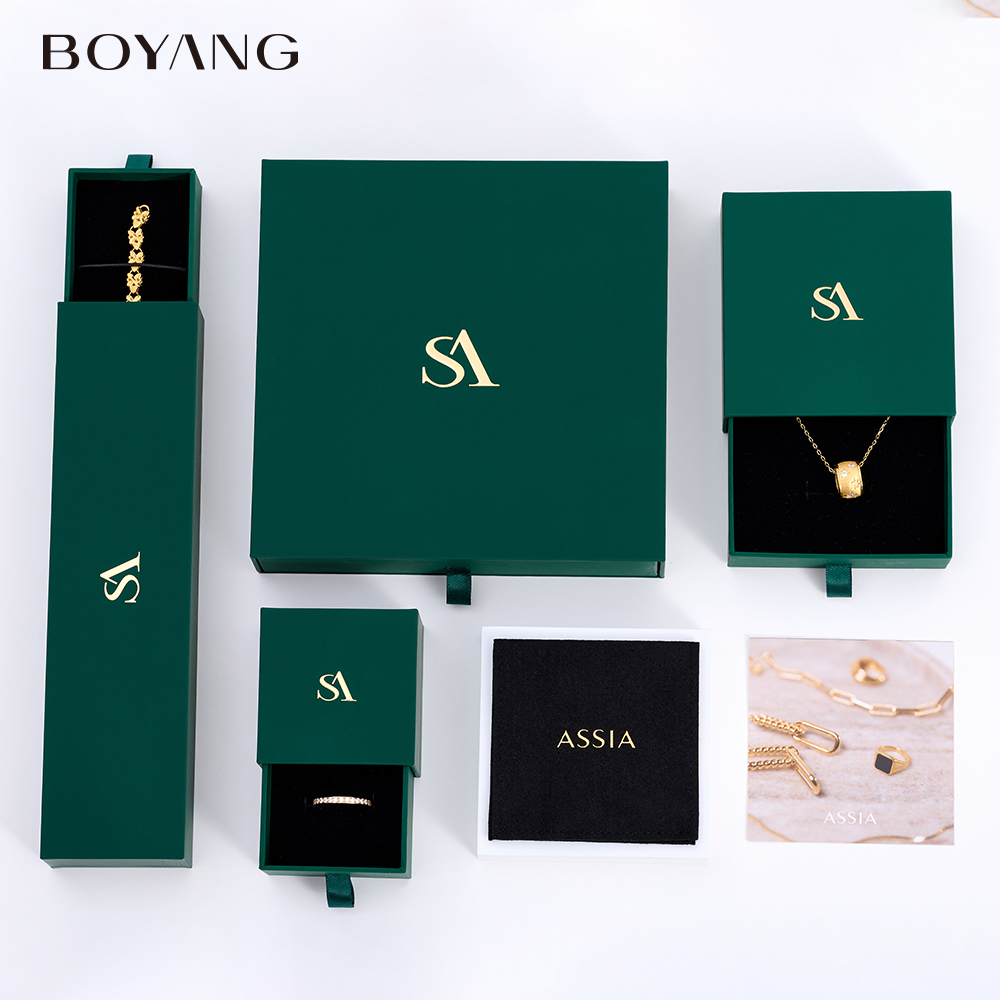
| Drawer box | Sleeve and tray tolerances, pull attachment, friction, and internal clearance | Smooth travel without looseness, binding, or ribbon distortion |
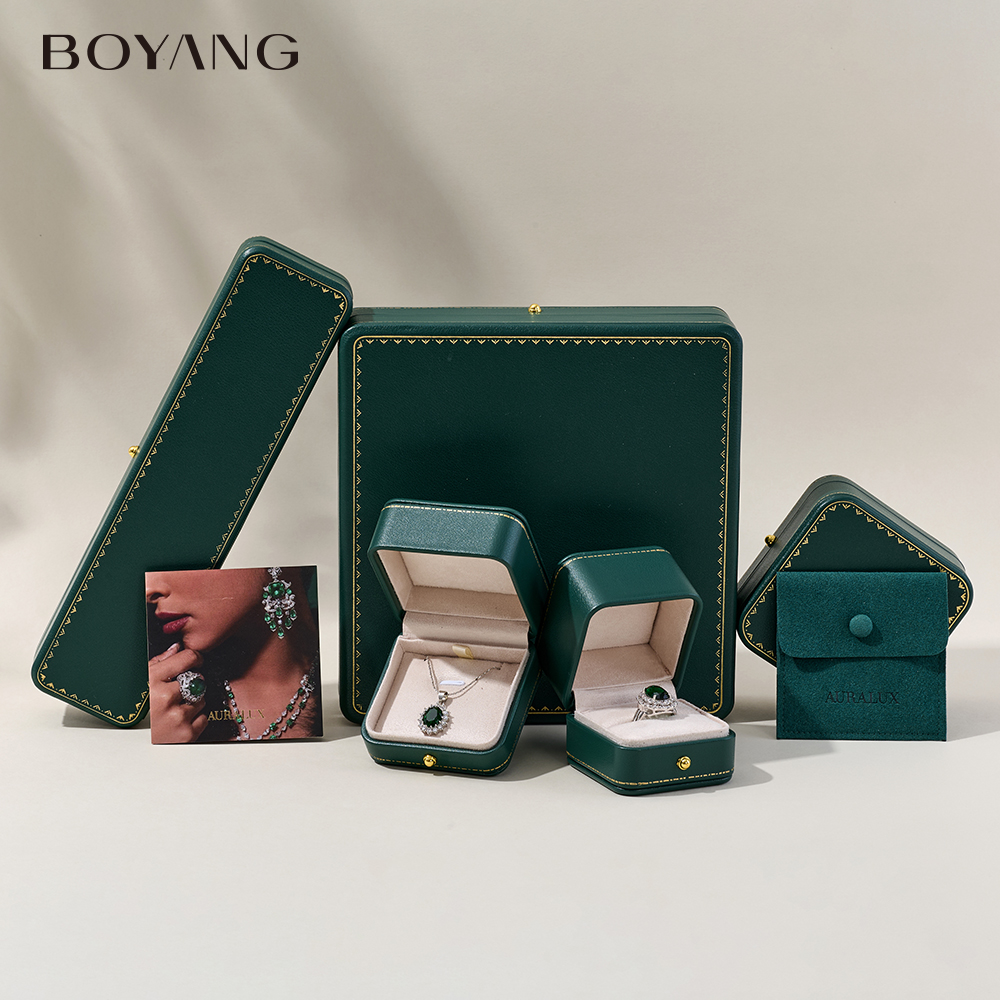
| Covered plastic or molded box | Shell sourcing or molding, covering, hinge or closure, lining, and insert integration | Consistent closure, clean covering transitions, and secure component fit |
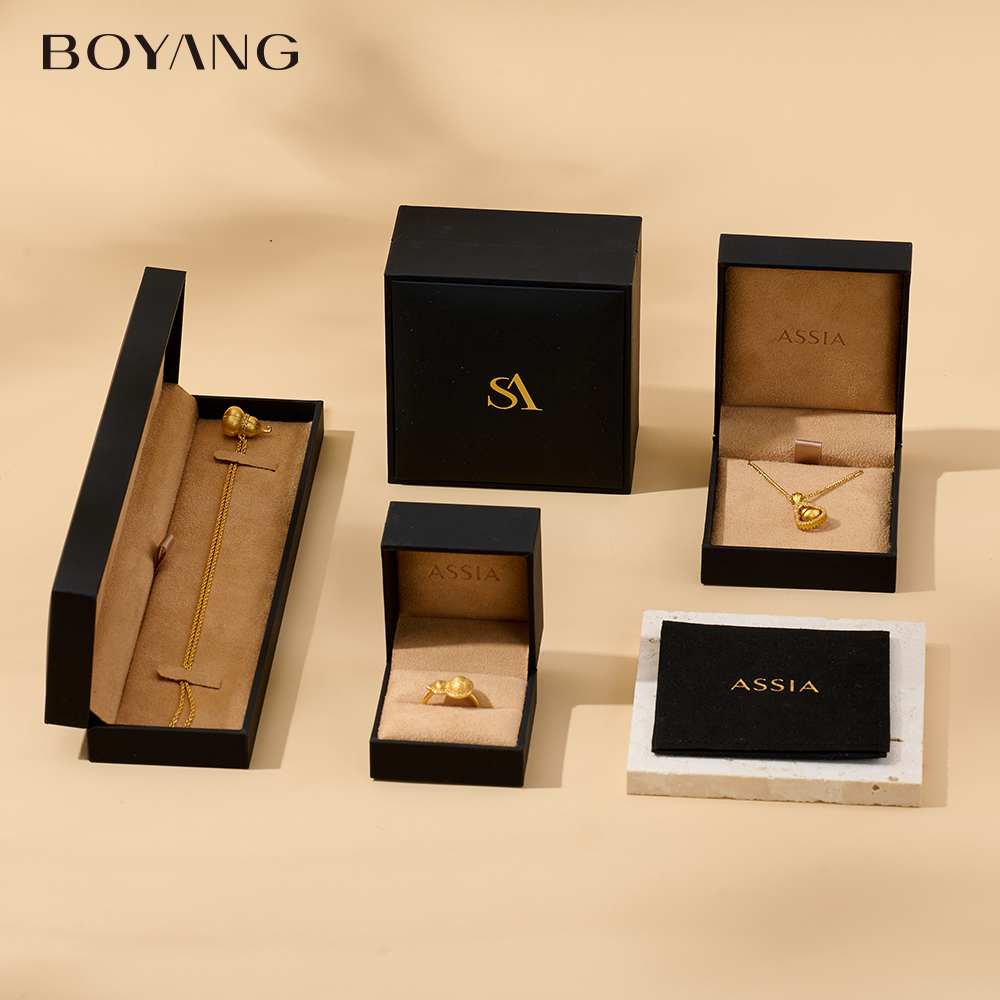
| Hinged presentation box | Hinge alignment, opening resistance, lid clearance, and presentation angle | Repeatable opening action and stable jewelry presentation |
| Multi-piece packaging set | Cross-component color, finish, logo, size, packing, and version control | A complete coordinated set rather than unrelated component samples |
Boyang’s factory information page displays printing, hot-stamping, box-work, finishing, inspection, and packing areas. Treat these as first-party capability signals, then request project-specific evidence that connects the relevant operations to the box you intend to buy.
Test Technical Fit Through a Targeted Sample
A useful sample answers the uncertainties that matter to the project. If structure is uncertain, begin with a structural prototype. If color, texture, or decoration is the risk, request coded swatches and a decorated sample on the intended material. If jewelry fit is critical, provide the actual piece or an accurate substitute.
Give every candidate the same test. Measure external and internal dimensions, check squareness and alignment, operate the lid or drawer, place the jewelry in the insert, close and rotate the box, and reopen it. Confirm that the piece remains positioned without excessive pressure, rubbing, snagging, or lid contact.
Inspect brand details at normal viewing distance and close range. Check logo size, position, registration, edge definition, color, and interaction with the surface texture. Fine artwork that works on smooth paper may need adjustment on velvet, synthetic leather, or deeply textured coverings.
Evaluate Component and Branding Coordination
Jewelry packaging is usually a coordinated system rather than one isolated shell. The box body, covering, lining, insert, ribbon, magnet, sleeve, card, pouch, and shipping protection may come from different processes or sources. Ask who owns the final compatibility check.
Evaluate material control at component level. A statement that a box is “paper,” “velvet,” or “leather” is not a complete specification. Record the substrate or shell, covering material, lining, insert core and surface, adhesive expectations, coating, decorative parts, and any documentation required for a claim.
For a family of ring, earring, necklace, bracelet, and watch boxes, verify how the manufacturer maintains a common design language. Color, foil, logo scale, proportions, and opening experience may need separate approval for each size. One approved box does not automatically prove every family member.
Compare Jewellery Box Manufacturers Using Evidence
A shortlist should be scored on evidence that is relevant to the design. Product photographs demonstrate range, but they do not prove control of your material, artwork, insert, tolerance, or packing. Ask each candidate to show how the proposed box moves from approved inputs to a repeatable output.
Useful evidence includes a clear material list, dimensioned drawing, coded swatches, sample version record, decoration proof, relevant process explanation, inspection checklist, packing layout, and written quotation assumptions. The evidence does not need to be complicated, but it should be specific enough to remove ambiguity.
Score every manufacturer with the same weighted criteria. Give more weight to functions that can cause a product failure, such as jewelry fit, closure, material appearance, logo reproduction, or pack protection. A decorative option that is easy to change should not carry the same weight as a structural requirement.
Identify Scope Gaps Before Requesting Quotes
A quotation cannot be compared reliably when the scope is incomplete. Before requesting prices, resolve or explicitly list open decisions for dimensions, materials, colors, insert, logo method, accessories, packing, quantities by version, sample stages, inspection, destination, and requested delivery window.
Ask whether minimum order quantity applies per design, size, color, artwork, or combined order. Confirm what tooling and sampling are included, what changes would trigger a new charge, and whether unit protection and export cartons are part of the price. Obtain current terms for the specific configuration instead of applying figures from an unrelated product page.
Clarify the timing milestone. A stated period may refer to sample preparation, material availability, production completion, dispatch, port departure, or arrival. Record which approvals start the schedule and how revisions or material substitutions affect it.
For logistics, request carton quantity, dimensions, gross and net weight, labels, pallet assumptions, and trade term. These details help the buyer compare landed scope and warehouse handling, not just the unit price of the jewelry box.
Jewellery Box Manufacturer FAQs
How many manufacturers should be included in an initial shortlist?
There is no universal number. Use enough candidates to compare relevant capability without creating an unmanageable sample process. Eliminate companies that cannot support the required construction or evidence, then give the remaining candidates the same brief, questions, and sample tests.
What should be checked before ordering a custom sample?
Confirm the drawing, dimensions, materials, color references, insert, logo artwork, decoration, accessories, packing assumptions, sample purpose, and approval criteria. State which details must use production materials and which may be represented by alternatives during an early structural sample.
Can one manufacturer produce a complete jewelry box family?
Possibly, but capability should be verified across each required structure and size. Ask for a coordinated sample set or relevant evidence covering color, logo reproduction, inserts, closures, proportions, and packing. Approval of one ring box should not be treated as approval of every format.
How should a buyer verify environmental claims?
Identify the exact component, claimed property, supplier document, coating, adhesive, decoration, and disposal route. Confirm that the evidence applies to the material and finished configuration being quoted. Avoid turning a component-level statement into a claim about the complete package.
When should MOQ, pricing, and production time be confirmed?
Confirm them after the structure, materials, decoration, version split, packing, and sample stages are defined. Require current written terms for the project and clarify what begins and ends the stated schedule. Do not assume that figures published for another product apply.
Move the Shortlist to Project Discussion
The most useful shortlist matches the box design to demonstrable manufacturing capability. Use the same capability map, sample tests, evidence requests, and quote scope for every candidate, then document unresolved conditions before selecting a production partner.
Prepare drawings or reference images, jewelry dimensions, material and color preferences, logo files, quantities by version, destination, and required approvals. Then contact Boyang Packing to confirm relevant processes, sampling options, current commercial terms, inspection arrangements, and packing for the proposed jewelry box.
 Jewellery Packaging Manufacturers: Coordinating a Complete Brand Set
Jewelry Box Factory: From Approved Sample to Production
Oct 11,2026
Jewelry Box Supplier: A Practical Evaluation Guide
Oct 07,2026
Customized Ring Box: A Buyer’s Design and Sourcing Guide
Oct 05,2026
Custom Packaging for Jewelry: From Brief to Production
Oct 01,2026
Jewelry Gift Boxes: A Practical Sourcing Guide for Brands
Sep 30,2026
 You May Also Like


 Tel
 Email
 Address
Bldg 5,Zhenbao Industrial Zone Longhua,Shenzhen,China

Boyang Packing
 Whatsapp