Inquire (
 HOME
HOMEJewelry Gift Boxes: A Practical Sourcing Guide for Brands
 Sep 30,2026

 BOYANGPACK
Jewelry gift boxes should protect each piece, present the brand clearly, and fit the realities of packing, shipping, and retail. A beautiful sample is only the beginning: the right packaging also needs a secure insert, repeatable production details, efficient outer packing, and a specification that buyers and suppliers interpret in the same way.
This guide helps jewelry brands, retailers, e-commerce sellers, wholesalers, and procurement teams compare box structures, materials, branding, samples, and quotations for the US and European markets.
What Jewelry Gift Boxes Need to Do
A jewelry box has several jobs at once. It must hold the item in a stable position, reduce abrasion during handling, make the product easy to present, and communicate the intended price level. It also needs to work inside the real fulfillment system: staff must be able to pack it consistently, labels or sleeves must fit, and the finished unit must survive distribution without wasting shipping volume.
Start with the jewelry rather than the decoration. Record the maximum dimensions of the piece, its weight, fragile areas, chain length, clasp position, and the way it should face when opened. A ring needs a firm slot. Earrings need correctly spaced holes or tabs. A necklace needs retention points that prevent the chain from falling into a knot. A bracelet or watch may require a cushion that holds its shape without placing excessive tension on the product.
The sales channel matters too. Mail-order packaging should pack efficiently and control movement; boutique packaging may emphasize presentation; gift sets may need coordinated bags, tissue, cards, and ribbons. Define the channel before choosing the structure.
Choose the Box Structure Around the Jewelry
No single style suits every collection. Compare protection, presentation, packing speed, storage space, and landed cost before requesting samples.
| Format | Useful for | Main strength | Point to check |
|---|---|---|---|
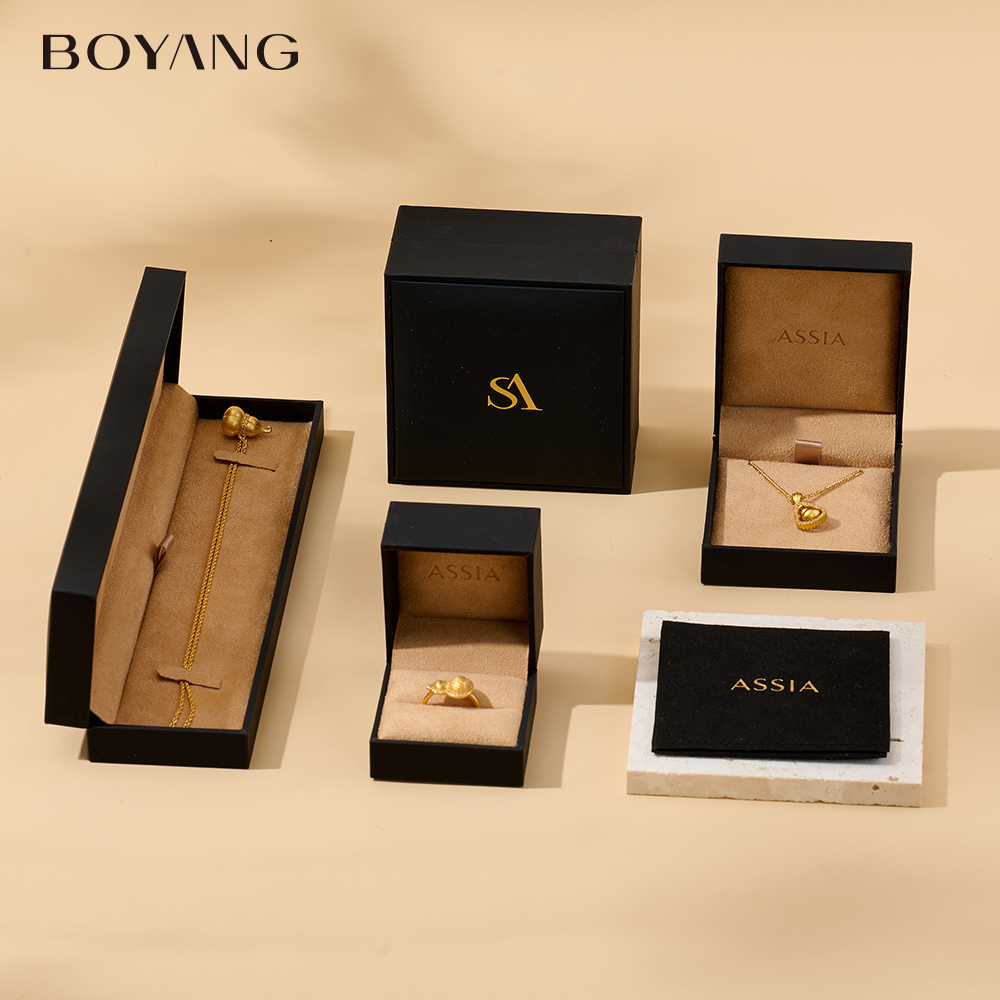
| Two-piece lid and base | Rings, earrings, pendants, and coordinated ranges | Familiar presentation and broad design flexibility | Lid fit, corner alignment, and ease of opening |
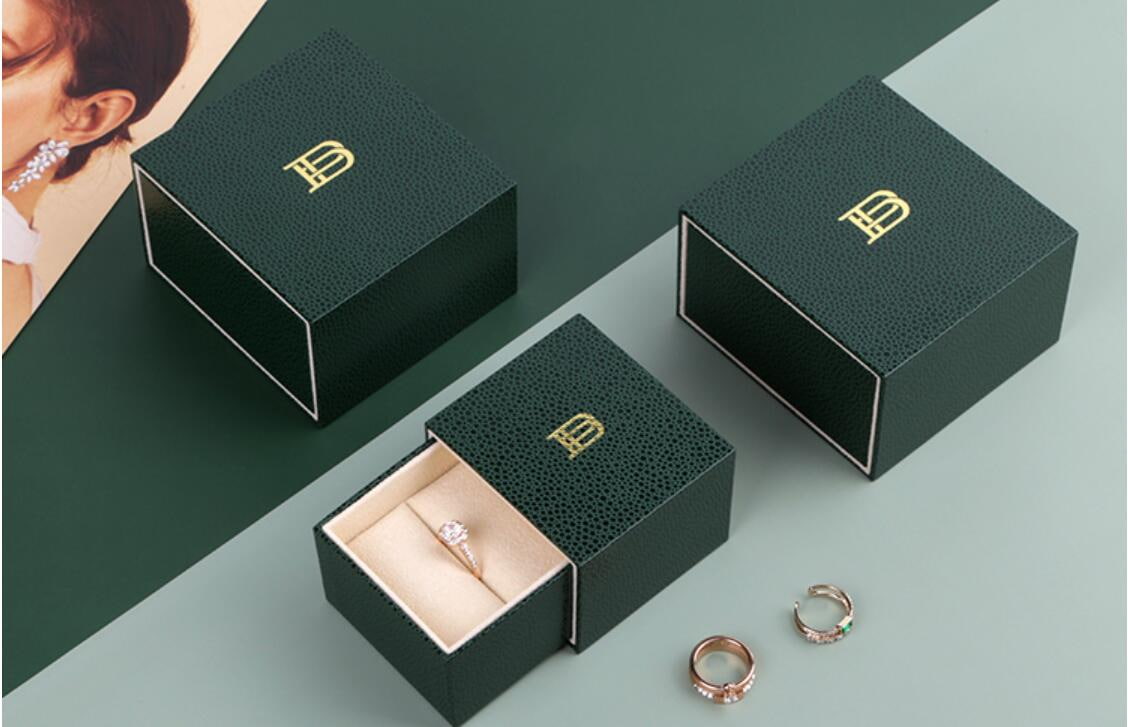
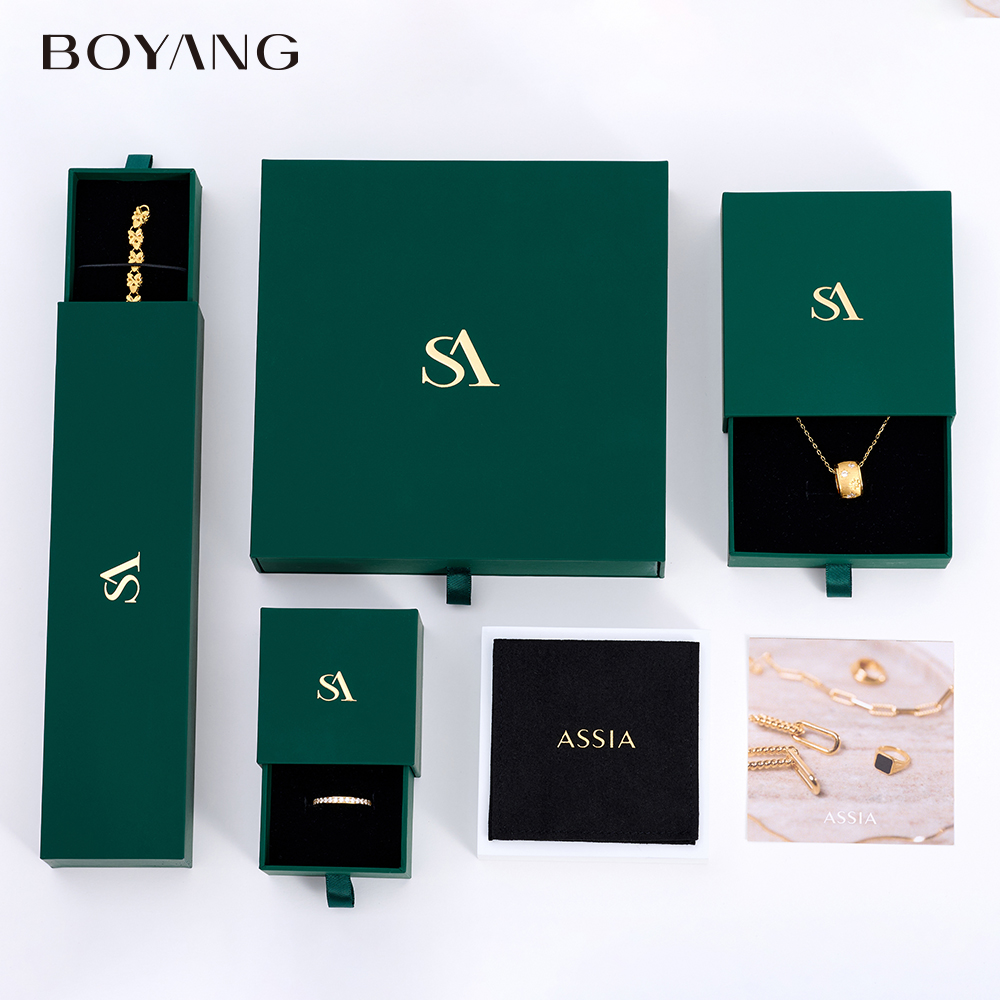
| Drawer or sliding box | Gift-led collections and layered unboxing | Distinctive opening action and room for ribbon pulls | Drawer friction and clearance after wrapping |
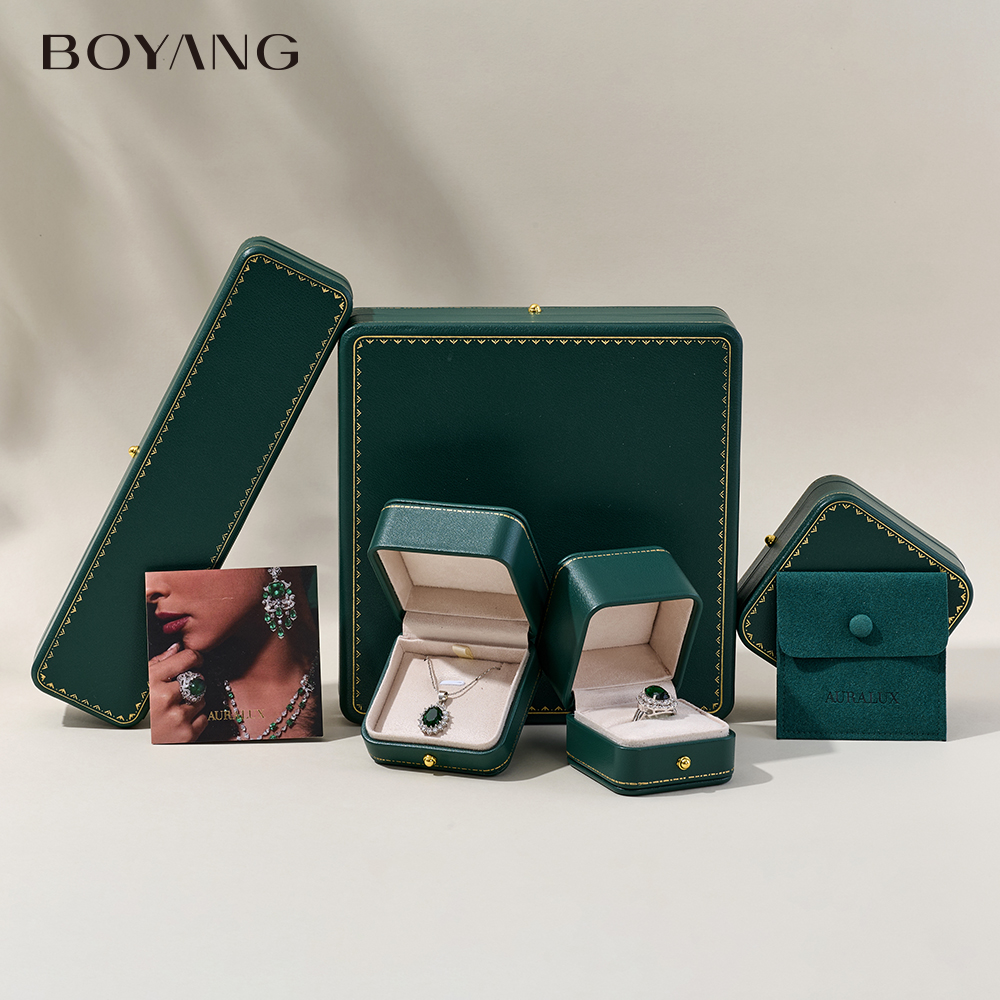
| Hinged rigid box | Premium rings, watches, and special pieces | Controlled presentation angle | Hinge durability and lid alignment |
| Foldable paper box | Programs where storage and inbound freight efficiency matter | Ships and stores flatter before assembly | Assembly time and final rigidity |
| Pouch with an outer box | Soft presentation, travel, or reusable packaging | Lightweight tactile layer | A pouch alone may not prevent crushing |
Standardized external dimensions can simplify cartons and shelving, but each product still needs a suitable insert. Compare Boyang’s custom ring boxes with its coordinated jewelry packaging sets.
Match Materials and Inserts to the Product
Build the structure from measurable requirements
Specify the box body, rigidity, covering, and edge finish. Paper-wrapped board supports many colors and print treatments; PU leather, fabric, and velvet-like coverings offer different tactile effects. Review folds, corners, and seams, and approve an identified swatch or physical sample.
Design the insert as a functional component
The insert keeps jewelry centered. Options include foam, flocked surfaces, fabric-covered pads, cards, cushions, and molded parts. Test installation and removal, isolate sharp posts or clasps, and check for pressure marks.
Boyang’s jewelry boxes and bags specification page lists customizable sizes and materials including satin, cotton, canvas, jute, mesh, PU leather, microfiber, and nylon. Confirm exact construction, color, insert composition, and finish for each quotation.
For environmental claims, request evidence for the exact material and supply chain. Clarify recycled content, coating, adhesive, component separation, and disposal options in the target market.
Plan Branding Without Sacrificing Function
Branding should be legible, repeatable, and proportionate. Define logo size, position, color, and method—not merely “logo on lid.” Artwork templates should show safe areas, folds, openings, and panel orientation.
Options include foil stamping, screen printing, embossing, embroidery, printed ribbon, and woven labels. Suitability depends on the substrate and artwork. Request a physical sample when color, metallic effect, depth, or registration is critical.
Keep the box, pouch, bag, care card, and shipping presentation coherent through a controlled palette, typography, and tone. For online sales, test that the retail box fits its protective mailer and that decorative elements survive transport.
Validate Quality Before a Production Order
Use a written sample checklist. Confirm dimensions with the actual jewelry, open and close the box repeatedly, and turn the packed box to check movement. Review the insert cut, glue, wrapping, edges, marks, odor, logo position, and color under consistent lighting.
Assemble foldable boxes with ordinary staff, pack a trial carton, and inspect unit contact. For formal transport testing, agree on the method and acceptance criteria with the supplier or an independent provider.
State whether approval covers structure, dimensions, materials, color, logo, workmanship, or all of them. Record tolerances and defect classes, and retain matching approved samples when feasible.
Before production, reconfirm the bill of materials, artwork version, packing method, quantity, and schedule. Minimums and lead times vary by construction and finish, so confirm them for the current quotation.
Prepare a Clear Request for Quotation
Give every bidder the same brief, including:
- Jewelry type, maximum product dimensions, weight, and one or more reference photos.
- Preferred box style, external dimensions, opening direction, and insert layout.
- Body material, covering material, insert material, color references, and surface finish.
- Logo artwork, exact size and position, print or finishing method, and number of colors.
- Required quantities by size and color, plus any expected repeat-order pattern.
- Accessories such as ribbon, tissue, care cards, polishing cloths, bags, or sleeves.
- Unit packing, master-carton requirements, carton marks, barcode needs, and delivery destination.
- Target approval date, requested delivery window, and any inspection or testing requirements.
Separate tooling, sampling, unit packaging, accessories, and freight assumptions. Confirm trade terms, currency, validity, and sample policy. Boyang’s specification page requests dimensions, materials, surface treatment, print colors, and design files, and lists PDF, CDR, AI, and PSD formats; reconfirm compatibility before sending artwork.
Normalize the scope: a lower unit price may exclude an insert, sleeve, testing, or export carton. Compare the same construction and service level, then calculate landed cost.
Jewelry Gift Box FAQs
What information is needed to quote custom jewelry gift boxes?
Provide product dimensions, box style and size, materials, insert, colors, logo method, quantity, packing, destination, and timing. Photos or a physical sample help, but the approved written specification remains the reference.
Which box style is best for rings, earrings, and necklaces?
Choose by product geometry and channel. Rings need a secure slot, earrings need aligned holes or tabs, and necklaces need chain retention. The outer box may be lid-and-base, drawer, hinged, or foldable if the insert holds the piece correctly.
How should a buyer check custom colors and logo finishes?
Use color references, review the actual substrate, and approve a physical sample. Foil, embossing, fabric, and textured paper respond differently to light and pressure, so do not rely on a screen image alone.
What minimum order quantity should a jewelry brand expect?
There is no universal minimum. Boyang’s product page states a general minimum of 5,000 pieces and notes that smaller runs may carry higher setup cost. This is not a guaranteed term; request the current minimum for the exact structure, material, finish, and quantity mix.
How can a buyer reduce delays before production?
Freeze dimensions, artwork, colors, insert, accessories, and packing before approval. Control file versions, combine feedback, identify the final approver, and reconfirm the specification and schedule in writing.
Next Step: Build a Packaging Brief
Start with a box that fits the jewelry and the operation, then add branding. Shortlist the structure, define the insert, identify every material and finish, and turn those decisions into a quotation checklist.
Prepare product dimensions, quantity, reference images, logo files, delivery market, and matching accessories. Then contact Boyang Packing for a project-specific quotation and confirmation of current minimums, sample terms, and production timing.
 Custom Packaging for Jewelry: From Brief to Production
Cardboard Jewelry Box: Material Engineering and OEM Customization Guide
Cardboard Jewelry Box: Material Engineering and OEM Customization Guide
Aug 18,2026
Custom Jewelry Packaging With Logo: A Complete OEM Branding Guide
Aug 16,2026
Custom Jewelry Boxes: A Complete Guide to Structural Design and Branding
Aug 12,2026
Custom Paper Jewelry Packaging Sets: A Comprehensive Sourcing Guide
Aug 07,2026
 You May Also Like

 Tel
Tel
 Email
Email
 Address
Bldg 5,Zhenbao Industrial Zone Longhua,Shenzhen,China

Boyang Packing
 Whatsapp