Inquire (
 HOME
HOMEJewellery Packaging Manufacturers: Coordinating a Complete Brand Set
 Oct 17,2026

 BOYANGPACK
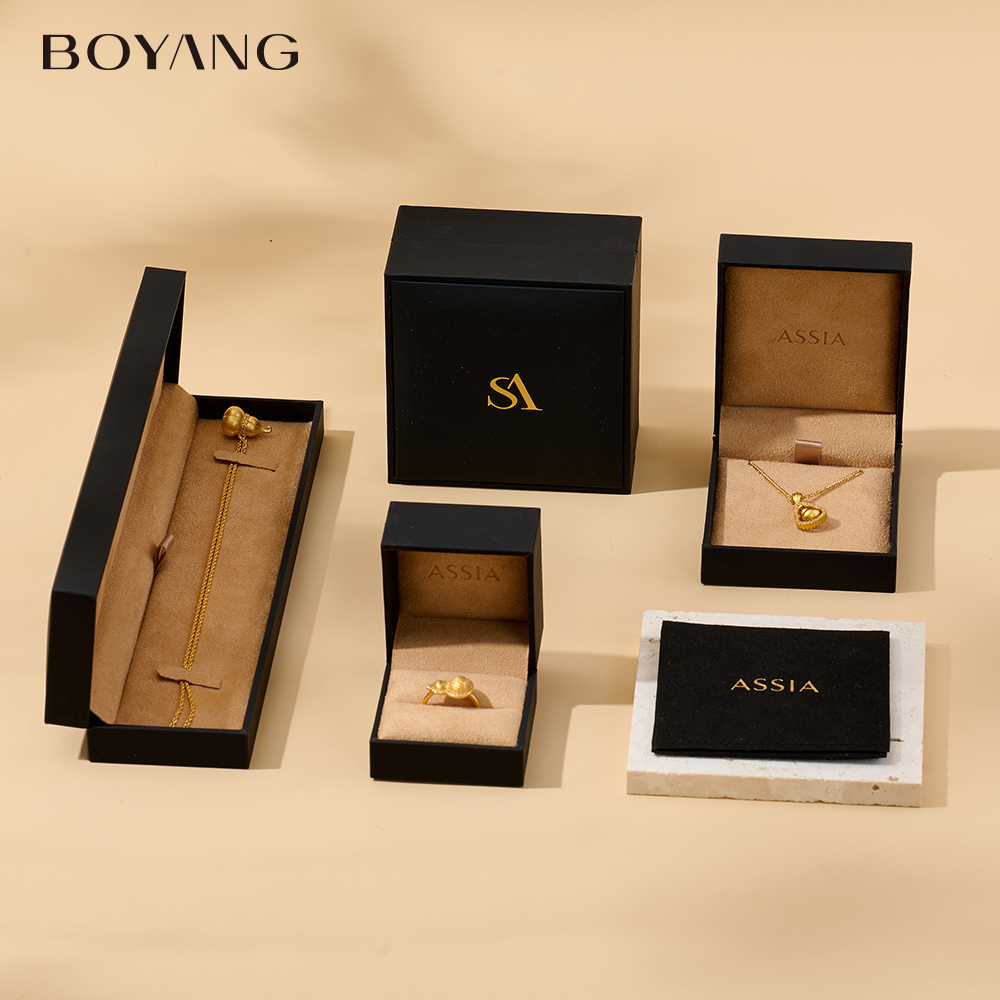
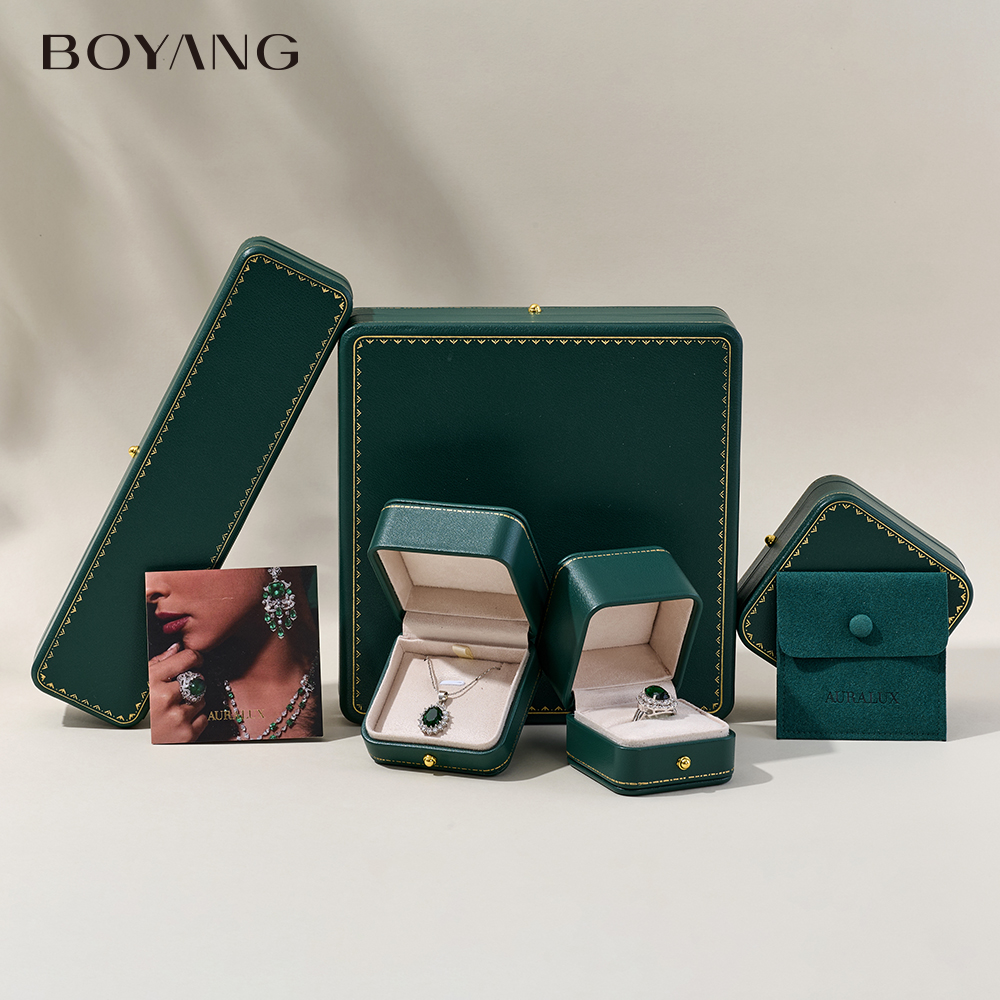
A coordinated packaging set works only when every component follows one approved design and production brief. Jewellery packaging manufacturers should coordinate boxes, bags, cards, inserts, and branding as one controlled system. Buyers should therefore evaluate the complete customer experience rather than approve each item in isolation.
Design the Packaging System Before Selecting a Manufacturer
A packaging system begins with product and channel requirements. List the jewelry types, selling environments, fulfillment method, gifting expectations, storage needs, and destination. Then decide which components are essential for every order and which are optional for premium collections, seasonal launches, wholesale presentation, or e-commerce shipping.
Build the hierarchy before selecting finishes. A ring box, necklace box, pouch, shopping bag, polishing cloth, care card, envelope, ribbon, and shipping protection do not all need equal visual weight. Define which component carries the primary logo, which supports product information, and which remains quiet so the set does not become visually crowded.
Record the functional relationship between components. The jewelry box must fit the piece; the box may need to fit a pouch, sleeve, or mailer; printed cards must fit without bending; and the retail bag should hold the intended combination securely. Dimensions should be tested as a nested system rather than copied from unrelated standard items.
Create a component map showing required dimensions, materials, colors, logo treatment, artwork version, quantity, packing method, and approval owner. This becomes the shared basis for design, sampling, quotation, inspection, and replenishment.
Set One Control Standard Across Every Component
Visual consistency depends on explicit references, not words such as “matching” or “luxury.” Use coded color targets, approved swatches, final artwork, logo-size rules, finish references, and component-specific tolerances. State where an exact match is required and where a controlled tonal variation is acceptable because the substrates differ.
| Control area | Set-level decision | Evidence to approve |
|---|---|---|
| Color | Define the reference and acceptable relationship across paper, fabric, ribbon, foil, and ink | Coded swatches and a complete set viewed under consistent lighting |
| Logo | Set size, clear space, position, orientation, color, and process for each component | Artwork proofs and decorated samples on the actual substrates |
| Materials | Specify body, covering, lining, insert surface, bag paper, textile, ribbon, and coatings | Component list, supplier codes, and physical material references |
| Fit | Define how jewelry, cards, boxes, sleeves, bags, and shippers nest together | Functional packing test using the intended combination |
| Version control | Identify artwork, language, size, color, and collection variants | Version matrix, labeled samples, and packing labels |
Expect some materials to reproduce color and decoration differently. A foil on coated paper, ink on uncoated stock, print on ribbon, and logo on velvet may not look identical. The goal is a deliberate visual relationship approved on real materials, not an unsupported promise of perfect sameness.
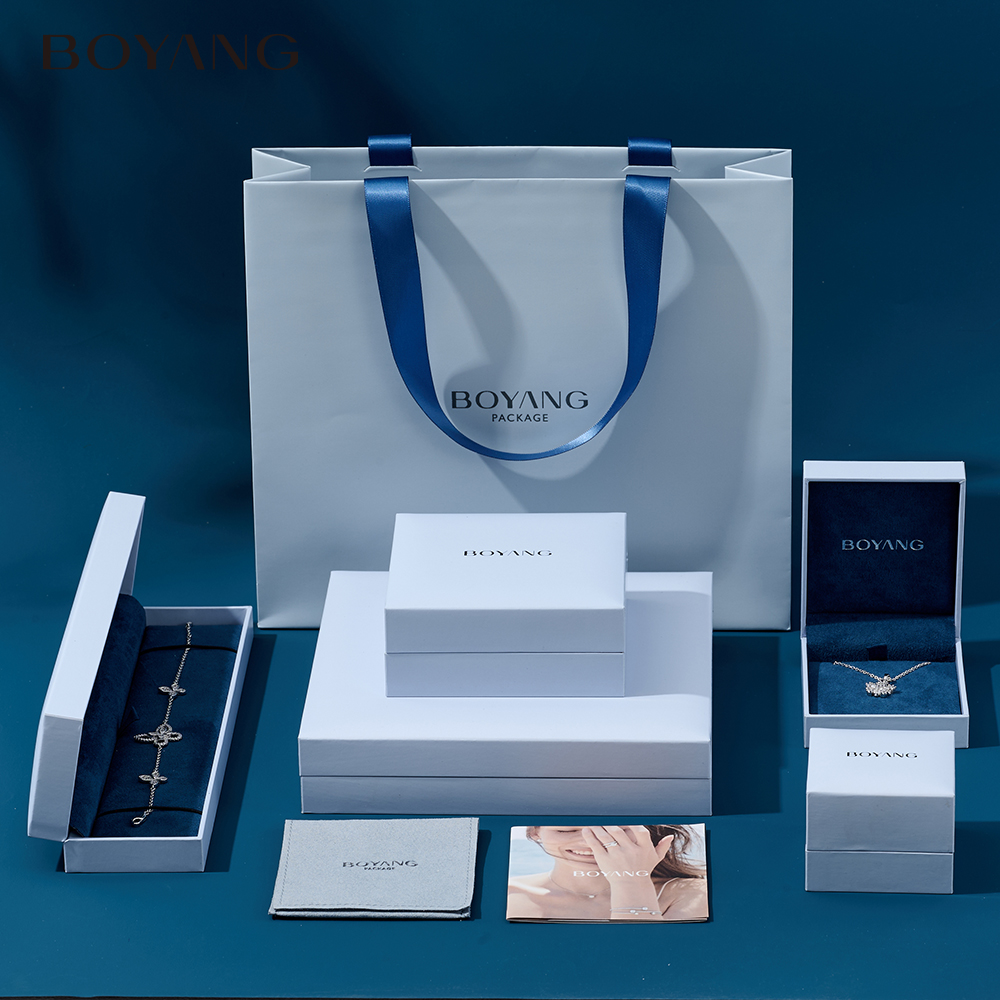
Prove Cross-Component Consistency With a Set Sample
A set sample reveals conflicts that separate samples may hide. Request the intended combination of components together when color relationships, nesting, logo hierarchy, or packing sequence affects approval. A box may look correct alone yet appear too warm, too bright, or incorrectly scaled beside the retail bag and cards.
Follow the customer sequence during review. Remove the transport protection, handle the bag or mailer, open the outer package, view the jewelry box, remove the product, and read the supporting card. Check whether logos face the correct direction and whether components can be removed without snagging, abrasion, excessive force, or unnecessary empty space.
Test the jewelry fit separately from the set fit. Verify insert grip, lid clearance, chain restraint, earring or ring position, and easy removal. Then place the closed box inside any sleeve, pouch, bag, or shipping protector to confirm that the final combination is stable and practical for packing staff.
Label the approved set sample and its specification with the same revision. Photograph the full arrangement and the packing order, but retain physical references when color, texture, opening resistance, fit, or surface quality cannot be approved from images alone.
Plan Variants Without Losing Brand Consistency
Product families create complexity through size, artwork, color, language, and accessory combinations. Build a variant matrix before pricing so the manufacturer can see which elements are shared and which change. This prevents one total quantity from hiding many small production versions.
Use common materials and decoration rules where they genuinely work, but do not force one insert or logo size across every product. Ring, earring, necklace, bracelet, and watch packaging require different support and clearance. Small surfaces may need simplified artwork or a different logo dimension to remain legible.
Decide how collections relate. A core line may use one color and finish, while a premium or seasonal line uses a controlled accent, sleeve, ribbon, or card. Record the invariant brand elements so a new variation does not become an unrelated packaging system.
Assign Production Responsibilities and Quality Gates
Multi-component packaging often combines different production processes. When evaluating jewellery packaging manufacturers, ask which components and operations are handled directly, which are sourced, and who owns final compatibility. One responsible party should control the approved set even when specialist partners supply individual parts.
Use quality gates that correspond to irreversible decisions. Approve materials and artwork before decoration, approve decorated first pieces before the full run, verify structure and inserts before final assembly, and inspect the complete set before unit packing. Early detection prevents a mismatch from spreading across every component.
The final inspection should cover count, version, visual consistency, jewelry fit, component nesting, opening function, printed information, unit protection, and carton labels. Define defect categories and acceptance rules for the actual project instead of relying on a general statement that quality will be checked.
Confirm the packing responsibility. Specify whether components arrive assembled as complete sets, packed separately for local fulfillment, or grouped in another sequence. The quotation and inspection plan should use the same definition of a finished unit.
Jewellery Packaging Manufacturer FAQs
Should every packaging component use exactly the same color?
Not necessarily. Different papers, textiles, coatings, foils, and inks reproduce color differently. Define the intended relationship, approve coded swatches and a complete set under consistent lighting, and document acceptable variation instead of relying on the word “match.”
What should be included in a complete jewelry packaging sample?
Include every component that affects presentation, fit, branding, or packing: the intended jewelry box, insert, pouch or sleeve, cards, ribbon, retail bag, unit protection, and relevant shipping pack. Use the actual jewelry or an accurate substitute when approving fit.
How can buyers control several box sizes and product versions?
Create a version matrix showing size, jewelry type, insert, color, artwork, language, accessories, quantity, and packing. Label every sample and proof with matching codes. Shared components should be identified clearly, while each functional insert and closure still receives its own approval.
How should environmental claims be handled for a packaging set?
Evaluate each component separately, including substrate, covering, lining, insert, ribbon, coating, adhesive, magnet, and printing. Request documentation that applies to the quoted materials and destination. Do not extend one component’s claim to the complete set without support.
When should MOQ and production timing be confirmed?
Confirm them after the component list, materials, decoration, version split, sample stages, packing, and destination are defined. Clarify whether minimums apply per component or version and which approval starts the schedule. Treat current written project terms as authoritative.
Build a Set-Level RFQ
A set-level request for quotation should let every candidate price and plan the same finished system. Include the component map, drawings, jewelry dimensions, coded materials and colors, artwork files, logo rules, variant matrix, quantities, sample stages, inspection requirements, packing sequence, destination, and requested delivery window.
Ask the manufacturer to identify scope exclusions, outsourced components, tooling, sample charges, minimums, schedule assumptions, unit protection, carton details, and change conditions. Compare the complete delivered scope rather than adding unrelated component prices after selection.
The next practical step is to submit one controlled brief and request a coordinated set sample. Confirm materials, decoration, fit, current commercial terms, inspection, and packing before releasing production.
 Jewellery Box Manufacturers: Match Capability to Your Design
Jewellery Box Manufacturers: Match Capability to Your Design
Oct 14,2026
Jewelry Box Factory: From Approved Sample to Production
Oct 11,2026
Jewelry Box Supplier: A Practical Evaluation Guide
Oct 07,2026
Customized Ring Box: A Buyer’s Design and Sourcing Guide
Oct 05,2026
Custom Packaging for Jewelry: From Brief to Production
Oct 01,2026
 You May Also Like


 Tel
Tel
 Email
Email
 Address
Bldg 5,Zhenbao Industrial Zone Longhua,Shenzhen,China

Boyang Packing
 Whatsapp