Inquire (
 HOME
HOMECustom Packaging for Jewelry: From Brief to Production
 Oct 01,2026

 BOYANGPACK
Custom packaging for jewelry starts with a clear product brief, coordinated components, and an approval process that suppliers can follow. The goal is not simply to decorate a box; it is to create a repeatable packaging system that fits the jewelry, the sales channel, the brand, and the shipping method.
This guide helps jewelry brands, retailers, e-commerce businesses, wholesalers, and procurement teams move from a packaging brief to an approved production specification.
How to Plan Custom Packaging for Jewelry
Begin with the jewelry and customer journey. Record each product’s maximum dimensions, weight, opening position, and delicate points such as posts, chains, stones, clasps, or polished surfaces. These details determine the insert before color, paper, or logo finish.
Map the sales channel. Boutique packaging may emphasize presentation; e-commerce packaging must fit a protective mailer; wholesale programs may prioritize assembly and efficient cartons. A gift collection may combine a box, pouch, tissue, card, ribbon, and bag.
Define quantity by size, launch date, destination, price level, storage limits, and material or compliance needs. Treat unconfirmed minimums and lead times as quotation variables for the exact construction and finish.
Build a Component and Size Matrix
A component matrix keeps the packaging family coherent. Give each jewelry type a row and track product size, box, insert, covering, logo, accessories, unit packing, and master carton.
| Component | Define before quoting | Approval check |
|---|---|---|
| Retail box | Style, external size, opening direction, body, and covering | Fit, alignment, opening resistance, and surface quality |
| Insert | Product position, slots, holes, tabs, cushion, and removal method | Movement, pressure points, presentation, and packing time |
| Pouch or wrap | Material, size, closure, logo, and whether it contacts the jewelry | Seams, shedding, color transfer, and ease of use |
| Printed items | Card size, copy, language, paper, print colors, and placement | Legibility, version control, and correct insertion |
| Outer packing | Individual protection, carton quantity, orientation, and marks | Carton fit, count, protection, and destination labels |
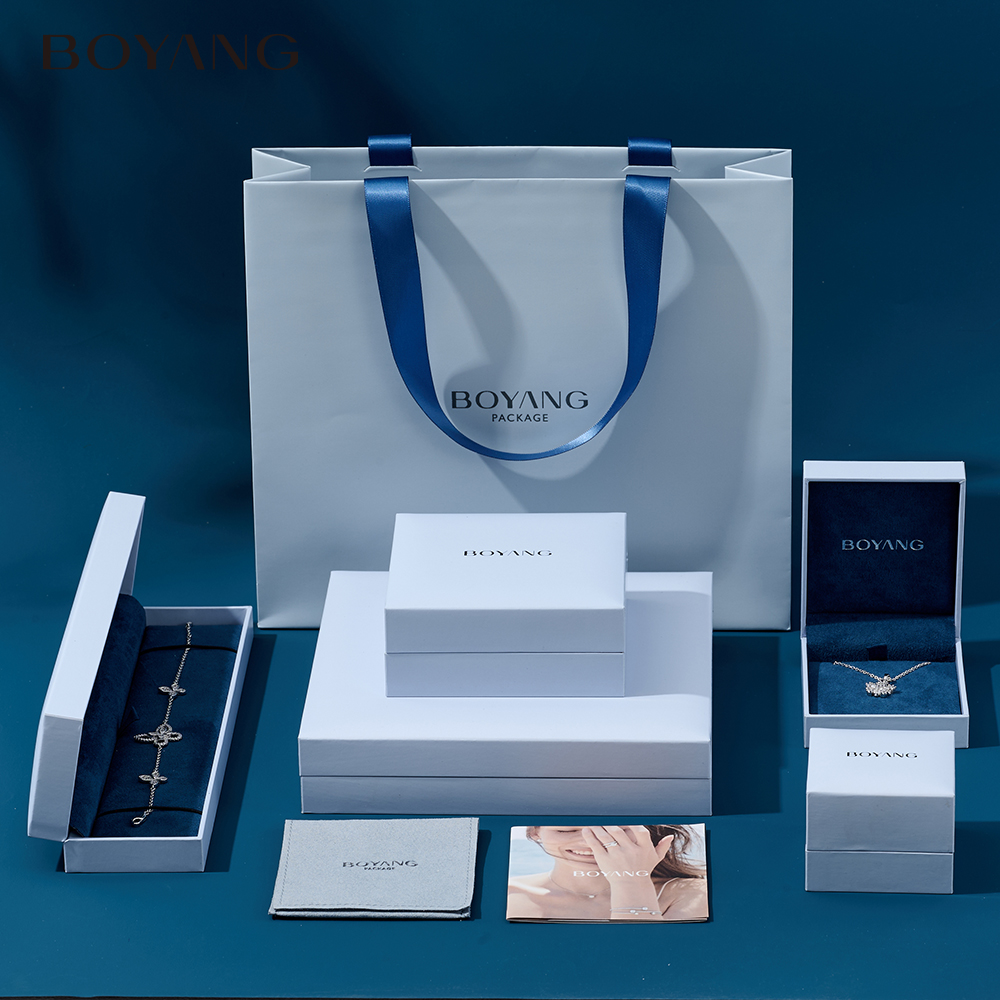
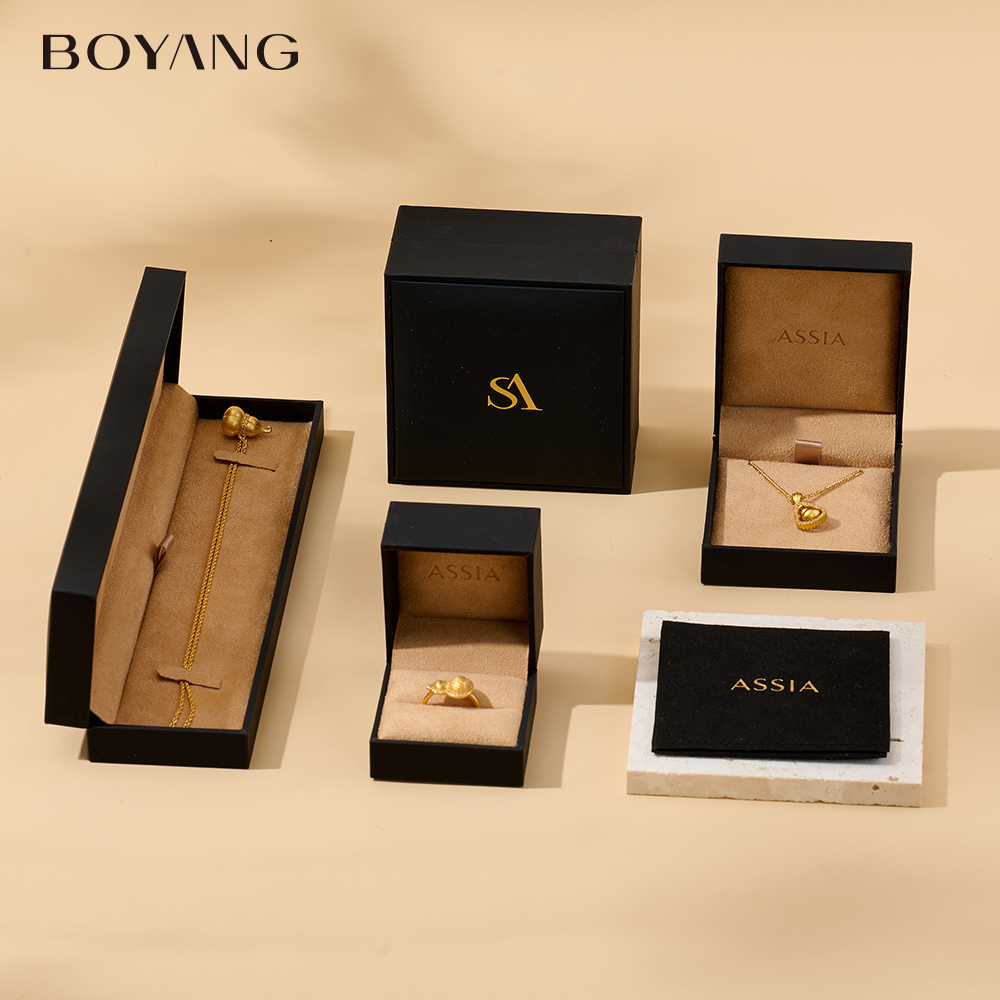
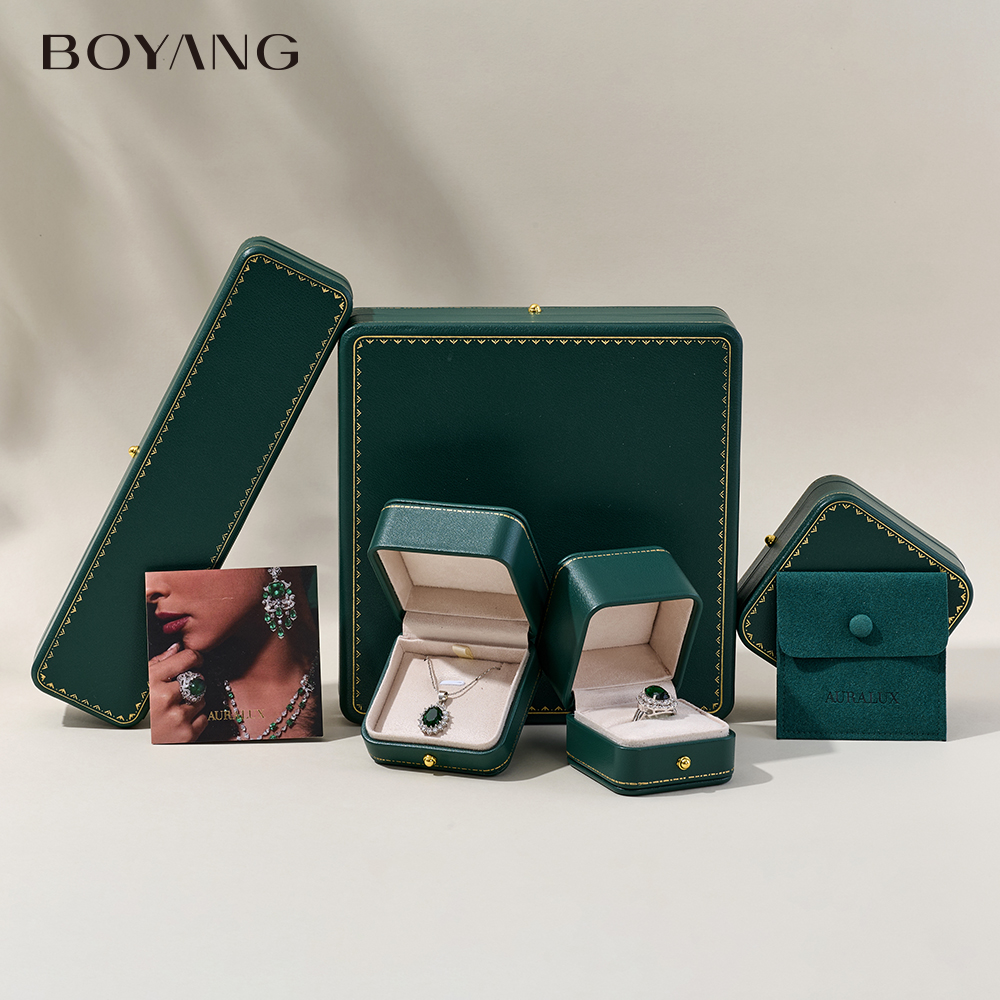
Shared external sizes can simplify storage and shipping, but every insert must fit its product. Review the jewelry packaging set collection before deciding how many coordinated formats the range needs.
Select Materials and Finishes as a System
Specify the rigid or foldable body, covering, insert, lining, adhesive expectations, and edge treatment. Approve a coded swatch or physical sample so color, texture, thickness, and finish become part of the standard.
Boyang’s jewelry boxes and bags specification page lists customizable sizes; satin, cotton, canvas, jute, mesh, PU leather, microfiber, and nylon; and logo methods including foil, screen printing, embossing, embroidery, woven labels, and printed ribbon. Suitability depends on the substrate.
Choose finishes through physical trials. Define logo size, position, color, orientation, and method for each component; fine artwork, foil, textured paper, and fabric can reproduce differently. Decide which item carries the primary mark.
For environmental claims, ask about recycled content, documentation, coatings, adhesives, mixed materials, and separation. Confirm that evidence covers the actual production component.
Prepare Artwork and Prototypes
Start artwork after the structure is stable. Verify the supplier’s dieline, dimensions, folds, openings, safe areas, and orientation. Control file versions and identify spot colors, white ink, foil, varnish, or embossing separately.
Boyang’s page requests the box pattern, dimensions, material or surface treatment, print colors, and artwork or samples. It lists PDF, CDR, AI, and PSD and a 3–5 mm bleed range. Confirm the current template, bleed, color mode, resolution, and file format.
Use prototypes in stages. A plain sample tests size, opening, insert fit, and assembly; a decorated sample confirms color, covering, logo, and accessories. Assemble the complete set with actual jewelry.
Record the approved sample ID, artwork version, materials, dimensions, colors, finish locations, accessories, packing sequence, and tolerances. Photographs cannot fully communicate texture, exact color, or opening resistance.
Approve Quality with Measurable Standards
Convert subjective terms into checks. “Premium” is not measurable; logo position, clean corners, an approved color, a secure insert, and smooth opening are. Define defect classes and inspection scope.
Install and remove the jewelry, rotate the closed package to detect movement, repeat the opening action, and inspect contact points. Test foldable parts, mailers, and cartons under realistic packing conditions.
For transport or compliance testing, define the method, inspection party, sample quantity, and acceptance criteria. Retain approved samples and reconfirm materials, artwork, quantity, packing, cartons, and destination before production.
Compare Quotations and Production Assumptions
Send every supplier the same brief. The quotation should identify construction, materials, logo process, accessories, quantities, setup, samples, unit packing, export cartons, trade term, payment assumptions, validity, and exclusions.
Normalize quantity breaks and component counts. One price may include a pouch, card, tissue, and protective bag while another covers only the box. Compare landed cost, storage, assembly, waste, and insert risk.
Boyang’s page states a general minimum of 5,000 pieces and notes that smaller orders may carry higher setup cost. It publishes differing time estimates in separate sections, so request written confirmation for the exact design, quantity mix, finishes, and delivery window.
Custom Packaging for Jewelry FAQs
What should a jewelry packaging brief include?
Include product dimensions and photos, required components, box style and size, insert layout, materials, colors, logo methods, quantities, destination, target timing, unit packing, and inspection needs. State which items are fixed and which are open to supplier recommendations.
Should all jewelry products use the same box size?
Not necessarily. Shared external sizes can simplify storage and cartons, but the insert must fit each product safely. Use a size matrix to balance operational simplicity with the different needs of rings, earrings, necklaces, bracelets, and sets.
When is a physical prototype necessary?
A physical prototype is important when fit, opening action, color, texture, logo finish, or assembly affects approval. A structural sample can resolve dimensions first, followed by a decorated sample for the complete packaging system.
How can a buyer substantiate sustainable packaging claims?
Request evidence for the exact production material and define the claim by component. Review recycled content, coatings, adhesives, mixed materials, separation, and disposal options in the destination market instead of relying on an undefined “eco-friendly” label.
How are MOQ and lead time confirmed?
Confirm them in the project quotation after the structure, materials, finishes, quantities, and sample stages are defined. Website figures may be general or outdated, and complex sets can have different constraints for each component.
Turn the Brief into a Supplier Request
Define the jewelry and channel, map each component, approve materials and artwork, test the full prototype, and convert approval into measurable production specifications.
Prepare the component matrix, measurements, quantities, images, logo files, destination, and delivery window. Then contact Boyang Packing to confirm construction, minimums, samples, timing, and shipping assumptions.
 Jewelry Gift Boxes: A Practical Sourcing Guide for Brands
Custom Paper Jewelry Packaging Sets: A Comprehensive Sourcing Guide
Aug 07,2026
How to Choose a Jewellery Packaging Box That Modern Consumers Love
Aug 02,2026
Matching Materials in Jewelry Packaging Sets: Paper vs. Plastic Core
Jul 26,2026
Why Bypassing Traders for Bracelet Boxes Saves You 30%
Jul 18,2026
 You May Also Like


 Tel
Tel
 Email
Email
 Address
Bldg 5,Zhenbao Industrial Zone Longhua,Shenzhen,China

Boyang Packing
 Whatsapp