Inquire (
 HOME
HOMEJewelry Box Factory: From Approved Sample to Production
 Oct 11,2026

 BOYANGPACK
A jewelry box factory should turn an approved design into repeatable production through controlled materials, processes, inspection, and packing. Buyers should verify how the factory manages each handoff instead of relying on a finished sample alone.
Turn the Brief Into a Manufacturing Specification
A factory cannot reproduce a mood board; it can reproduce an approved specification. The manufacturing file should define the box structure, external and internal dimensions, board or molded body, covering, lining, insert, decoration, accessories, opening direction, unit protection, and carton packing.
Include the jewelry dimensions and how the piece should sit. Ring setting height, pendant orientation, chain storage, bracelet diameter, watch size, and surface sensitivity can all change the insert design. Give the factory an actual piece, an accurate model, or a dimensioned reference when fit is critical.
Every variable needs an approval reference. Use coded material swatches, color references, final artwork, a dimensioned drawing, and a labeled sample. Terms such as “luxury,” “soft,” or “matching gold” are not measurable enough for production release.
Review Factory Capability for the Exact Box
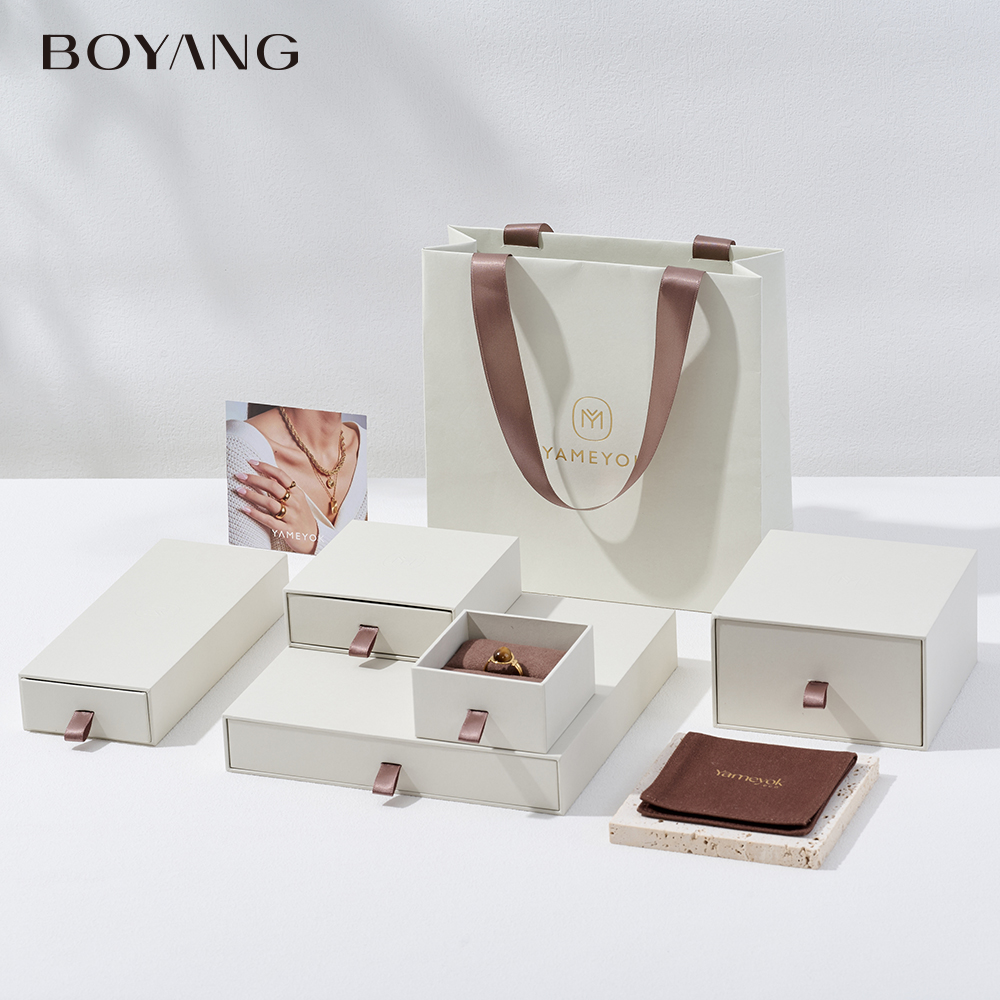
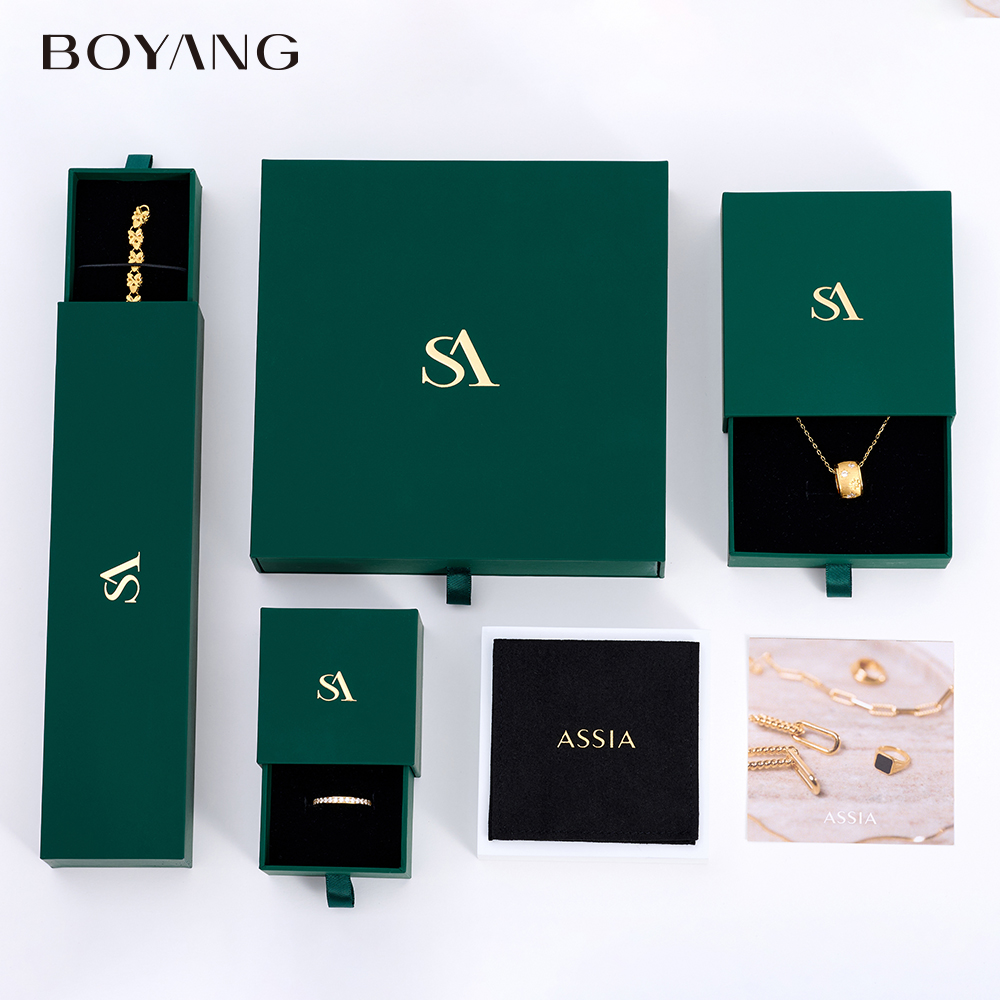
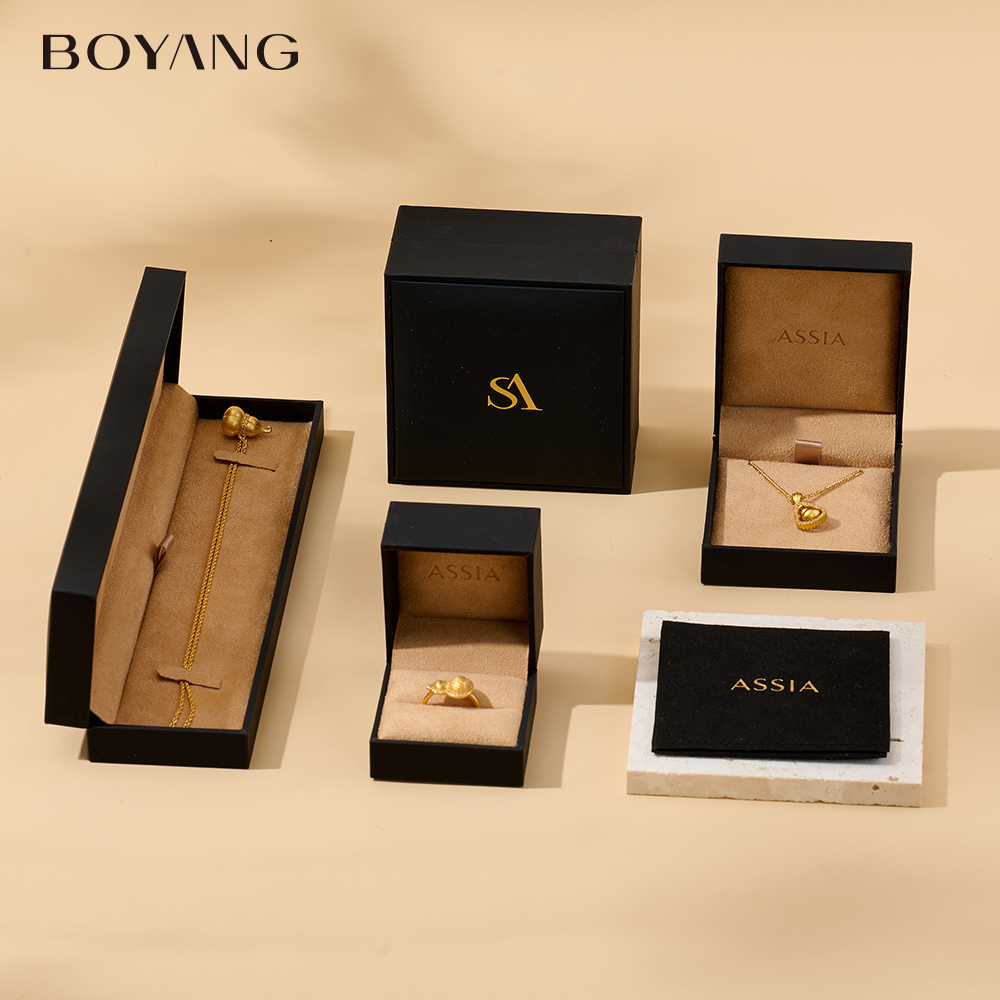
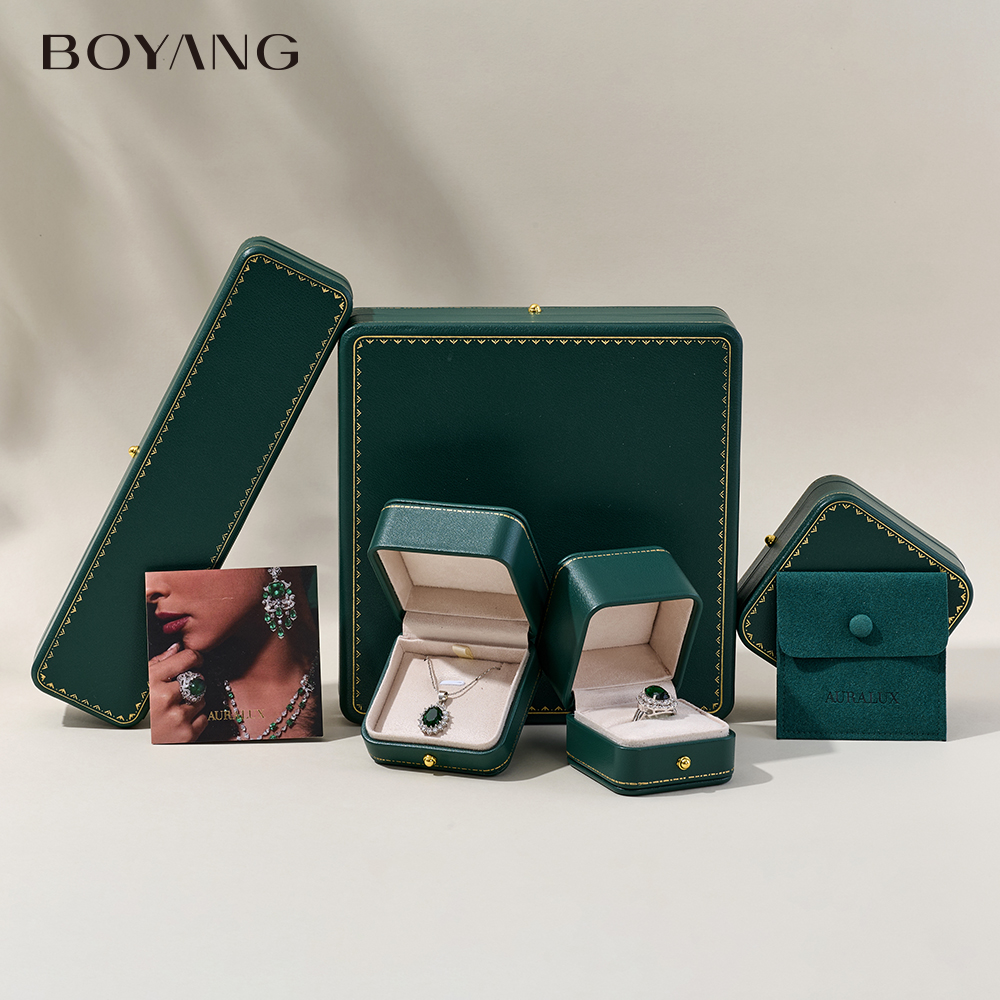
Factory capability must be matched to the proposed construction. The jewelry box product collection shows paper, drawer, lid-and-base, leather-covered, and other jewelry-box formats. Use the range to identify relevant examples, then ask which operations are performed for your exact structure and which components are sourced.
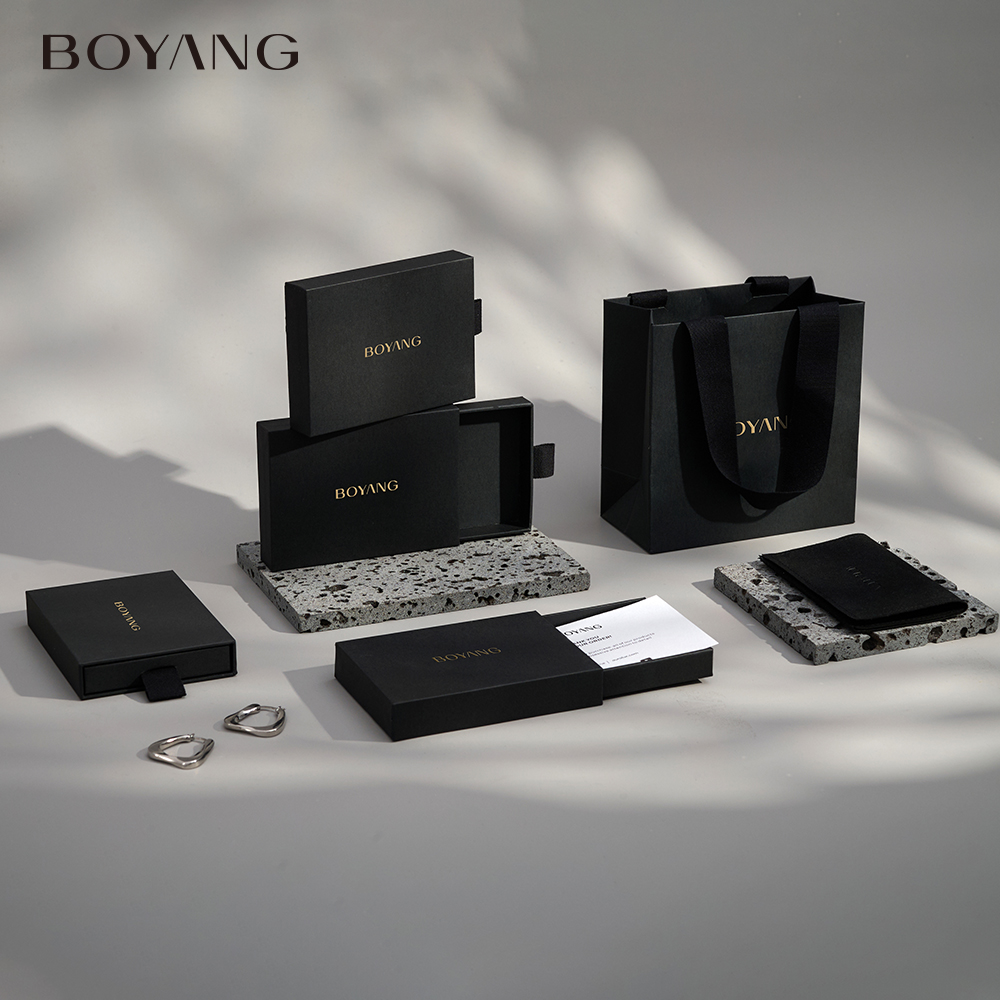
Boyang’s factory information page displays areas labeled for printing, hot stamping, box work, finishing, inspection, and packing. This is useful first-party context, but a buyer should still connect each relevant operation to the proposed box, responsible production step, and inspection evidence.
| Production area | What to confirm | Useful evidence |
|---|---|---|
| Material preparation | Approved grade, color, texture, thickness, and storage | Purchase specification, swatch code, and incoming check |
| Printing or decoration | Artwork version, position, color, pressure, and substrate fit | Signed proof and decorated production reference |
| Box forming and assembly | Dimensions, squareness, alignment, adhesive control, and closure | First-off check and in-process inspection record |
| Insert fitting | Jewelry grip, clearance, orientation, and easy removal | Functional test with the intended jewelry |
| Final packing | Surface protection, unit count, labels, and carton layout | Approved packing sample and carton specification |
Approve Materials, Tooling, and the Production Reference
The approved sample must represent the intended production combination. A structure sample can confirm dimensions and opening action, while a decorated sample is needed to approve actual covering, color, logo, lining, insert, and accessories. Do not assume a stock sample approves details it does not contain.
Inspect materials as components and as an assembled box. A covering may change appearance when wrapped over an edge; foil or ink may reproduce differently across paper, synthetic leather, velvet, or textured surfaces. Approve critical finishes on the final substrate and at the final logo size.
Confirm tooling and dimensional references before bulk production. Dies, molds, cutting files, logo plates, and fixtures should correspond to the current revision. When several box sizes share a design system, each size still needs checks for proportions, logo legibility, insert fit, and closure behavior.
Control Production at Critical Checkpoints
Production control works best when it catches errors before later operations hide or multiply them. A jewelry box factory should define checks for incoming materials, the first production pieces, decoration, forming, assembly, insert fitting, finishing, and packing.
Incoming checks should connect delivered material to the approved specification. Verify the material identity, visible color and texture, thickness or other agreed properties, quantity, and condition. If a substitute is proposed, require written approval and a new swatch or sample where the change can affect appearance or function.
A first-off review confirms that setup choices are correct before the run continues. Compare dimensions, alignment, logo position, decoration quality, closure action, and insert fit with the approved reference. When the product has several versions, verify each artwork, size, color, and insert rather than approving only one representative item.
In-process checks should focus on failure points specific to the design. These may include lifted wrapping, exposed board, adhesive marks, uneven corners, misregistered logos, scuffed surfaces, loose inserts, distorted drawers, weak magnetic alignment, or mixed versions. The checklist should identify what is checked, when, by whom, and how an out-of-limit result is handled.
Define Inspection and Defect Handling
Inspection requirements should be agreed before production, not negotiated after a shipment is complete. Define the product specification, approved sample, inspection stage, sampling approach, defect categories, acceptance rule, reporting format, and responsibility for corrective action.
Visual checks alone are not enough. Measure the dimensions that affect fit and packing; test the opening and closure; place the intended jewelry in the insert; rotate the closed box; and confirm that the product remains secure without damaging contact. Check unit protection and carton presentation as part of the finished product.
Classify defects according to their effect on safety, function, saleability, and brand presentation. The exact categories and limits must be agreed for the project. A logo error, mixed artwork, unusable closure, contaminated lining, small cosmetic mark, and damaged carton do not create the same consequence.
Plan Packing, Capacity, and Supply Continuity
Production planning should include materials, operations, inspection, packing, and transport preparation. Confirm which approvals release material purchasing and bulk work, how multiple versions enter the schedule, and which components have the longest sourcing or processing constraints.
Packing protects both the product and the production result. Specify unit sleeves or tissue, separators, orientation, carton count, carton dimensions, gross and net weight, labels, and pallet requirements where relevant. Review how pressure, rubbing, dust, and moisture exposure will be limited during ordinary handling and transit.
Build contingency into the commercial plan. Define notification and approval rules for material substitutions, artwork changes, quality holds, quantity differences, and schedule risks. For a launch date, allow time for sample revisions, production inspection, transport, customs, and receiving rather than treating factory completion as delivery.
Jewelry Box Factory FAQs
What information does a jewelry box factory need before sampling?
Provide the jewelry dimensions, box structure, target dimensions, materials, insert, colors, logo artwork, decoration method, accessories, packing, and quantity by version. Also state the destination, approval process, and intended delivery window. Mark open decisions so the factory can propose options without treating assumptions as approvals.
What is the difference between a stock sample and a production reference?
A stock sample demonstrates general construction or workmanship. A production reference represents the approved combination of dimensions, materials, color, insert, logo, accessories, and packing for the actual order. Bulk production should be checked against the labeled production reference and its matching specification version.
Which factory processes should buyers verify?
Verify the processes that directly affect the proposed box, such as material preparation, printing or hot stamping, cutting, forming, wrapping, assembly, insert fitting, finishing, inspection, and packing. Also identify subcontracted operations and how their output is approved.
How can buyers reduce sample-to-production differences?
Use a controlled specification, coded materials, final artwork, a labeled approved sample, defined tolerances, first-off approval, and in-process checks. Require written approval for substitutions or revisions, and confirm every size, color, artwork, and insert version included in the order.
When should MOQ and production timing be confirmed?
Confirm minimum order quantity and timing in the current quotation after the specification and version split are clear. Ask what starts the production clock, which approvals are required, whether timing includes packing, and which milestone marks completion. Website figures for one product should not be applied to every project.
Prepare a Factory-Ready Inquiry
A factory-ready inquiry allows technical and commercial teams to evaluate the same project. Include the jewelry dimensions, box drawing or reference, material and color choices, insert requirements, logo files, quantities by version, packing, quality expectations, destination, and approval milestones.
Use the inquiry to request a proposed production route, sample plan, current minimums, quotation breakdown, inspection approach, packing details, and dated schedule assumptions. Then contact Boyang Packing to confirm which factory processes and commercial terms apply to the exact jewelry box configuration.
 Jewellery Box Manufacturers: Match Capability to Your Design
How can you efficiently collaborate with a jewelry box factory without design blueprints?
Jun 14,2026
What Should Be Considered in High-End Ring Box Design and Customization?
Jun 14,2026
5 Pain Points and Breakthrough Strategies for Jewelry Brands Sourcing Jewelry Box Manufacturers
Jun 07,2026
An Immersive Breakdown: Structural Engineering and the Secret to Brand Premium in Custom Bracelet Boxes
Jun 07,2026
Insights into the Global Jewelry Supply Chain: The Distribution of Jewelry Brands and Packaging Factories
May 29,2026
 You May Also Like

 Tel
Tel
 Email
Email
 Address
Bldg 5,Zhenbao Industrial Zone Longhua,Shenzhen,China

Boyang Packing
 Whatsapp