Inquire (

 HOME
Customized Jewelry Box: Fit, Finish, and Practical Design Choices
 Oct 28,2026

 BOYANGPACK
Start by identifying what an available box cannot do for the jewelry or the customer. A customized jewelry box should solve a fit, presentation, or packing problem through a tested combination of structure and materials. Decide what must change before choosing decoration, then prove the proposed design with a physical sample.
Find the Reason to Customize
A useful customization brief describes a specific problem. A pendant turns away from the viewer, a tall ring touches the lid, a bracelet moves inside its holder, or a box takes too long to pack. These are general design situations, not customer case studies. Each points to a different change, and adding a logo alone will not resolve a structural issue.
Separate functional needs from visual preferences. Secure positioning, safe removal, closure performance, and space for the jewelry are functional. Texture, color, logo treatment, and opening sequence shape presentation. Both matter, but the design should show which choices are essential and which can be adjusted if a sample reveals a conflict.
Use reference images to explain the intended look, then translate them into details a supplier can evaluate. Record the box format, internal layout, intended jewelry position, materials, surface finish, logo location, accessories, and packing method. A visual reference is a starting point; it does not establish dimensions or construction.
Design Around the Jewelry and the Packing Routine
Usable internal space matters more than outside dimensions. Provide the jewelry's maximum width, depth, height, weight, and any parts that must not bear pressure. Identify whether the dimensions supplied for the box are external or internal, and check the remaining space after the insert and lining are installed.
| Problem to resolve | Design decision | Evidence to check |
|---|---|---|
| A tall setting contacts the lid | Adjust usable height, insert depth, or product orientation | Clearance with the actual jewelry and final lining fitted |
| A chain shifts or tangles | Define chain routing, retention points, and storage behind the display | Packing, movement, reopening, and removal checks |
| A shared box does not hold every item securely | Use interchangeable inserts or separate product formats | Fit at both ends of the intended product-size range |
| The presentation pack does not fit the shipping pack | Review the assembled box, sleeve, protection, and outer carton together | A complete packed-order sample |
Check the routine of the person packing the jewelry. The insert should make the correct position clear and allow the item to be placed without catching clasps, posts, chains, or stones. A dramatic presentation that requires awkward handling may need a simpler holder or an opening direction that better suits the product.
When several products share one outer box, test every insert variation. The same footprint does not guarantee equal clearance or retention. Record which jewelry fits each combination so a later collection is not assigned to an unsuitable box by appearance alone.
Balance Structure and Opening Experience
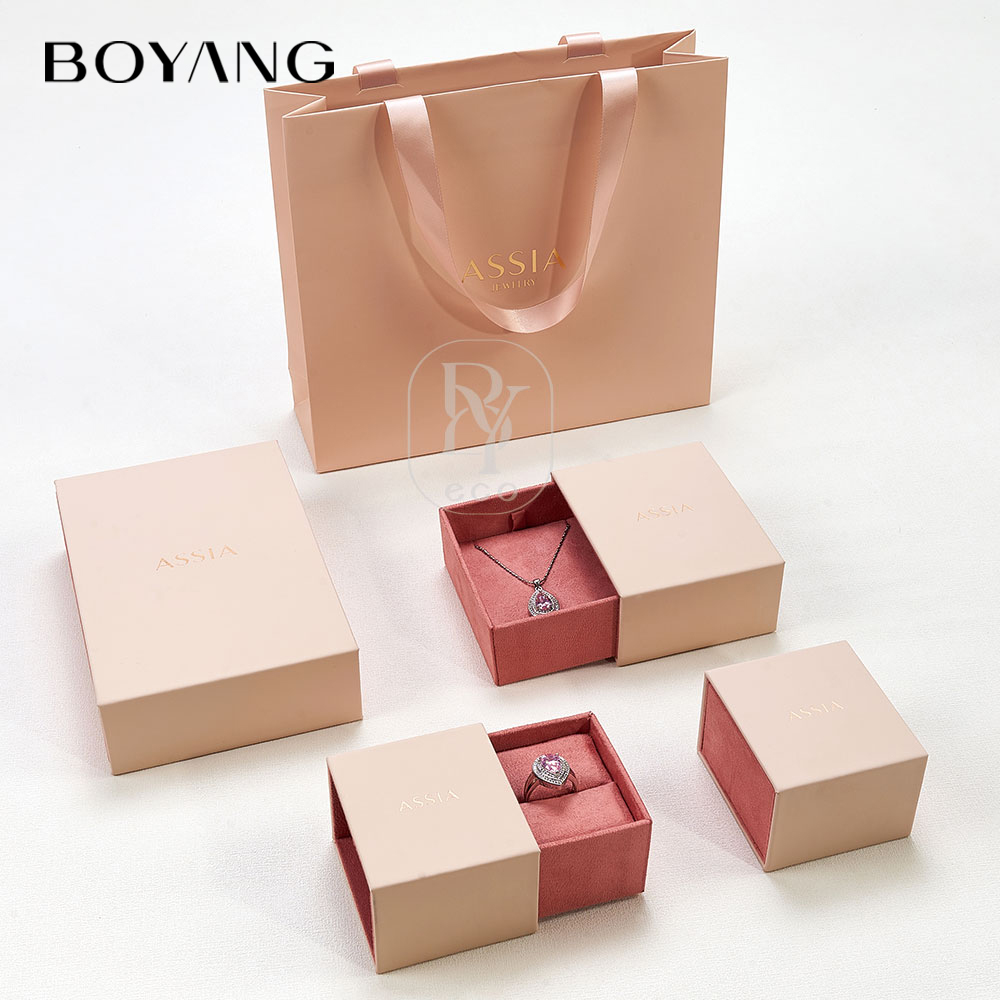
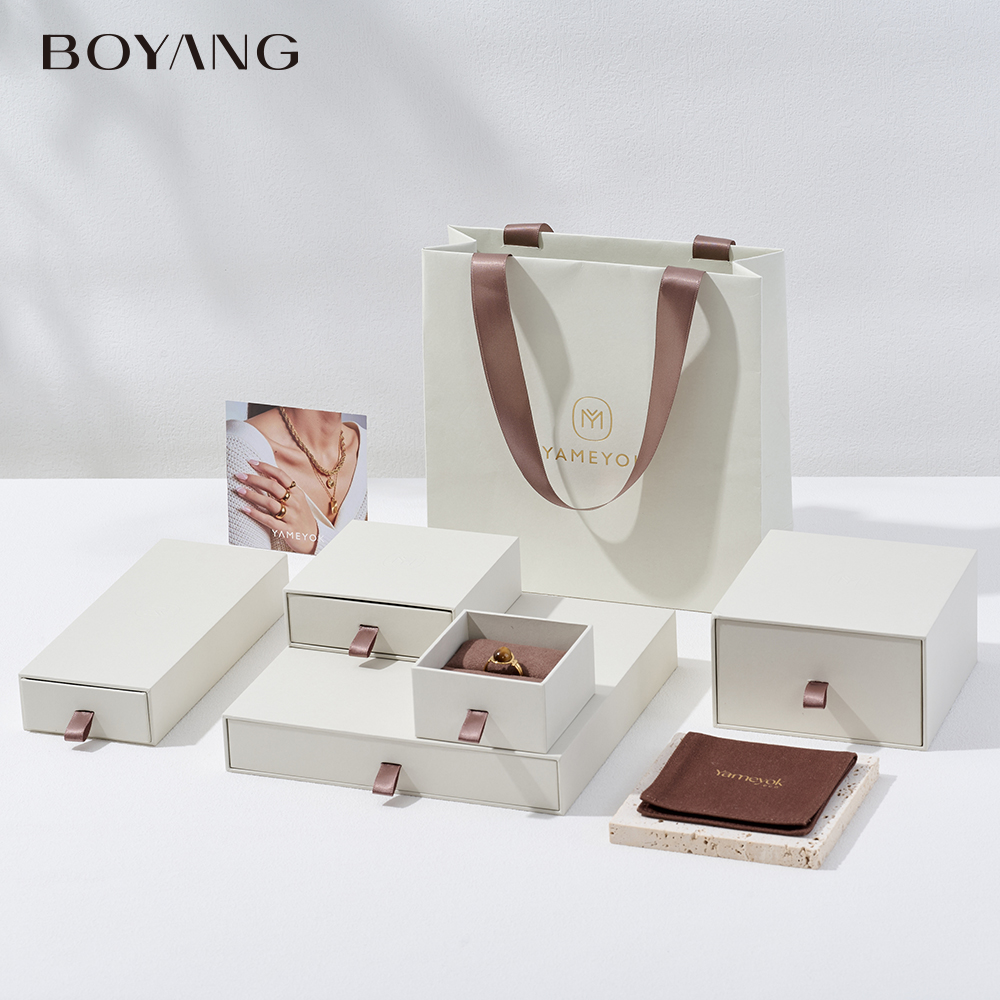
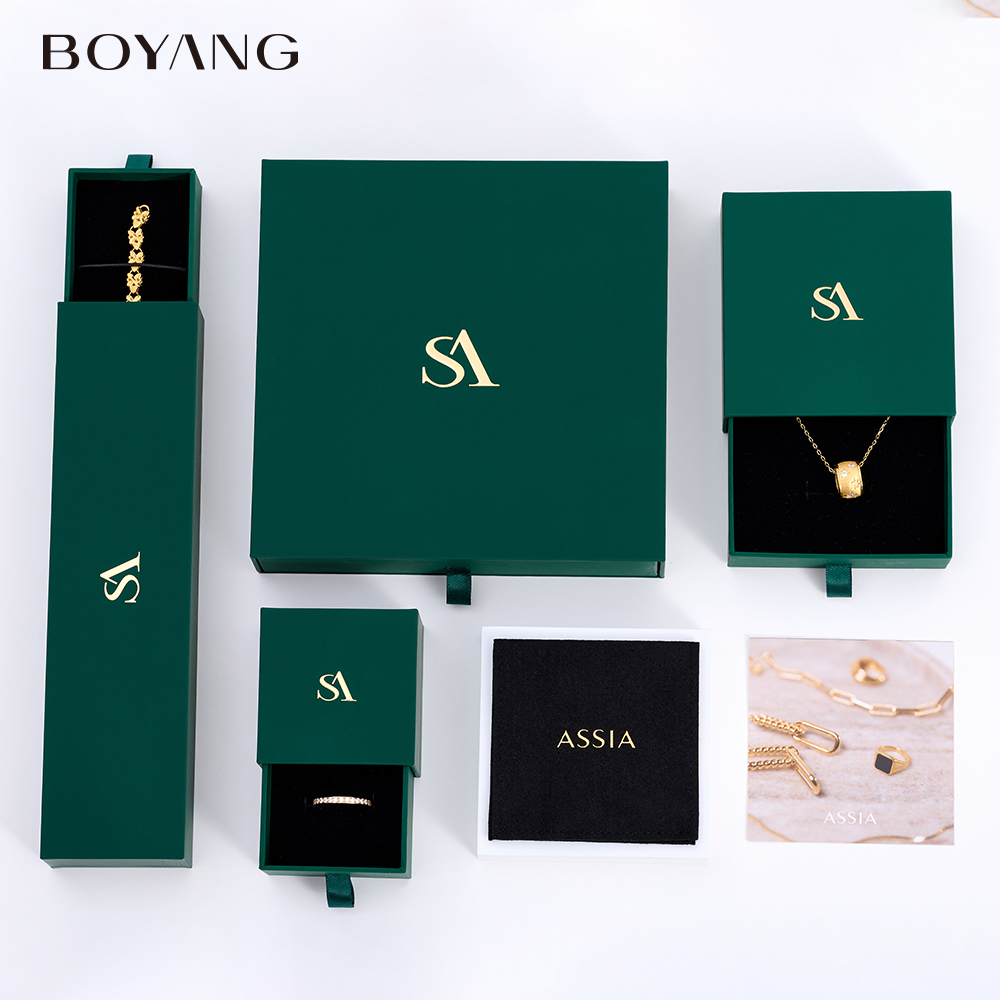
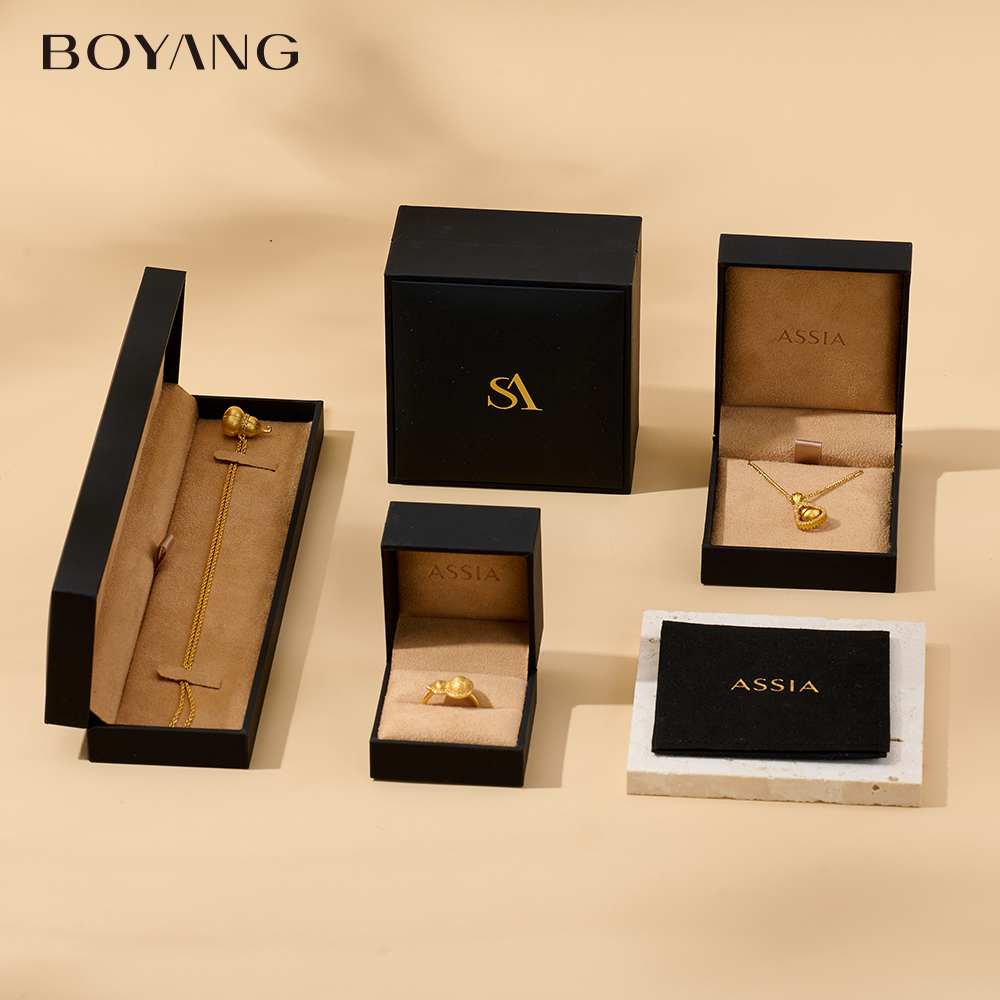
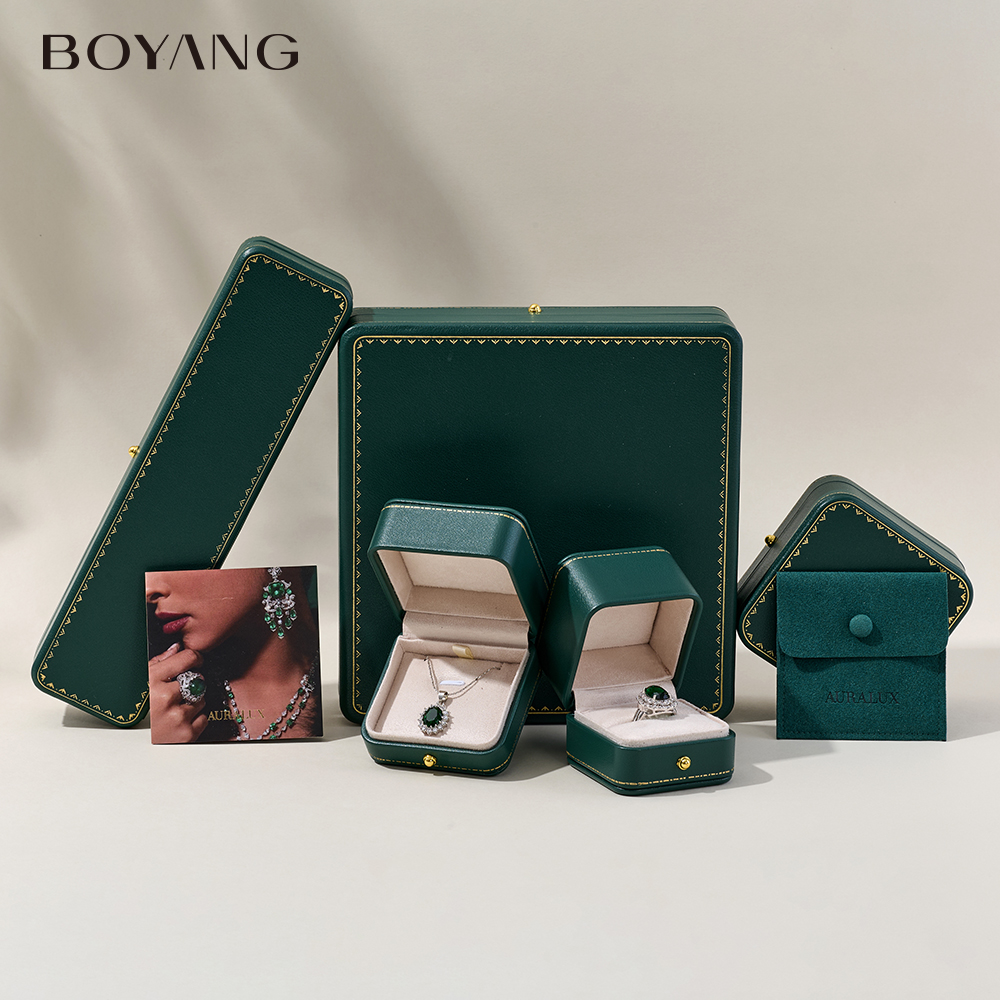
The opening action should reveal the jewelry clearly and remain practical in use. Compare how a removable lid, drawer, hinged lid, or foldable structure works with the product position. Boyang's collection includes paper, drawer, foldable, and covered jewelry-box formats; the right choice still requires a project-specific sample.
A drawer adds a sliding action and needs controlled sleeve-to-tray fit. Check resistance, pull attachment, and whether opening the drawer disturbs the jewelry. A removable lid needs a usable grip and consistent fit. A hinged design needs stable alignment, sufficient clearance, and an opening position that does not obstruct the product.
Consider what happens before and after the opening. Confirm how the box is assembled, stored, filled, closed, displayed, and protected in transit. If a flat-packed format is proposed, ask what assembly is required and test the erected box with its final insert. Do not assume that every foldable design has the same handling characteristics.
Make Material and Logo Decisions on Real Samples
Specify each layer rather than describing the box with one material name. The body, outer covering, lining, insert core, contact surface, adhesive, and decorative parts may differ. A soft exterior does not explain what supports the box, and a paper covering does not establish the material of the insert.
Boyang's detailed paper-box page lists options including paper coverings, synthetic leather, velvet, satin, foam, paperboard, and ethylene-vinyl acetate (EVA) inserts. These are listed options, not interchangeable choices for every design. Ask which combination is proposed and confirm the jewelry-contact surfaces with an actual sample.
Approve color and decoration on the final substrate. Define logo size, position, orientation, color, and process, then review edge definition and legibility. Fine lettering, foil, embossing, and print can behave differently on smooth, textured, or fabric-covered surfaces. Where a process cannot reproduce the artwork clearly, compare a revised mark or another finish.
Keep environmental claims tied to evidence for the selected components. Request the material specification and relevant documentation before describing the complete box as recyclable, recycled, or responsibly sourced. The appearance of paper or fabric does not confirm the status of coatings, inserts, adhesives, or accessories.
Check the Finished Box Beyond Appearance
A finished sample should be assessed as a working package. Photographing an empty box can show general appearance, but it cannot demonstrate jewelry retention, lid clearance, opening resistance, or comfortable removal. Use the intended jewelry and final components when approving these functions.
- Inspect wrapping, seams, corners, alignment, logo reproduction, and interior cleanliness.
- Pack the jewelry, close the box, gently change its orientation, and reopen it to look for movement or contact.
- Remove the jewelry as a customer would, checking for snagging, surface marks, pressure, or loose fibers.
- Operate the closure repeatedly and check that the insert, ribbon, hinge, or drawer stays correctly positioned.
- Test the complete presentation and shipping combination, including any sleeve, pouch, protective wrap, or outer carton.
Agree on what is acceptable before production. Define the dimensions, references, tolerances, appearance criteria, functional checks, and handling of defects. Keep a labeled approved sample with the matching specification. Informal handling checks help identify problems, but they do not certify a shipping system or establish long-term material compatibility.
Customized Jewelry Box Questions
Is adding a logo the same as developing a custom box?
Adding a logo personalizes an existing format, while a custom development may also change dimensions, structure, insert, covering, lining, and opening action. The necessary scope depends on the problem being solved. If an available format already fits and functions well, decoration alone may be sufficient, subject to supplier availability.
Can a single box hold different types of jewelry?
Sometimes, especially when a common outer box uses different fitted inserts. Test the complete arrangement for each jewelry type, including the smallest and largest intended pieces. A shared box should not allow movement, create lid contact, or require pressure on delicate features merely to reduce the number of formats.
Why can the same logo look different on two materials?
Surface texture, color, coating, and decoration method affect how the artwork appears. Approve a decorated sample on the actual material at the final logo size. A digital proof confirms layout, but the physical sample is needed to judge texture, edge definition, foil appearance, and the assembled result.
What must be confirmed before approving production?
Confirm the current drawing, material list, insert fit, artwork, color references, approved sample, inspection criteria, quantities by version, and packing. Obtain written agreement on minimum order quantity, sample costs, price, production timing, and delivery scope. Website estimates for another item should not be treated as commitments for your design.
Record the Design Decisions Before Requesting a Quote
A useful brief records the problem, the proposed solution, and the evidence needed for approval. Include jewelry measurements, internal and external box dimensions, structure, insert layout, materials, logo files, finish references, quantity by version, packing, destination, and requested delivery window. Mark open decisions clearly so alternatives can be quoted on an agreed basis.
For a customized jewelry box project with Boyang Packing, submit the brief and request a suitable sample plan and current commercial terms. Carry the approved decisions into one version-controlled specification so future production and reorders have a clear reference.
 Jewellery Packaging Boxes: Choose a Range That Fits Every Piece
Custom Jewelry Packaging for Small Business: Start With Less
Custom Jewelry Packaging for Small Business: Start With Less
Oct 21,2026
Jewellery Packaging Manufacturers: Coordinating a Complete Brand Set
Oct 17,2026
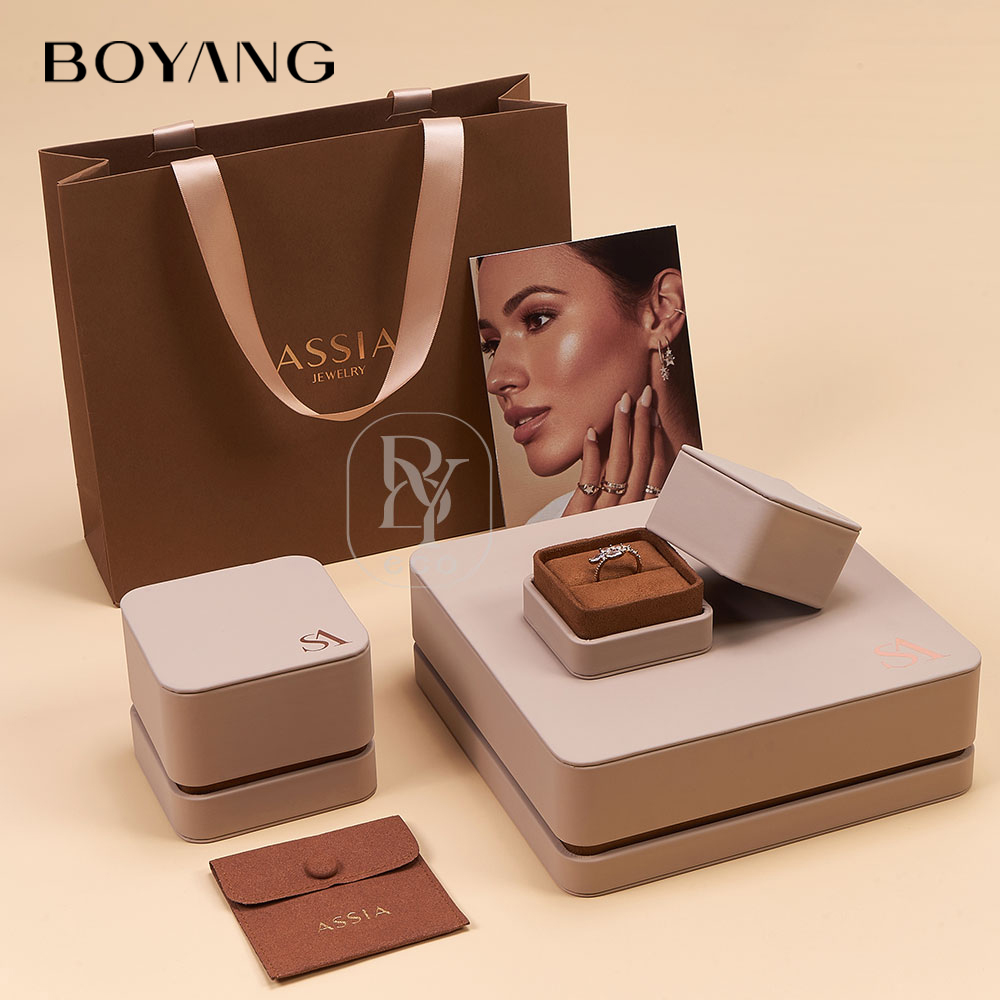
Jewellery Box Manufacturers: Match Capability to Your Design
Oct 14,2026
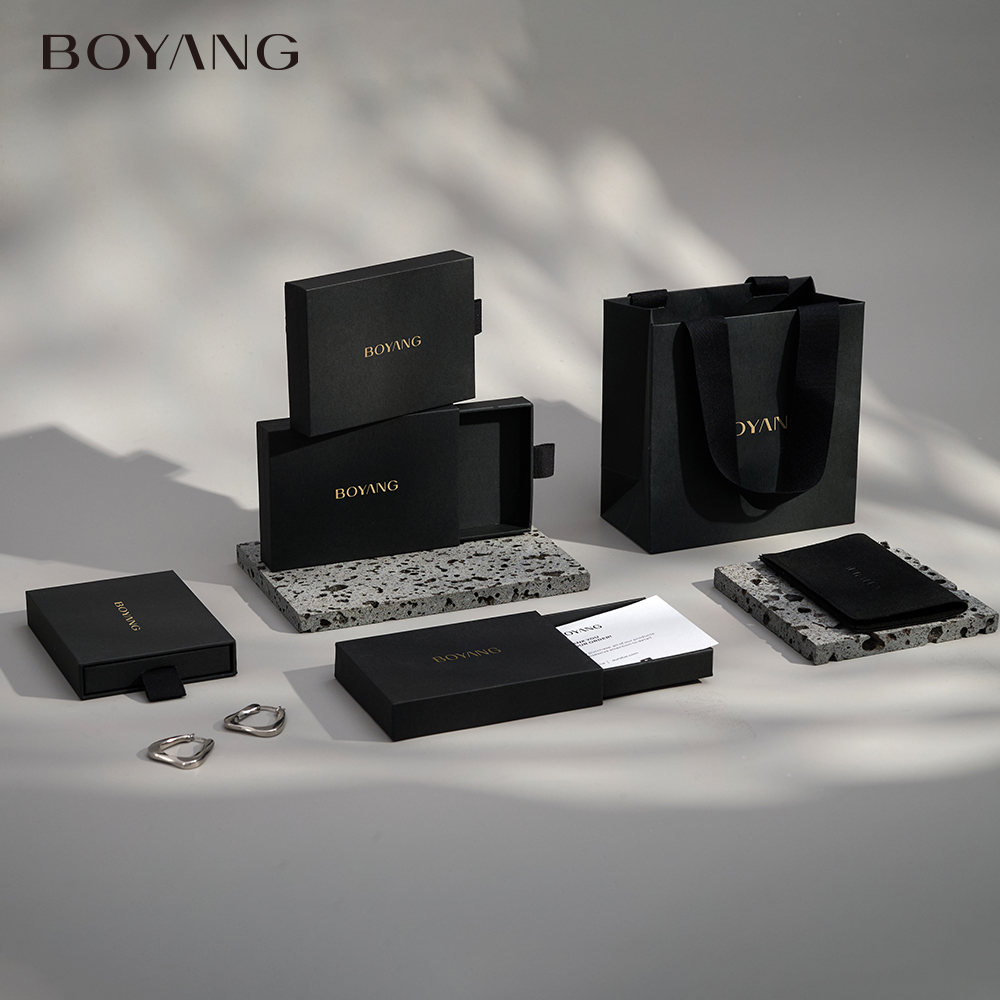
Jewelry Box Factory: From Approved Sample to Production
Oct 11,2026
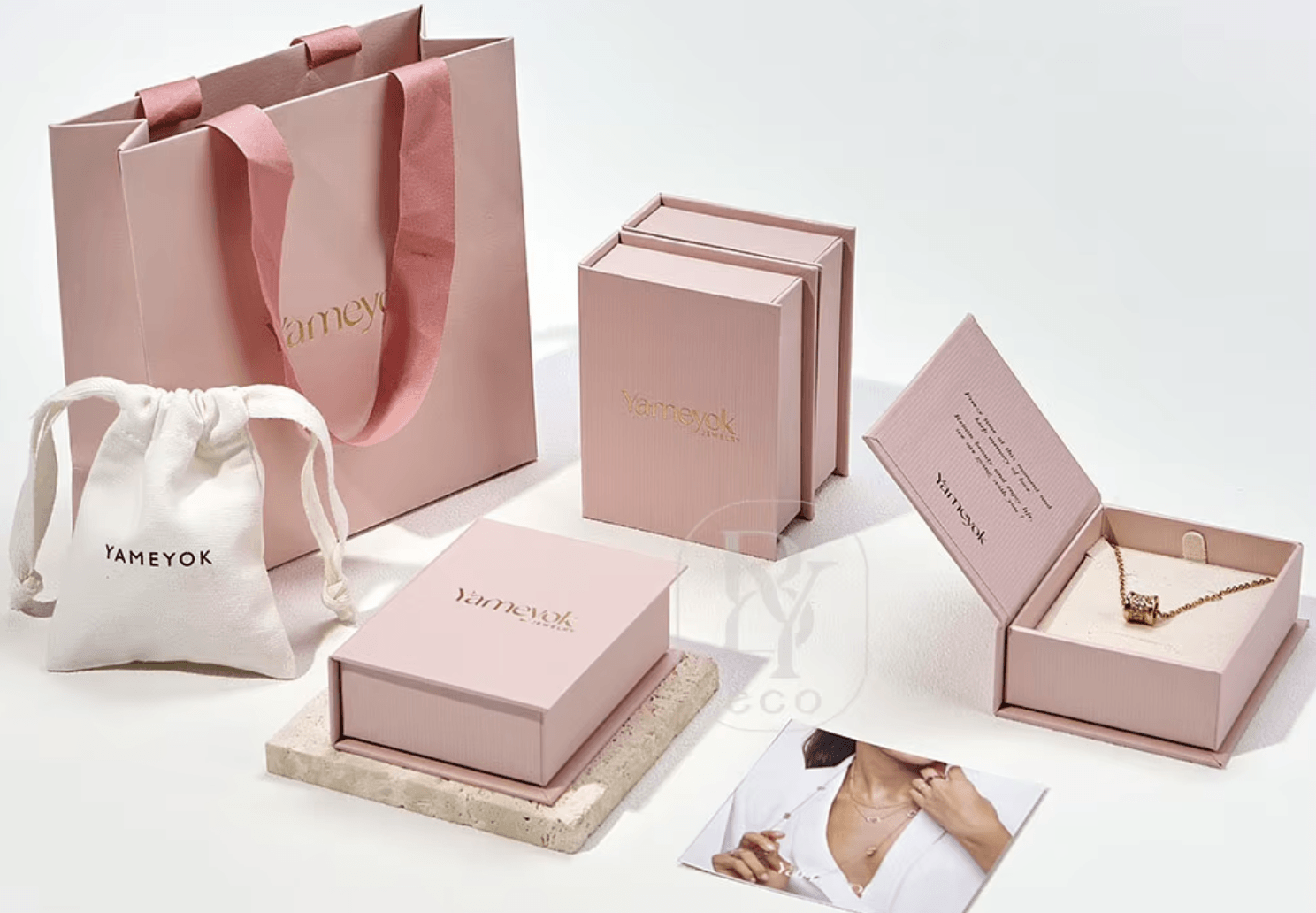
Jewelry Box Supplier: A Practical Evaluation Guide
Oct 07,2026
 You May Also Like


 Tel
 Email
 Address
Bldg 5,Zhenbao Industrial Zone Longhua,Shenzhen,China

Boyang Packing
 Whatsapp