Inquire (

 HOME
Custom Jewelry Packaging for Small Business: Start With Less
 Oct 21,2026

 BOYANGPACK
Begin with the jewelry you sell most often and the way each order reaches the customer. Custom jewelry packaging for small business works best when product fit, flexible branding, and reorder needs shape the first order. Choose a manageable packaging range, approve the physical sample, and confirm the complete purchase terms before committing to production.
Start With the Orders You Actually Pack
Your first packaging range should serve the orders you can reasonably expect to fulfill. List the jewelry you sell, the combinations customers buy, and the channels you use. A studio selling rings at appointments has different packing needs from an online store shipping necklaces or a retailer preparing gifts at the counter.
Measure representative products before choosing box sizes. Record the tallest setting, widest piece, chain length, pendant dimensions, and any delicate surfaces. The insert must hold the jewelry securely, allow comfortable removal, and provide lid clearance. A compact box is useful only when the jewelry fits without pressure or movement.
Group products by genuinely compatible packaging needs. Several pieces may share a box size while using different inserts; others need a separate format. Avoid creating a unique outer box for every design unless the product or presentation requires it. Each extra size introduces another item to approve, store, count, and reorder.
Write down the packing sequence as well. Identify the product holder, presentation box or pouch, care information, and any shipping protection. Include retail bags only where customers need them. A complete packaging collection can be a future goal while the first order focuses on the components used regularly.
Choose a Level of Custom Jewelry Packaging for Small Business
Customization can begin with a branded detail rather than a new box structure. Compare the scope that fits your current products, approved budget, and likely replenishment pattern. Existing sizes, logo decoration, accessories, and fully custom construction have different approval and purchasing requirements.
| Approach to discuss | A practical starting point | Confirm before choosing |
|---|---|---|
| Standard packaging with a separate branded element | Use an available box or pouch with a card, label, sleeve, or ribbon | Availability, fit, accessory minimums, and time needed to assemble each order |
| An established format with your logo or finish | Keep suitable dimensions and personalize the visible brand elements | Decoration setup, permitted materials, logo reproduction, and quantity per version |
| Custom structure and fitted insert | Develop a specific shape, opening action, or internal arrangement | Tooling, sample stages, production minimums, material sourcing, and future reorders |
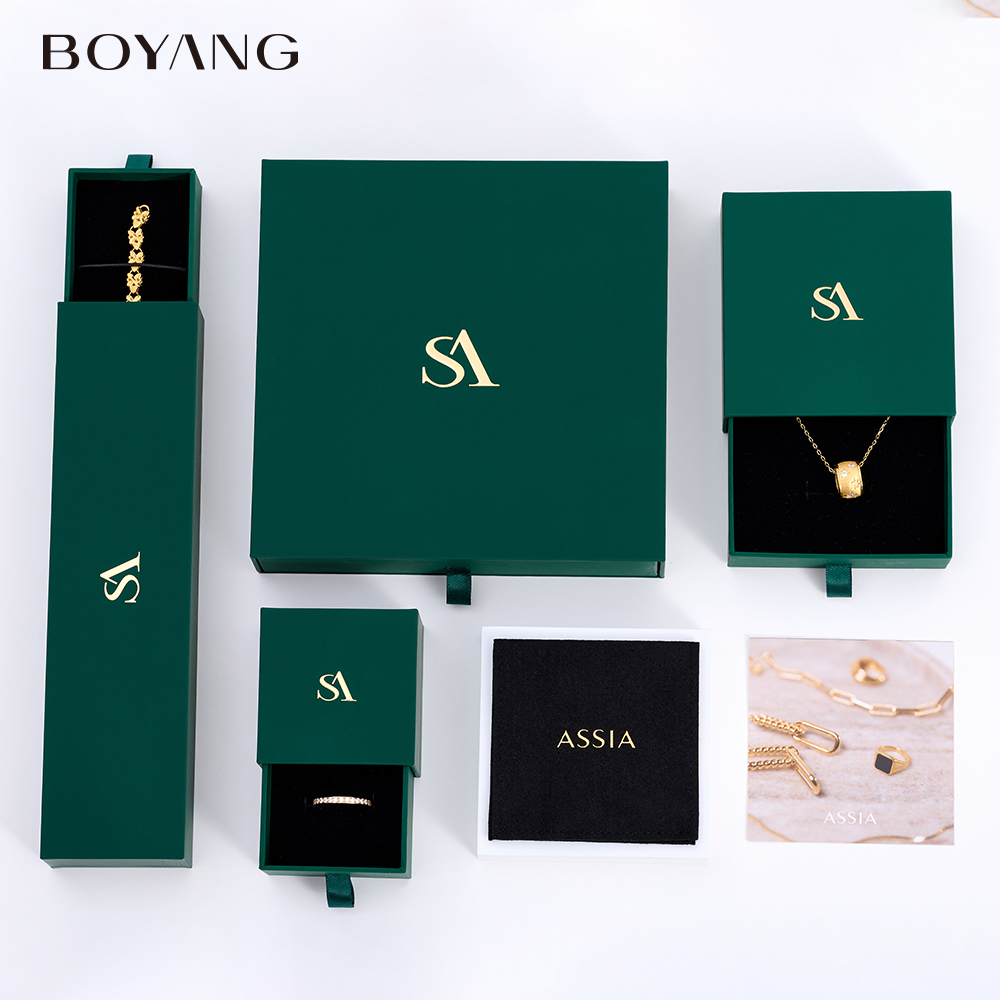
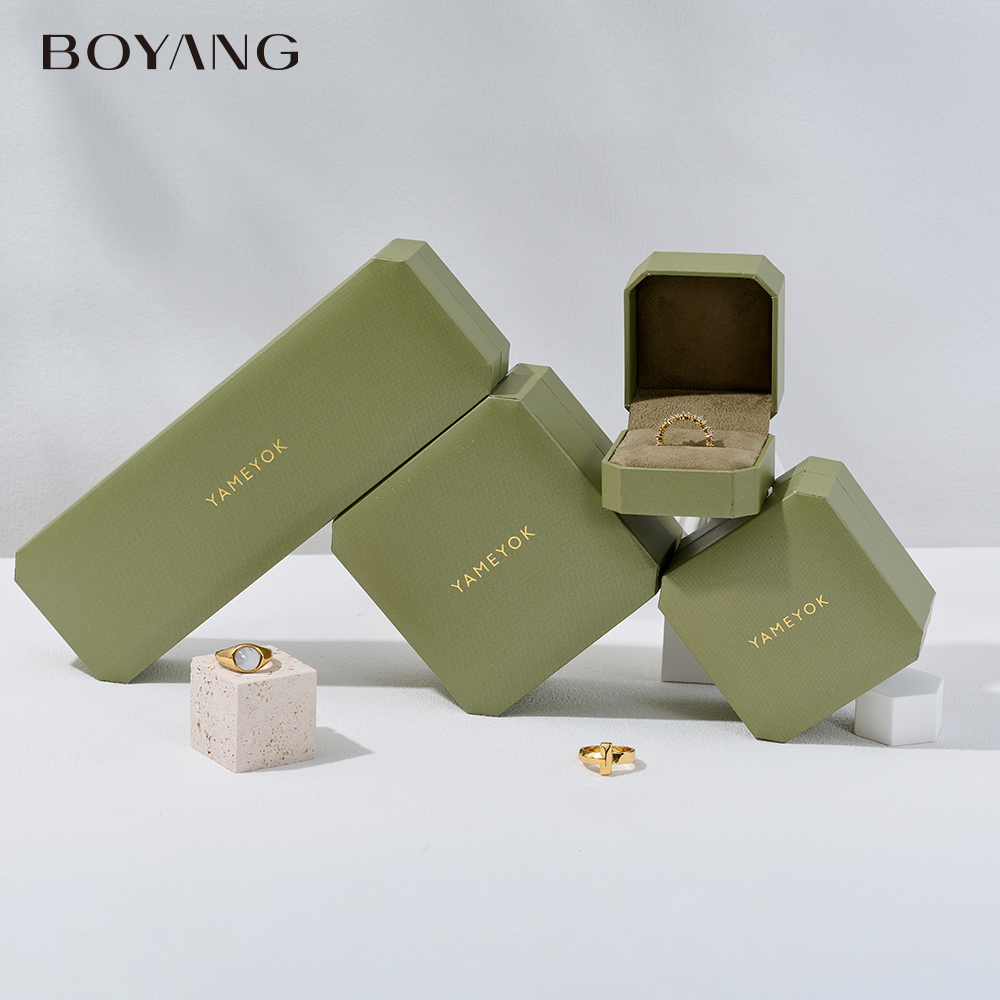
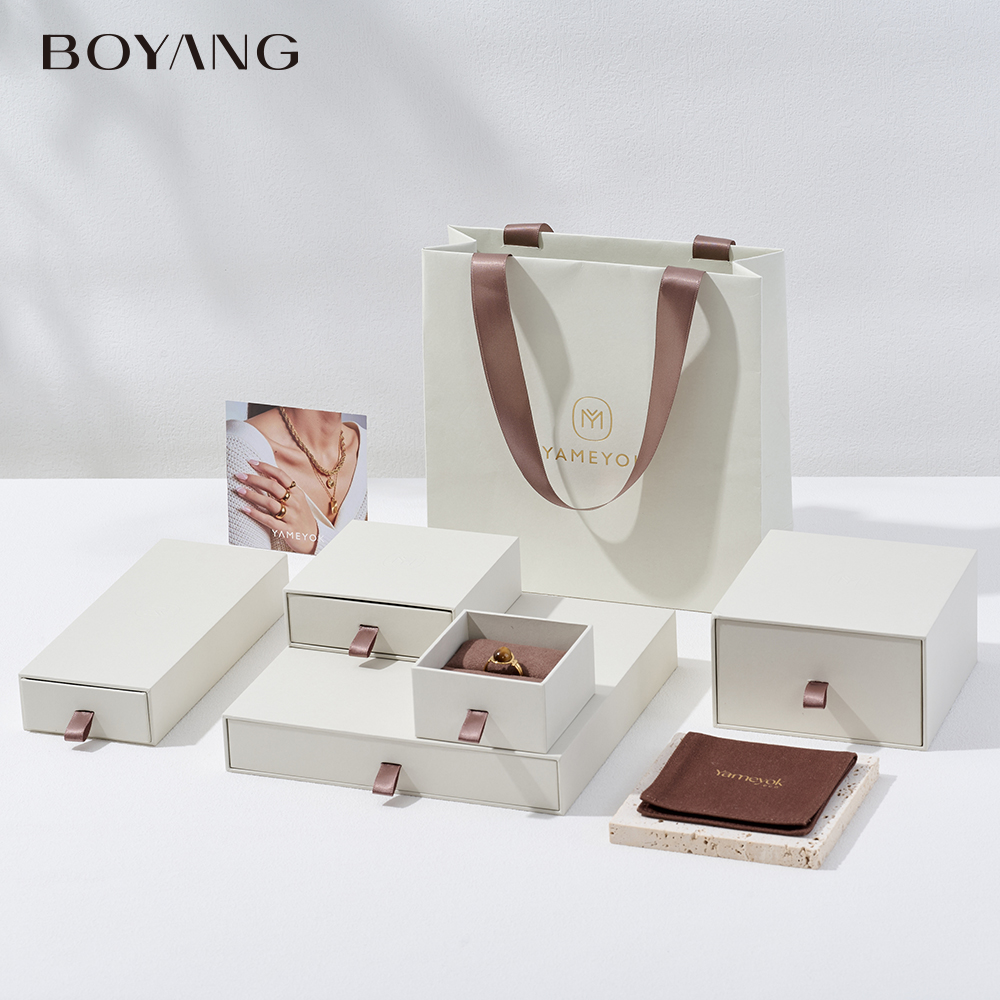
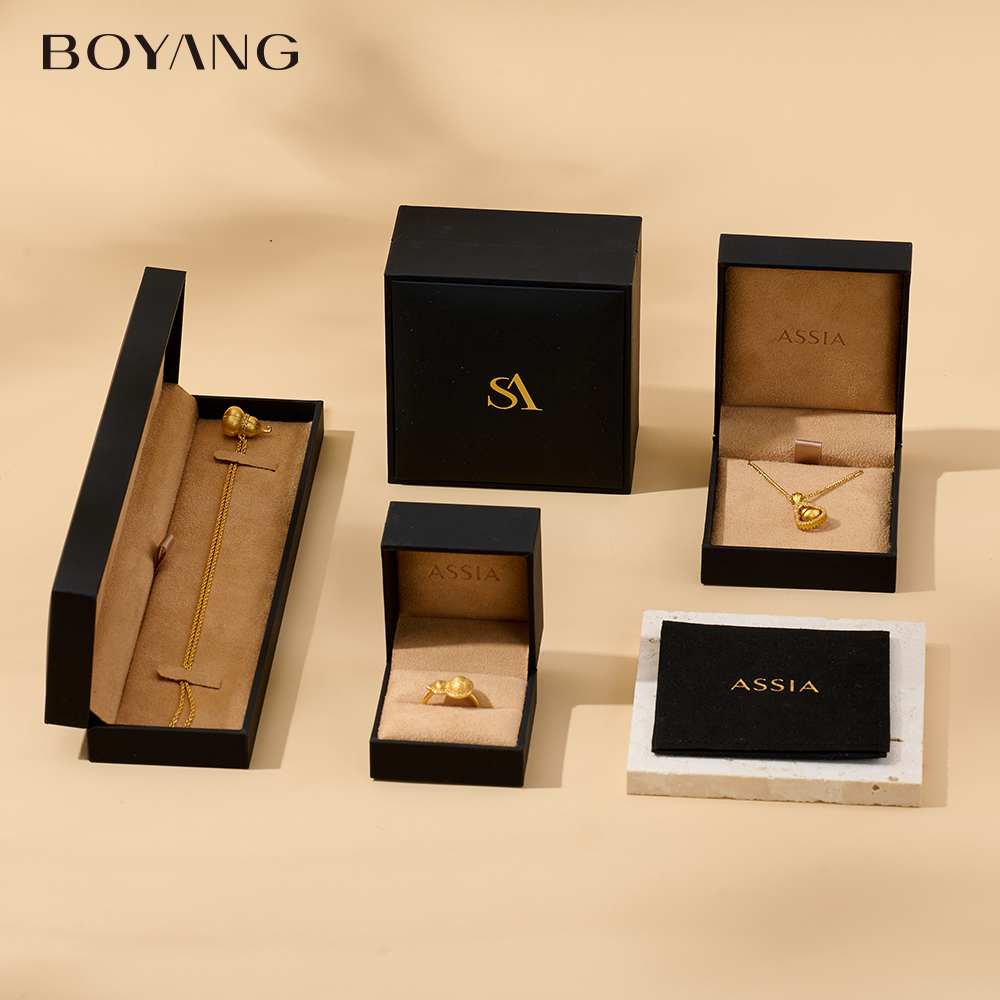
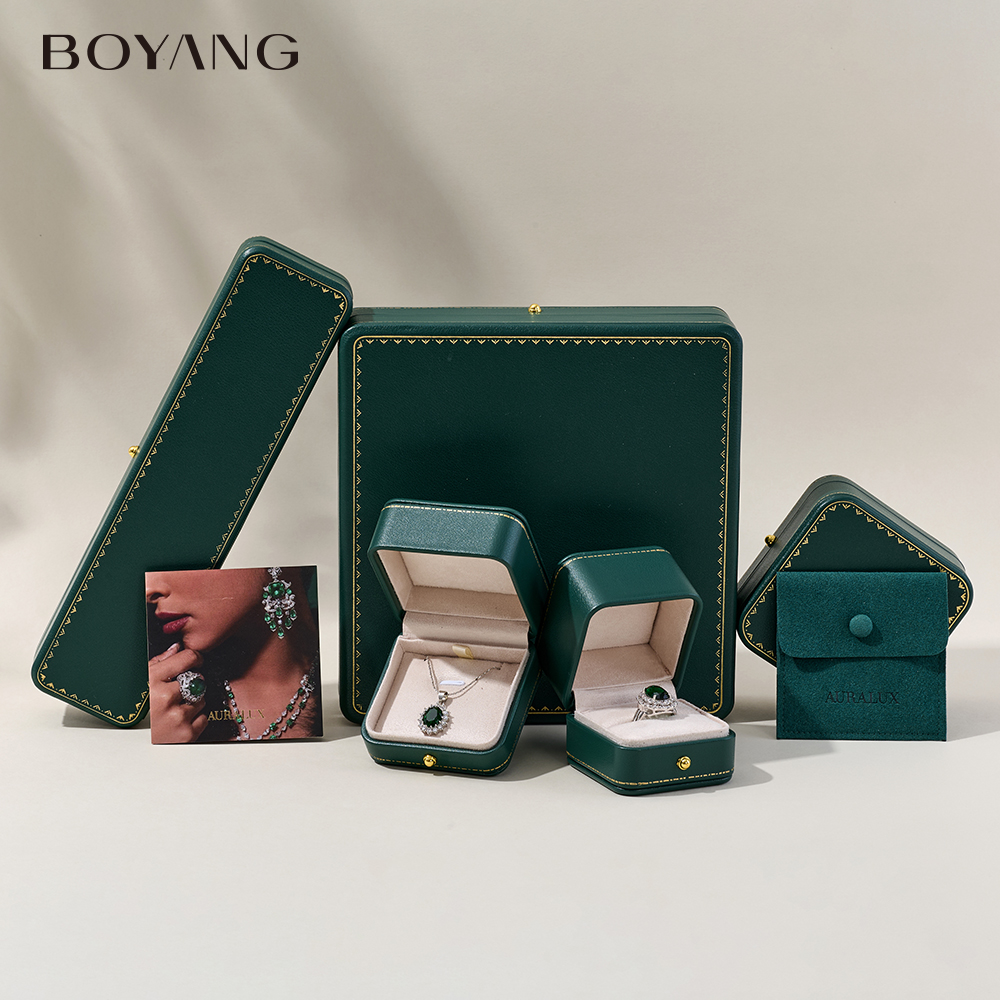
These are planning options, not a promise that every supplier offers every route. Boyang's packaging-set collection shows coordinated jewelry boxes, jewelry bags, and paper bags. Ask which existing formats and customization methods are available for your project; a product collection alone does not confirm a low minimum order.
Keep the first design adaptable. An evergreen logo and color scheme can work across collections, while a separate card or sleeve carries a seasonal message. Approve fine logo details on the actual material: a mark that looks clear on a screen may reproduce differently on textured paper, fabric, or foil.
Compare First-Order Costs and Inventory Commitments
A useful quotation separates the price of the packaging from the cost of starting and receiving the order. Request a breakdown of samples, decoration setup, tooling when applicable, unit prices, inserts, accessories, unit protection, export cartons, and delivery assumptions. Confirm the currency and trade term so different proposals cover the same scope.
Check how the minimum order quantity is applied. It may be calculated per size, color, logo, insert, component, or design rather than across the whole purchase. Ask whether shared materials or artwork change that calculation. Do not assume that combining several versions automatically satisfies a minimum.
Evaluate the quantity against expected use and storage. A lower quoted unit price can still require a larger payment and more shelf space. Record how many usable packs each product group needs, where cartons will be stored, and what happens if one jewelry line sells more slowly than another.
For an internal comparison, divide the total agreed packaging cost by the number of usable finished packs it supplies. Keep one-time development charges visible rather than hiding them in an optimistic repeat-order estimate. Add the staff time needed for assembly if one option involves tying ribbons, applying labels, or adding sleeves individually.
Plan reorders before the first batch runs out. Keep a record of actual packaging use, damaged or rejected items, remaining stock, and the supplier's confirmed replenishment window. Delivery planning should include approvals, production, inspection, transport, and receiving. A factory completion estimate is not an arrival date.
Test a Real Order Before Committing to Volume
A sample should prove that the packaging works with your jewelry and your packing process. Boyang's FAQ describes a preproduction sample for evaluation before mass production. Confirm the sample charge, materials, artwork, delivery arrangements, and which decisions the sample is intended to approve.
- Pack the actual jewelry and check insert grip, lid clearance, surface contact, and easy removal.
- Check logo position, legibility, color, wrapping, corners, closures, and interior cleanliness against approved references.
- Complete the order with cards, tissue, pouch, sleeve, and any outer shipping pack. Confirm that components fit together.
- Have the person who will fulfill orders repeat the packing sequence and note awkward steps or missing supplies.
- Record the approved specification, artwork version, material references, and sample identification for production and reorders.
A presentation box should not automatically be treated as a shipping carton. Review the complete parcel and any cushioning or protective outer packaging separately. Informal handling checks can reveal obvious movement or rubbing, but they do not establish transit-test compliance or guarantee damage-free delivery.
Keep material and environmental claims specific. A paper-looking box may also contain coatings, adhesive, fabric, foam, or magnets. Ask for evidence that applies to the quoted configuration before describing the complete pack as recycled, recyclable, responsibly sourced, or protective against tarnishing.
Questions Small Jewelry Businesses Ask
Can a small jewelry brand start with only a few customized components?
Yes, a phased packaging plan can focus on the components used most often. For example, a suitable box and a branded card may provide a starting point if the supplier offers that combination. Confirm fit, purchasing minimums, and assembly requirements before committing; a smaller component list does not guarantee a smaller order.
Does custom packaging always mean a low minimum order?
No. Minimums depend on the construction, material, decoration, tooling, and number of versions. Ask for the current minimum for each proposed component and clarify how sizes and colors are counted. If the requirement exceeds likely use, discuss a simpler specification or another available format.
Should every jewelry item have its own box size?
Only when fit or presentation requires it. Compatible items may share an outer format with appropriate inserts, while tall settings, long chains, or larger pieces need separate assessment. Test the largest and smallest intended pieces before approving a shared box; appearance alone cannot establish fit.
What should I remove first if the quotation exceeds my budget?
Review optional accessories, extra versions, decorative finishes, and custom dimensions that do not solve a product problem. Keep the features needed for secure fit, clear branding, and practical handling. Ask the supplier to price alternatives against the same quantity and delivery scope rather than assume every simplification reduces cost.
What information makes a repeat order easier to manage?
Keep the approved drawing, material codes, colors, artwork, logo process, insert layout, sample reference, packing specification, and quantities by version. Confirm current availability, prices, minimums, and timing with the supplier. An earlier order is a useful reference, but it does not guarantee identical future commercial terms.
Prepare Your First Packaging Brief
Start with a concise brief listing the jewelry dimensions, expected order mix, selling channel, required components, preferred format, logo files, colors, quantities by version, storage constraints, destination, and desired delivery window. Mark the details that are essential and those where alternatives are welcome.
To discuss custom jewelry packaging for small business with Boyang Packing, submit that brief and request confirmation of available formats, decoration, samples, minimums, quotation scope, and reorder conditions. Approve the functional package first, then expand the range when actual sales and fulfillment experience support it.
 Customized Jewelry Box: Fit, Finish, and Practical Design Choices
Jewellery Packaging Manufacturers: Coordinating a Complete Brand Set
Jewellery Packaging Manufacturers: Coordinating a Complete Brand Set
Oct 17,2026
Jewellery Box Manufacturers: Match Capability to Your Design
Oct 14,2026
Jewelry Box Factory: From Approved Sample to Production
Oct 11,2026
Jewelry Box Supplier: A Practical Evaluation Guide
Oct 07,2026
Customized Ring Box: A Buyer’s Design and Sourcing Guide
Oct 05,2026
 You May Also Like



 Tel
 Email
 Address
Bldg 5,Zhenbao Industrial Zone Longhua,Shenzhen,China

Boyang Packing
 Whatsapp