Inquire (

 HOME
Custom Jewelry Boxes Bulk: Plan Quantity, Storage, and Reorders
 Nov 04,2026

 BOYANGPACK
Ordering more boxes can reduce repeated purchasing work, yet excess stock ties up space and cash. Custom jewelry boxes bulk orders should be sized by real demand for each format, available storage, and a practical reorder point. The best quantity is therefore a planning decision for the brand's product mix, not simply the largest number that produces an attractive unit price.
Calculate Demand by Box Format
Start with the number of pieces expected to use each box, rather than the total jewelry units sold. A brand may ship many earrings but need only a smaller number of bracelet boxes. If a shared box format serves several products, combine demand only after checking that its insert fits all of them. A format that is visually close but functionally unsuitable should remain a separate line.
Use the most relevant sales period available to estimate usage, then adjust for known launches, promotions, and discontinued designs. Separate dependable demand from a speculative campaign. Seasonal peaks matter, but ordering a full year's supply around one unusually strong month can leave obsolete branded boxes in storage. If sales history is limited, use a conservative initial estimate and ask what reorder options exist.
Include expected waste from setup, packing, and handling in the internal plan, but do not invent a universal allowance. Review the company's actual packaging loss and receiving records. Record the assumptions behind the number so the team can update it after the first run. This is especially useful when several box sizes have different usage rates.
Packaging guides from industry peers highlight product volume and launch timing as inputs to a packaging decision. For this jewelry buyer, the practical extension is a separate demand estimate for every box format. That avoids using one convenient total to hide an oversupply of slow-moving sizes.
Compare the Full Cost of a Bulk Order
A lower unit price does not automatically make a larger order less expensive to operate. The buyer also has to consider sample or setup charges, freight, customs or local handling where relevant, storage, damage, and the risk that artwork or the jewelry range changes before all boxes are used. Ask the supplier to state exactly what each quoted quantity includes.
Compare a few realistic order quantities against the same specification. The box structure, insert, decoration, packing method, and destination should remain constant across the comparison. Otherwise, a price difference may come from a changed product rather than volume. Request the quote by format if ring, pendant, and bracelet boxes use different components or processes.
| Planning question | Smaller initial order | Larger initial order |
|---|---|---|
| Demand certainty | Useful when a design or sales rate is still being tested. | More suitable when usage is established and stable. |
| Storage | Requires less immediate space; may need more frequent receipts. | Needs room for cartons and protection against damage. |
| Design change risk | Limits stock exposed to a later redesign. | Works best when artwork, jewelry fit, and branding will remain consistent. |
| Buying effort | Requires more frequent planning and supplier contact. | Reduces reorder frequency but commits more inventory at once. |
This table is a decision framework, not a claim about any supplier's prices or minimum order. The actual quote may change with materials, tooling, decoration, quantity, and shipping terms. A buyer should calculate a landed cost and compare it with the cost of holding the additional boxes until they are used.
Check Storage and Delivery Before Choosing Volume
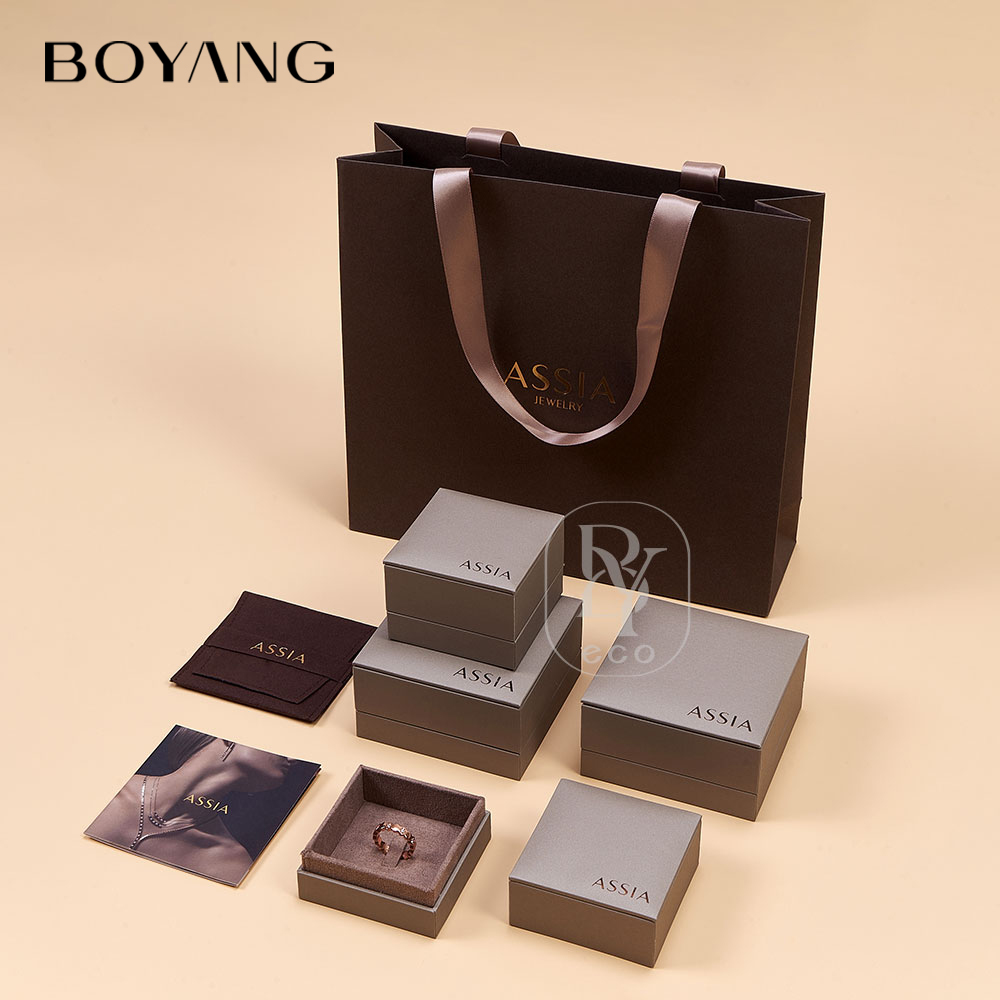
Empty boxes still occupy physical volume. Ask how the finished products are packed for transport and how many cartons will arrive for each proposed quantity. A nested or flat format may use space differently from a rigid assembled box. The product photograph does not establish carton dimensions or whether the boxes can be stacked safely in the buyer's warehouse.
Consider where the boxes will be received, inspected, and stored. Staff need access to each format without crushing cartons or mixing old and new artwork. If stock will be split between a central warehouse and retail locations, plan that allocation before the order is placed. This helps prevent one site from running out while unused boxes sit elsewhere.
Confirm the shipping arrangement in the quote: origin, destination, delivery terms, carton packing, and any service needed after arrival. Do not assume that a quoted production price includes freight or import charges. A bulk order should be evaluated as an end-to-end supply decision, especially when the buyer has limited storage or a fixed launch window.
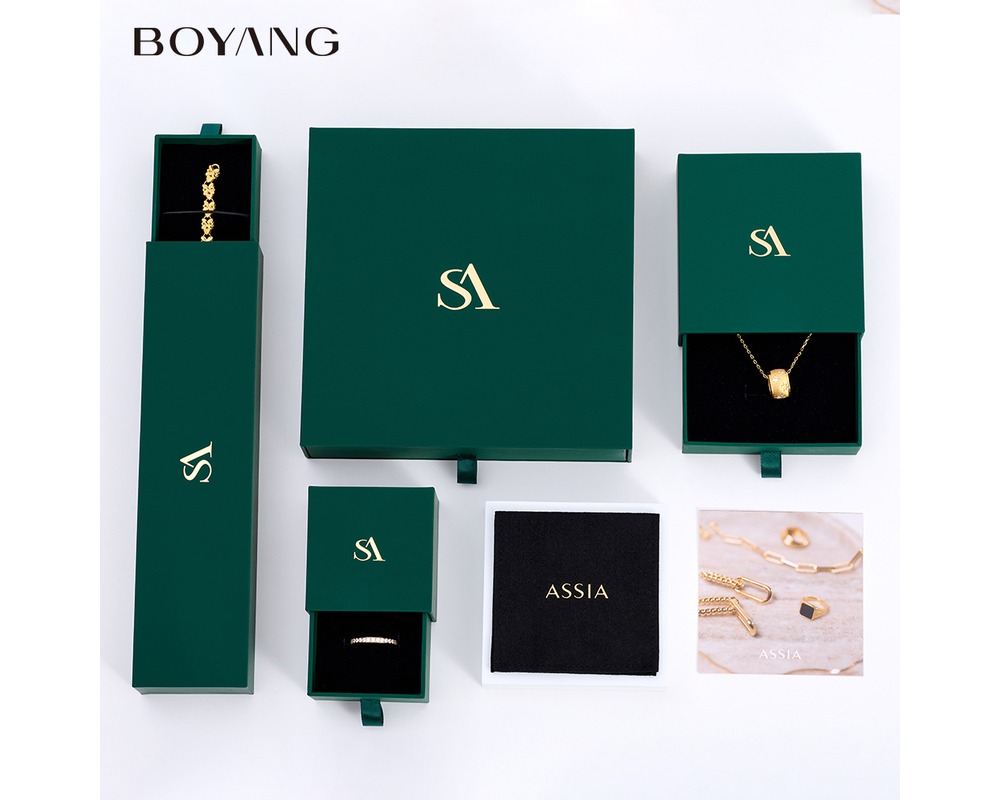
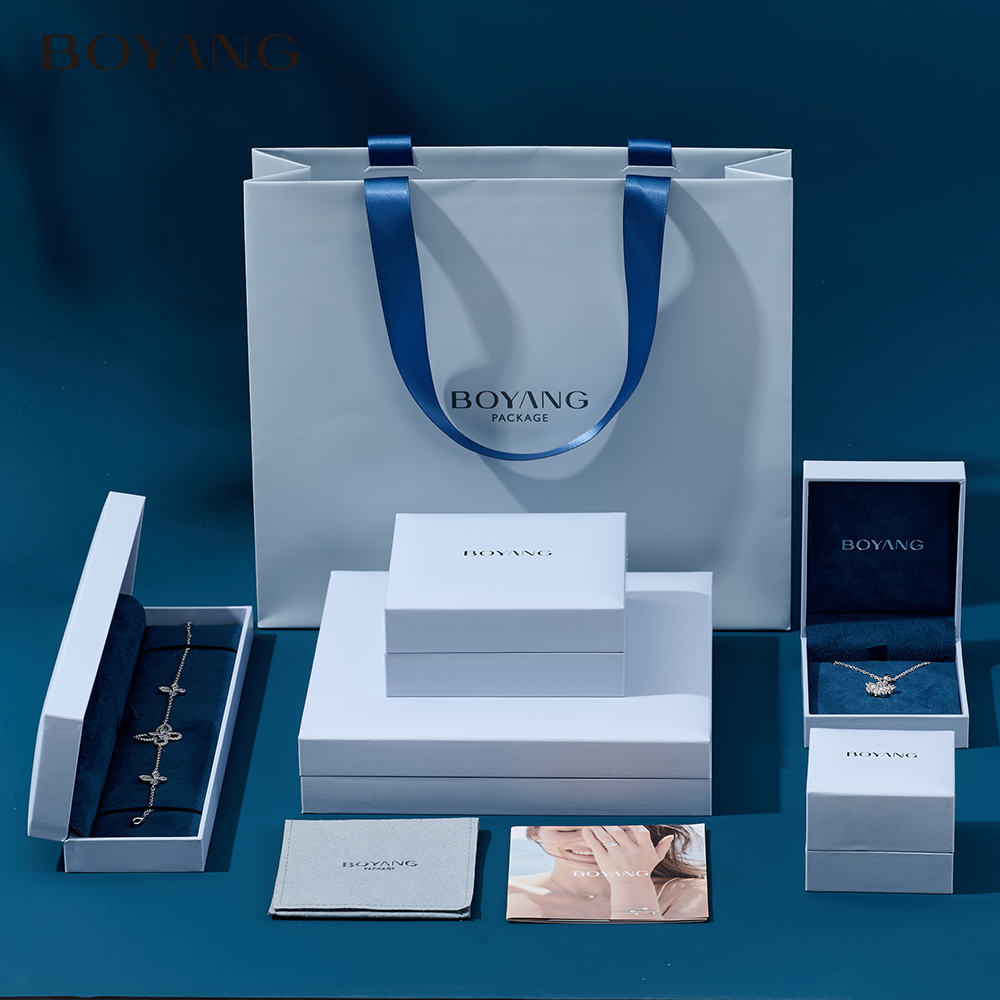
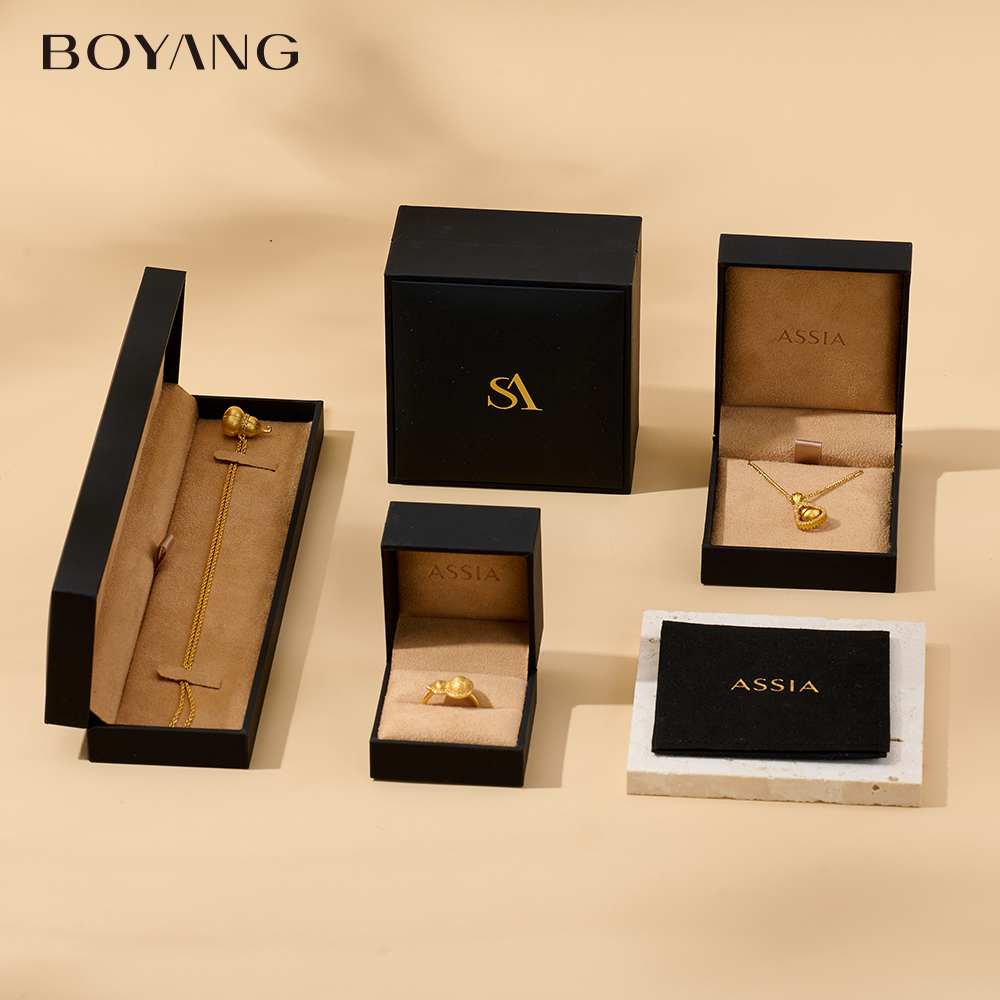
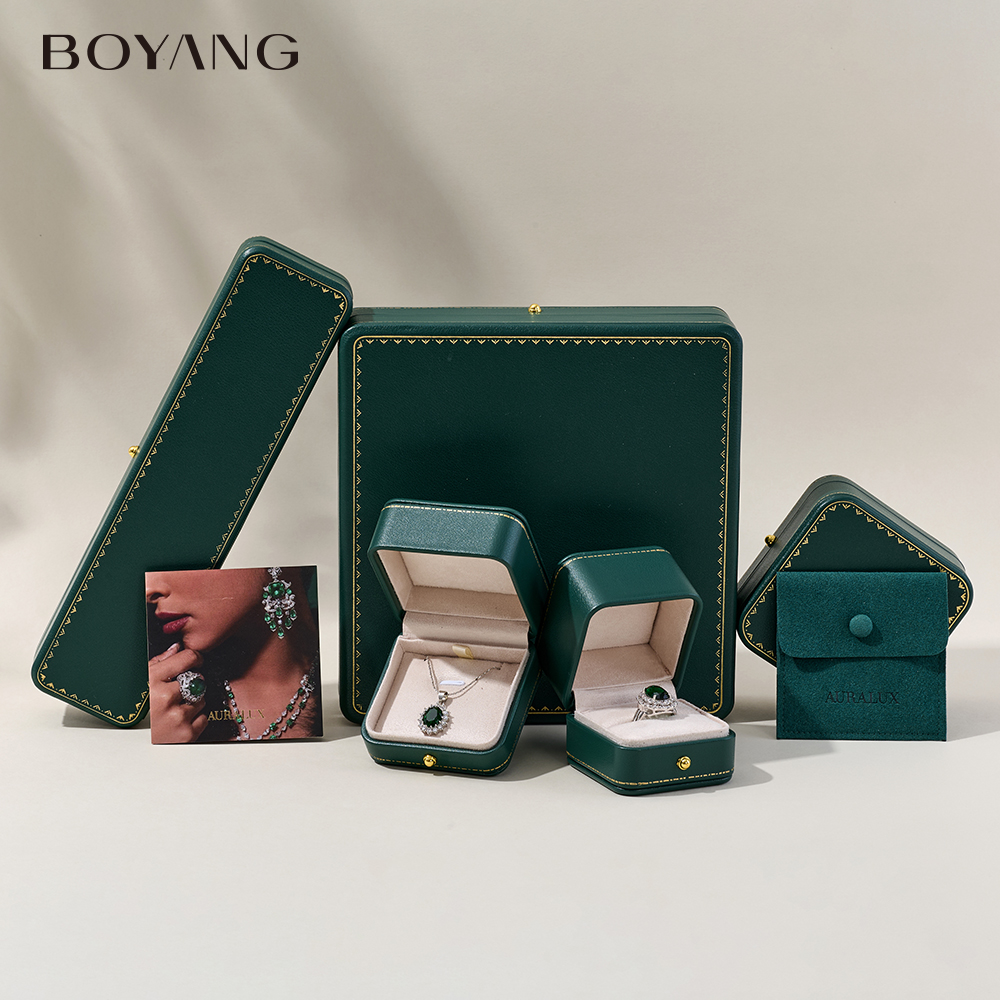
When packaging components are ordered together, check whether bags, cards, pouches, or sleeves are needed in the same quantities as boxes. A matching set can look cohesive, but component usage may differ. The photographed set is an illustration of available packaging formats; the buyer's own bill of materials should determine order counts.
Set a Reorder Trigger That Fits the Business
A bulk purchase is only the first part of the supply plan. Define when the next order should be considered: remaining stock by format, expected weekly use, time needed for approval and production, and time in transit. Use confirmed supplier timing for the specific design. A general industry estimate is not a safe substitute for a current commitment.
Keep a small record for each format: opening stock, receipts, consumption, damaged units, and stock committed to planned launches. Review it often enough to catch a change in sales mix. If pendant boxes are moving faster than ring boxes, a single “total packaging stock” number may look healthy while one essential format is close to depletion.
Ask whether a reorder can use the same approved design and whether any material, artwork, or tooling needs reapproval. Even a repeat order deserves a check against the current jewelry and brand files. If the supplier proposes a substitution, compare it with the reference sample before treating the reorder as identical.
Send an Inquiry That Can Be Quoted Clearly
Provide a line for every box format: intended jewelry, internal fit requirement, exterior style, insert, logo treatment, estimated demand, and desired order quantity. Include the receiving destination and target date. State whether the design has been sampled or still needs development. Request a clear distinction between production scope and optional services.
Ask for alternative quantities only where they help a real decision. The buyer might compare an initial order that covers launch demand with a larger quantity that also covers an expected replenishment period. The supplier can then quote each scenario against the same product specification and explain any change in minimum order, setup, packing, or delivery conditions.
Boyang's custom jewelry boxes bulk options show different materials, decoration, and inserts. Use the product examples to frame an inquiry, then confirm which option is available for the proposed volume. The page cannot establish the terms of a particular buyer's order.
Questions Buyers Ask About Bulk Custom Boxes
Is the largest quoted quantity always the best value?
No. A lower unit price must be weighed against storage, freight, cash tied up in stock, and the possibility of a design change. Compare quantities using the same box specification and a realistic demand forecast. The most economical choice for a stable bestseller may differ from the choice for a new collection.
Should different box sizes be ordered in equal numbers?
Usually the order should follow expected use by format. Ring, pendant, and bracelet boxes may move at different rates. Estimate consumption separately, then check whether any shared format truly fits multiple products. The supplier may have quantity rules by format, so ask for those conditions rather than assuming one combined total qualifies.
What information is needed for a bulk quote?
Send the box style, dimensions or fit requirement, insert, material and finish preferences, logo artwork, quantity by format, destination, and target timing. State what has already been sampled. Ask the supplier to identify what is included and any assumptions used. This makes quotes easier to compare and reduces later revisions.
How early should a brand plan a reorder?
Plan from actual consumption and the supplier's confirmed schedule for the specific box. Include time for artwork review, any needed sampling, production, transit, and receiving checks. Monitor each format separately. If usage rises or the supplier proposes a material change, revisit the trigger rather than relying on the previous order's dates.
Can a brand change artwork on a repeat order?
Yes, if the supplier confirms the change and provides a suitable approval path. Updated artwork may alter setup, appearance, price, or timing. Identify the new version clearly and approve a proof or sample as appropriate. Keep old and new cartons separate at receipt so the brand does not mix packaging versions unintentionally.
Choose a bulk quantity only after the box formats, expected use, storage, and reorder timing are visible together. Send those details in one inquiry and ask for comparable quantity options before committing to inventory.
 Jewelry Box Made in China: What Overseas Buyers Should Verify
Custom Jewelry Box Manufacturer: Control the Design Handoffs
Custom Jewelry Box Manufacturer: Control the Design Handoffs
Nov 02,2026
Jewellery Packaging Boxes: Choose a Range That Fits Every Piece
Oct 30,2026
Customized Jewelry Box: Fit, Finish, and Practical Design Choices
Oct 28,2026
Custom Jewelry Packaging for Small Business: Start With Less
Oct 21,2026
Jewellery Packaging Manufacturers: Coordinating a Complete Brand Set
Oct 17,2026
 You May Also Like



 Tel
 Email
 Address
Bldg 5,Zhenbao Industrial Zone Longhua,Shenzhen,China

Boyang Packing
 Whatsapp