Inquire (

 HOME
Jewelry Packaging Boxes for Retail and Online Orders
 Nov 12,2026

 BOYANGPACK
A pendant should stay in its display position whether a sales associate hands it to the buyer or a carrier delivers it. Choose jewelry packaging boxes that hold the piece in place, then add a separate protective outer box for orders that ship. Checking the two layers separately helps you decide whether the same presentation box can serve your store and your online shop.
One Pendant, Two Routes to the Customer
A counter order and a parcel can share the box the customer opens. The parcel adds another job: getting that presentation box to the customer with its corners, finish, and contents intact. Start with a sample pendant and pack it the way you would for each order.
- At the counter: The associate seats the pendant on the insert, arranges the chain, and opens the box for the customer. Check that the clasp has a place to sit and that the chain comes free without pulling against a tight slot. If the box goes into a shopping bag, check that it can be lifted out without snagging its pull tab or disturbing the display.
- At the packing station: The same pendant and insert go into the presentation box. The packer then seats the closed box in a shipping carton with cushioning that limits movement. A shopping bag can be included as a gift extra if it fits the tested pack. The carton and its cushioning protect the presentation box during delivery.
Choose a design that staff can pack consistently. If every pendant needs a different way to tuck away its chain, test the shortest and longest chains you expect to use before adopting one insert. Write down where the clasp and extra chain go so the person packing the parcel can reproduce the arrangement you approved.
Check for Movement Inside and Outside the Box
Check the jewelry inside the presentation box before checking the presentation box inside the shipper. Measuring those two fits helps you locate the cause when something moves. Use actual jewelry samples and the same materials your staff will use for an order.
- Jewelry to insert: Close the presentation box with the pendant and chain arranged as intended. Gently turn the box on its side and back, then reopen it. Look for a shifted pendant, a clasp against the lid, or a chain caught at an edge. For a ring, check clearance above the setting; for earrings, check the space behind the posts.
- Presentation box to shipper: Place the closed presentation box in a sturdy corrugated shipping carton. Choose cushioning that holds it in place without bowing the carton or pressing on a drawer pull. Close the pack with all the extras included, then check whether the inner box shifts during ordinary handling.
FedEx's jewelry packing guide uses a fitted inner pack and a cushioned corrugated outer box to limit movement. Use the actual carrier and service instructions for your destination when choosing a shipping setup. A bench check can reveal obvious problems; use a representative packed shipment or an appropriate distribution test when you need to evaluate transit performance.
Trace Packing Problems to the Right Layer
When a packed sample arrives out of position or marked, record what moved before changing the box. Open it in order: look at the shipping carton, then the presentation box, then the jewelry. Photograph the condition as you find it. The clues below give you a place to start; confirm the cause by changing one part of the pack and repeating the check.
| What You See | Where to Look First | What to Try Next |
|---|---|---|
| The pendant is off center, but the closed box stayed in place. | The way the insert holds the pendant and chain. | Test a different chain path or a better fitting insert before changing the shipper. |
| The clasp catches when the lid opens. | The space above the jewelry or beside the insert. | Move the clasp away from the closing edge and check the tallest intended piece with the lid closed. |
| The drawer creeps out or its pull is flattened. | The drawer fit, the box orientation, and what touches the pull. | Check the drawer by itself, then adjust the orientation or cushioning if the problem occurs only in the carton. |
| A box corner is dented while the piece is still seated. | Clearance and support between the presentation box and the carton wall. | Try a carton and cushioning combination that leaves protected space around the corners. |
If the same problem appears in a box that has never been put in a carton, start with the insert, closure, or packing routine. If it shows up only after assembling the parcel, inspect the outer pack before ordering a different presentation box. This keeps a single packing problem from turning into a redesign across the whole range.
When One Box Can Serve Both Channels
Keep one presentation box for store and online orders when it holds the jewelry correctly, opens cleanly at the counter, and fits a protective parcel setup that staff can repeat. Sharing a format can reduce the number of boxes you stock. Different jewelry may still need different inserts, even when the outer box is the same.
Compare a second format when the store box takes up space in the parcel that the piece does not need, or when extra packing steps are required to keep it closed. A shallower online box can be worth testing if it still clears the tallest piece and presents it well. Measure the complete parcel with cushioning before comparing shipping options, since changing the presentation box may or may not change the parcel dimensions.
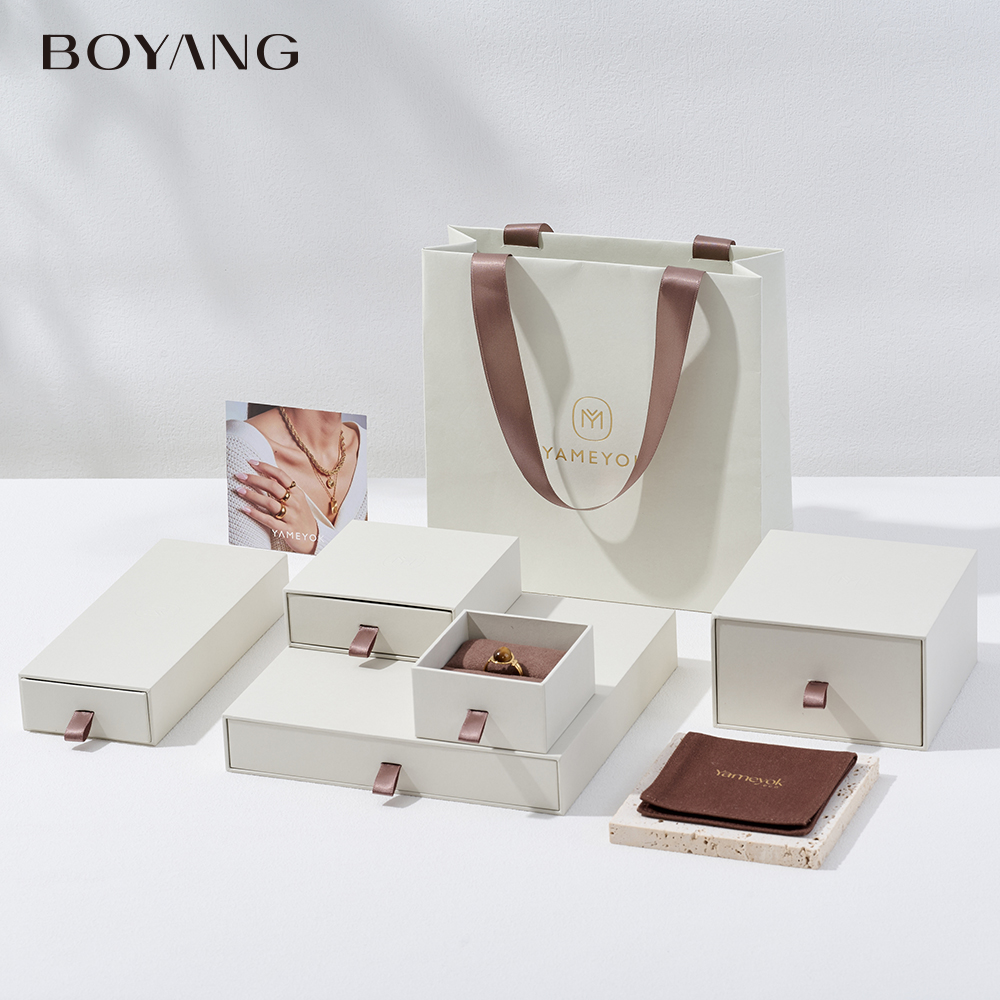
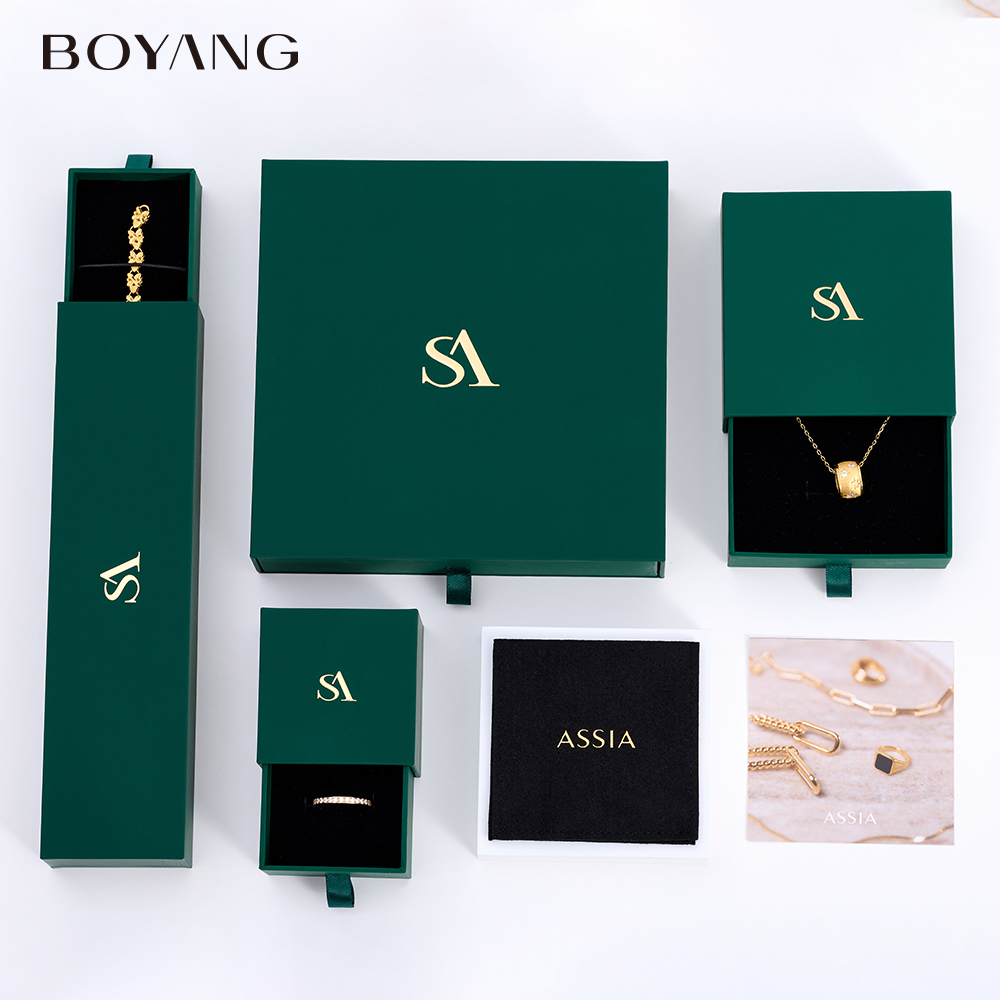
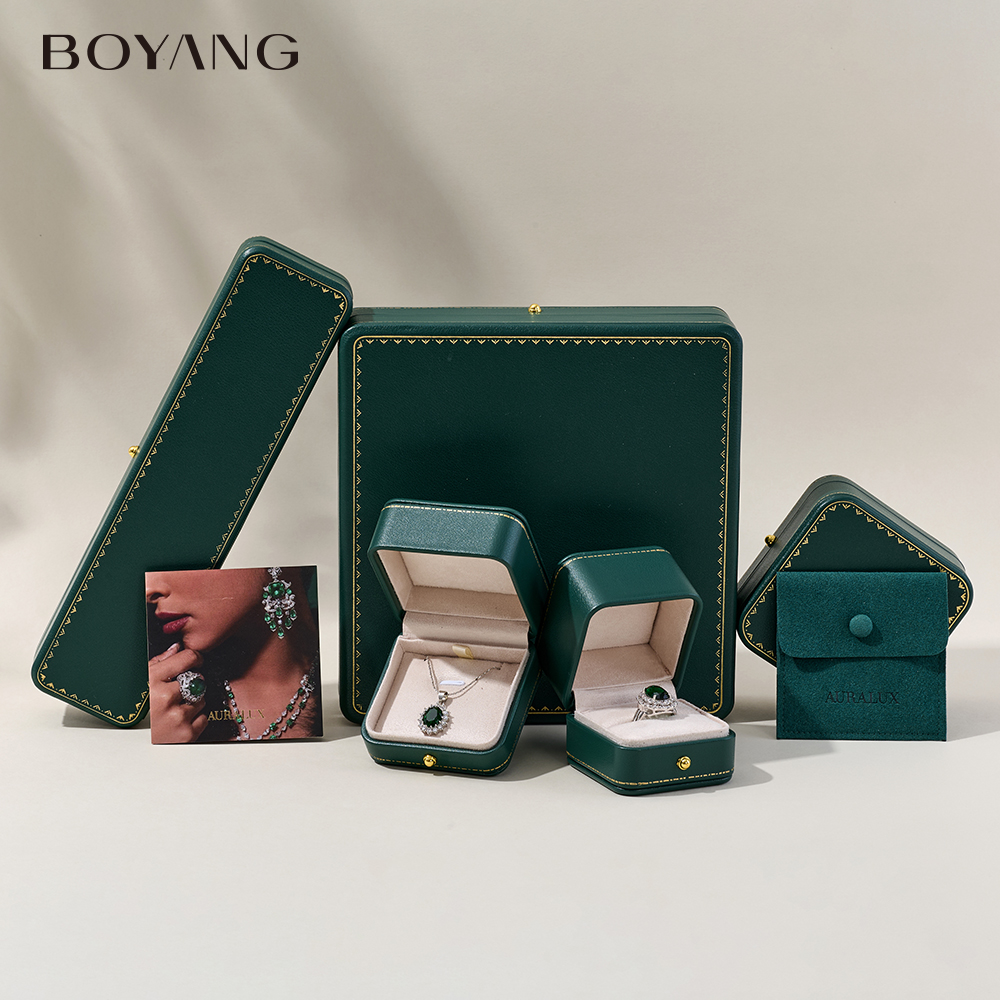
Boyang's drawer-style jewelry packaging boxes illustrate how related boxes can keep the same color and opening style across several sizes. If you are considering this approach for a range, compare actual samples for closed height, insert clearance, drawer travel, and how each box sits inside its proposed shipping carton. Confirm component and finish options for your order with the supplier.
Questions About Retail and Shipping Boxes
Can a presentation box serve as the shipping carton?
Treat a standard presentation box as the inner pack. Use an outer carton suited to the order and confirm the carrier's current requirements. If you want a single pack to do both jobs, assess the finished design as a shipping container with the actual jewelry inside it before using it for customer orders.
Can two differently sized boxes share the same parcel?
Yes, if the completed pack keeps both boxes in position and stops them from rubbing or pressing against each other. Trial the real mix, including the largest and smallest box you expect to send together. Check the parcel on its side as well as upright, then look at the corners and closures after opening.
Where should a care card go in an online order?
Put the card where it will remain flat and will not press against the jewelry or interfere with the insert. Try a dedicated spot outside the presentation box if there is little clearance under the lid. Include the card in your sample parcel so its position becomes part of the packing instructions.
What should the packing station keep as a reference?
Keep an approved sample or photos that show the jewelry seated in the insert, the presentation box closed, and the carton before it is sealed. Label the box, insert, and cushioning used. A new packer should be able to repeat the arrangement, including where any gift note or bag sits.
For your next sample review, pack one order for the counter and one for delivery using the same piece. Ask a colleague to open both without coaching. Record where the piece sits, whether the customer can lift it easily, and how the box arrives. Use those observations to choose a shared format or two separate ones.
 Design Your Own Jewelry Packaging: From Idea to Testable Brief
Design Your Own Jewelry Packaging: From Idea to Testable Brief
Nov 10,2026
Jewelry Box Made in China: What Overseas Buyers Should Verify
Nov 07,2026
Custom Jewelry Boxes Bulk: Plan Quantity, Storage, and Reorders
Nov 04,2026
Custom Jewelry Box Manufacturer: Control the Design Handoffs
Nov 02,2026
Jewellery Packaging Boxes: Choose a Range That Fits Every Piece
Oct 30,2026
 You May Also Like




 Tel
 Email
 Address
Bldg 5,Zhenbao Industrial Zone Longhua,Shenzhen,China

Boyang Packing
 Whatsapp