Inquire (
 HOME
HOMEThe Importer's Guide to Sourcing Jewelry Packaging from China
 Jul 07,2026

 BOYANGPACK
Sourcing Jewelry Packaging from China offers significant cost advantages and advanced structural customization for European and North American buyers. To import successfully, brands must follow a strict procurement process: verify that the supplier is a direct factory rather than a trading middleman, demand third-party quality certifications (like ISO9001), dictate exact material specifications, and approve physical pre-production samples before mass manufacturing begins. By partnering with an established Jewelry Packaging Manufacturer, retail brands can scale their packaging operations efficiently while maintaining complete control over product presentation.
Procuring packaging overseas is a major step for growing jewelry brands. It shifts your business from buying generic, pre-made boxes locally to developing fully customized brand assets at a lower unit cost. However, navigating international supply chains requires specific knowledge to avoid communication breakdowns and quality control failures.
To ensure your procurement strategy is secure, efficient, and profitable, follow this strategic guide for importing custom packaging.
Step 1: Filter Out the Trading Companies
Your first major decision is selecting the right type of supplier. The Chinese manufacturing market includes both direct factories and trading companies. Trading companies act as brokers; they source products from various factories and add their own profit margins.
For high-volume custom orders, working directly with a factory is always the superior choice. Direct manufacturers own their equipment, which gives you factory-direct pricing and direct communication with structural engineers. You can verify a direct factory by requesting a live video tour of their production floor and asking for official business registration documents that explicitly state their manufacturing capabilities.
Step 2: Define Your Custom Specifications Clearly
Overseas factories operate based on the exact specifications you provide. Vague instructions often lead to disappointing results. Before reaching out for a quote, you must document the precise parameters of your desired jewelry box.
-
Dimensions: Always provide external and internal measurements in millimeters (mm).
-
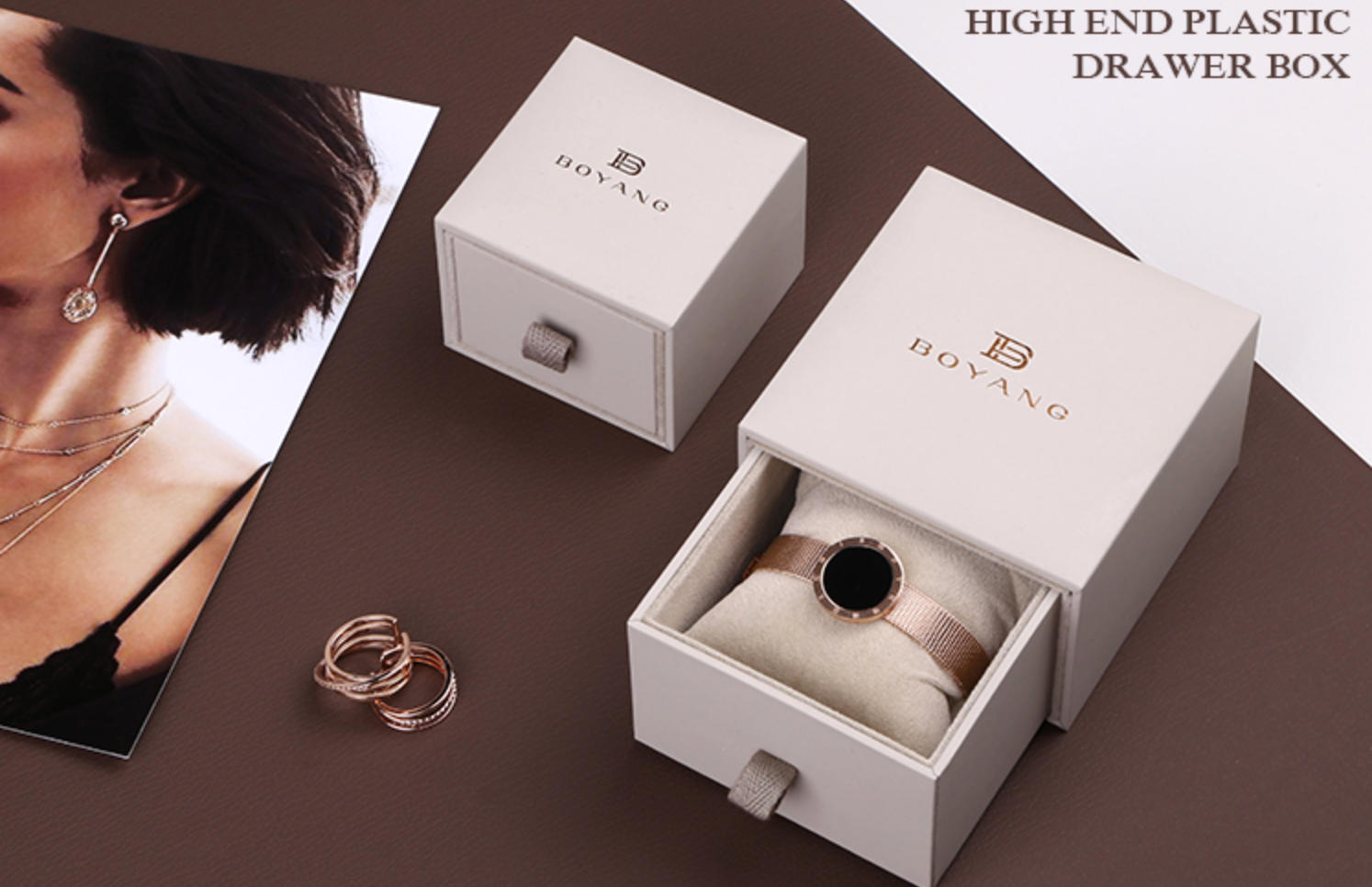
Paper Materials: Specify if you want eco-friendly kraft paper, coated art paper for vibrant printing, or textured specialty paper for a luxury feel.
-
Insert Requirements: Define what material will hold the jewelry. High-density EVA foam covered in velvet provides excellent protection and a premium aesthetic compared to standard sponge materials.
-
Brand Finishing: Detail your logo requirements, such as hot foil stamping, embossing, or spot UV treatments.
Step 3: Master the Custom Sampling Process
Never commit to a bulk order based on digital renderings or photos of past work. A reliable manufacturer will always support a rigorous sampling process.
First, ask for a structural blank sample (a box with no printing). This allows you to test the dimensions with your actual jewelry pieces to ensure a snug fit. Once the structure is approved, request a fully printed pre-production sample. This physical prototype serves as the master standard. If the final bulk production deviates from this approved sample, you have a documented baseline to hold the factory accountable.
Step 4: Verify Quality Control Infrastructure
The geographical distance between Europe or North America and China means you cannot personally oversee daily production. Therefore, the factory's internal quality assurance system must be heavily scrutinized.
Look for a manufacturer with dedicated quality control personnel who operate independently from the assembly line workers. They should perform moisture tests on raw paperboard, check foil alignment with digital calipers, and run drop tests on shipping cartons. Always request proof of current ISO9001, SGS, or BV certifications to confirm their facilities meet international management standards.
The Advantage of Integrated Manufacturing
Scaling a jewelry brand requires a packaging partner capable of growing with your volume. Working with a comprehensive facility eliminates the risk of capacity bottlenecks during critical retail seasons.
Since 2004, we have served as an integrated packaging partner, handling design, manufacturing, and global shipping logistics. Operating from a 12,000-square-meter facility, our workforce of over 300 employees includes a 10-person R&D team and a 36-person quality inspection division.
With a daily production output of 150,000 paper boxes and 180,000 plastic boxes, we provide the scale necessary to support everything from targeted boutique launches to massive international retail rollouts. Whether you need a single ring box or a complex, multi-piece jewelry packaging set, our certified infrastructure guarantees consistency.
Importer’s Action Checklist
Before initiating contact with a new overseas supplier, prepare the following to ensure a smooth negotiation:
-
Prepare CAD or Vector Files: Have your logo and box artwork saved in high-resolution AI or PDF formats.
-
Calculate Target Volume: Know your Minimum Order Quantity (MOQ) and ask for tiered pricing (e.g., 3,000 vs. 10,000 units).
-
Understand Shipping Terms: Decide if you want the factory to quote FOB (Free on Board) or DDP (Delivered Duty Paid), which includes delivery straight to your warehouse.
-
Check Lead Times: Account for both manufacturing time and the 25-35 days typically required for ocean freight to Western ports.
Sourcing overseas does not have to be a high-risk venture. Visit our home page to explore our comprehensive factory capabilities, or contact our engineering team today to submit your design specifications and request a custom physical sample.
4. FAQ
(1) How long does it take to ship jewelry packaging from China to the US or Europe?
Shipping timelines depend entirely on the freight method. Air freight typically takes 5 to 10 days and is best for urgent, low-weight shipments. Ocean freight is much more cost-effective for bulk packaging but generally takes 25 to 40 days to reach major Western ports, plus additional time for customs clearance and inland trucking.
(2) Do I need to pay customs duties when importing paper boxes?
Yes, most countries levy import duties on manufactured goods. The exact percentage depends on the destination country and the specific HS (Harmonized System) code for paper packaging.
(3) Can a Chinese manufacturer match my brand's specific Pantone colors?
Yes. A professional factory equipped with modern printing technology can mix inks to match exact Pantone Matching System (PMS) codes. To ensure 100% accuracy, the factory will send a physical printed sample for your approval before mass production begins.
(4) What shipping terms (Incoterms) should I ask for when requesting a quote?
If you have your own freight forwarder, FOB (Free on Board) is standard, meaning the factory covers costs to the nearest Chinese port. If you want a hands-off logistics experience, ask for DDP (Delivered Duty Paid) pricing, where the factory handles all shipping, customs, and delivery directly to your door.
 How to Eliminate Defect Rates in High-Volume Necklace Box Orders
Why Your Jewelry Packaging Manufacturer Needs a Dedicated QC Team
4 Tips to Acquire New Customers Fast!
Jun 20,2022
How to choose a jewelry pendant box? What are the requirements for a custom design?
May 30,2022
What are the advantages of cardboard jewelry boxes?
Apr 23,2022
 You May Also Like

 Tel
Tel
 Email
Email
 Address
Bldg 5,Zhenbao Industrial Zone Longhua,Shenzhen,China

Boyang Packing
 Whatsapp