20 years jewelry packaging manufacturer,
Serving 1000+brands,Passed ISO9001/BV/SGS

You can share
- Share to Facebook
- Share to Google+
- Subscribe to our
- Share to Linkedin
- Share to Twitter
You can share

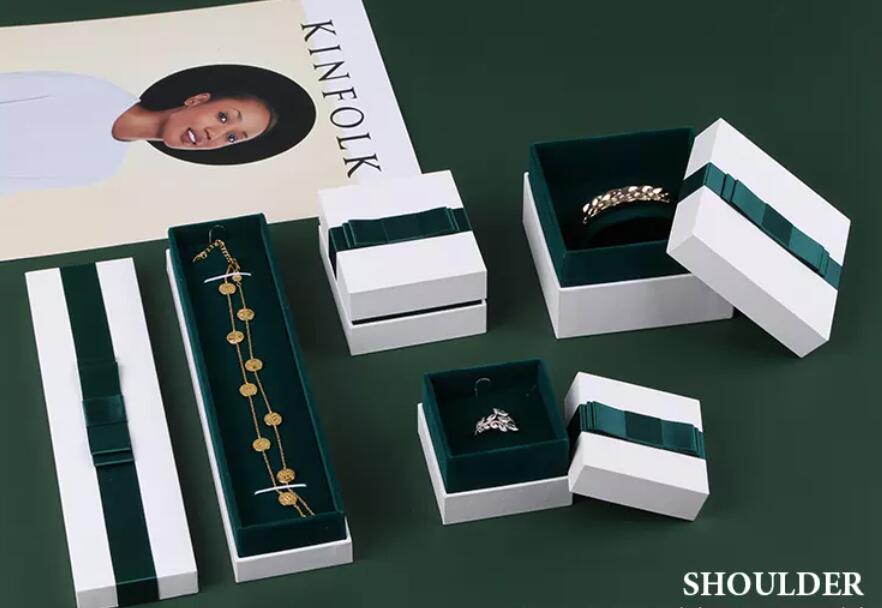
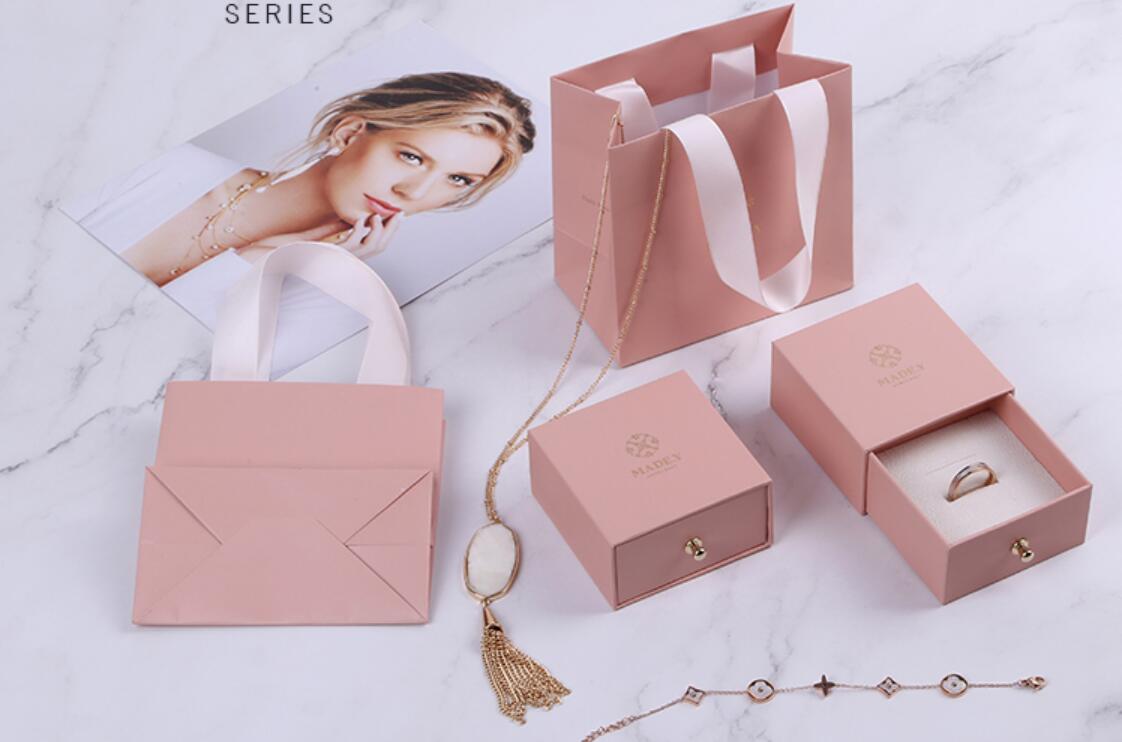
When designing Custom Jewelry Packaging Sets, selecting between a rigid paper core (greyboard) and a plastic core determines the structural durability, weight, and perceived value of your unboxing experience. Paper cores offer an eco-friendly profile and superior surface customization, making them the standard for luxury retail brands focused on sustainability. Conversely, plastic cores provide absolute structural rigidity, unmatched crush resistance, and complete immunity to moisture, serving as excellent foundations for high-impact protection. Partnering with a versatile Jewelry Packaging Sets Manufacturer allows European and North American buyers to select the exact core material that aligns with their brand aesthetics and international transit requirements.
When sourcing a comprehensive packaging collection—which may include ring containers, pendant cases, and large necklace boxes—the exterior finish is only half the equation. The hidden skeleton beneath the velvet or wrapped paper dictates how the box feels in the consumer's hand and how well it survives international freight.
Many emerging jewelry brands focus entirely on external aesthetics, ignoring the core material until a structural failure occurs. Understanding the technical merits of paper versus plastic substrates allows procurement teams to balance budget constraints with premium presentation standards.
For the contemporary luxury market, rigid paperboard (commonly referred to as greyboard) is the dominant structural choice. High-end paper cores are manufactured by compressing multiple layers of recycled paper fibers into dense sheets, typically ranging from 1 mm to 3 mm in thickness.
Eco-Friendly Market Appeal: Consumers in North America and Europe increasingly demand sustainable retail practices. Paper-core packaging is highly biodegradable and recyclable. Brands can heavily market this eco-friendly profile to align with modern environmental compliance standards.
Customization Flexibility: Paperboard allows for sharp, precise 90-degree folding corners and seamless integration of hidden magnetic closures. It acts as an ideal canvas for wrapping in textured specialty papers, faux leathers, or premium fabrics.
Lighter Shipping Weight: Compared to dense plastic, paper cores are physically lighter. When shipping bulk orders overseas, this weight reduction directly lowers international air and ocean freight costs.

While paper dominates the sustainable luxury sector, plastic cores—typically formed through injection molding—remain highly relevant for specific retail applications, particularly those requiring heavy-duty protection.
Absolute Structural Rigidity: A plastic core is nearly impossible to crush under standard shipping loads. For high-value gemstone rings or heavy metal bangles, a plastic foundation guarantees the internal jewelry remains isolated from external compression shocks.
Immunity to Ambient Moisture: Unlike paperboard, which can absorb humidity and warp over time if stored improperly, plastic cores are completely inert to moisture. This makes them exceptionally reliable during long ocean transits inside humid shipping containers.
Cost-Effective for Mass Scaling: Once a steel injection mold is cut, producing plastic cores is highly automated and extremely fast. For massive retail rollouts requiring millions of uniform units, plastic cores provide a highly consistent and economical base structure.
Procurement managers are not restricted to choosing a single material for an entire product line. A sophisticated manufacturer can seamlessly blend both materials within the same collection.
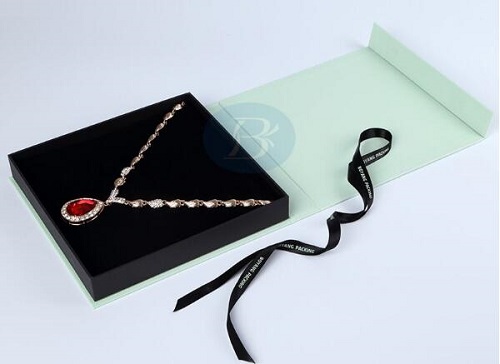
For example, a brand might utilize a heavyweight paper core for their large necklace presentation cases to reduce shipping weight and highlight an eco-friendly aesthetic. Simultaneously, they may specify a plastic core wrapped in premium velvet for a delicate engagement jewelry box to ensure maximum hinge durability and pocket-sized crush resistance.
By wrapping both the paper and plastic cores in identical exterior specialty papers, the end consumer perceives a unified, visually consistent jewelry packaging set without realizing the underlying structural engineering varies by product type.
Sourcing a mixed-material collection requires a manufacturer equipped to handle both paper die-cutting and plastic injection molding under one roof. Utilizing a broker who subcontracts paper to one factory and plastic to another frequently results in mismatched wrapping colors and inconsistent brand presentation.
Since 2004, our facility has operated as a fully integrated packaging manufacturer. Our 12,000-square-meter plant is uniquely structured to process both core materials simultaneously. Supported by over 300 personnel, our dual production lines maintain a staggering daily capacity of 150,000 paper boxes and 180,000 plastic boxes.
This scale is managed by an internal 10-person R&D engineering team capable of designing custom injection molds and paper dielines. Furthermore, our 36-person quality inspection division audits both material streams under active ISO9001, BV, and SGS certifications. This infrastructure ensures that whether you order a sustainable greyboard collection or a rigid plastic-core series, your packaging meets exact international retail standards.
Before submitting your final design specifications to an overseas supplier, evaluate your structural needs using this decision framework:
Analyze Your Target Demographic: Does your European or North American customer base prioritize eco-friendly, biodegradable materials? If so, default to high-density paper cores.
Evaluate Shipping and Storage Environments: Will your packaging sit in humid, non-climate-controlled warehouses? Plastic cores offer safer long-term structural stability against moisture.
Check Factory Integration: Confirm that the manufacturer physically owns both paper box-forming machinery and plastic injection molding equipment to ensure exact color matching on exterior wraps.
Request Dual Prototypes: Never guess. Ask the engineering team to produce one physical sample using a paper core and one using a plastic core so you can physically test the weight, hinge snap, and tactile feel.
The core material you select dictates the physical lifespan of your brand's unboxing experience. Visit our home page to explore our dual-material manufacturing capabilities, or contact our R&D engineering team today to request custom physical prototypes in both paper and plastic formats.
Can a plastic core jewelry box look identical to a paper core box?
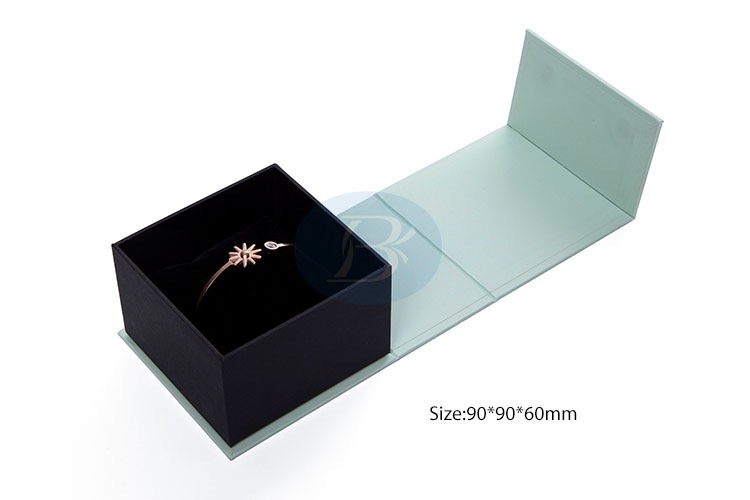
Yes. Both plastic and paper cores act strictly as the internal skeleton. A high-end manufacturer can wrap both core types in the exact same exterior material—such as soft-touch paper, PU leather, or premium velvet—making them visually indistinguishable on the retail counter.
Which core material is more cost-effective for a new jewelry brand?
For lower order volumes, paper cores are generally more cost-effective because they do not require expensive steel injection molds to create the custom shape. Plastic cores become highly cost-effective only when scaling up to massive, standardized order volumes where the initial mold cost is absorbed across tens of thousands of units.
Are there specific Minimum Order Quantities (MOQs) for custom plastic cores?
Yes. Because custom plastic shapes require cutting a bespoke steel mold, the MOQ is significantly higher than paper boxes. While paper box MOQs often start around 1,000 units, custom plastic core runs typically require higher volumes to justify the tooling costs.
How does a factory test the durability of paper and plastic packaging cores?
A dedicated factory QC team utilizes edge crush testing (ECT) for paper greyboard to measure weight-bearing capacity. For plastic cores, they conduct impact drop tests and hinge-cycle testing to ensure the box can open and close thousands of times without mechanical failure.