20 years jewelry packaging manufacturer,
Serving 1000+brands,Passed ISO9001/BV/SGS

You can share
- Share to Facebook
- Share to Google+
- Subscribe to our
- Share to Linkedin
- Share to Twitter
You can share

High-quality custom jewelry packaging with logo elevates brand identity and protects fine pieces through premium surface finishes and durable OEM structures. For North American and European jewelry brands transitioning to professional wholesale manufacturing, selecting the right material, structural design, and logo application method is essential. This guide explains the technical options for branded jewelry boxes and outlines the evaluation criteria for partnering with a reliable supplier like Boyang Packaging.
In the competitive jewelry market, packaging is the first physical interaction a customer has with a brand. A blank, off-the-shelf box communicates generic value, whereas a customized box featuring a precisely placed logo signals luxury, attention to detail, and authenticity.
For B2B buyers and brand owners, investing in branded packaging serves two core functions. First, it establishes brand recall; a distinctive box is often kept and reused by consumers, keeping the brand visible long after the initial purchase. Second, it provides visual consistency across retail displays and e-commerce unboxing experiences, ensuring that every necklace, ring, or bracelet delivered reflects the brand's intended market positioning.

The method used to apply a logo onto a paperboard or velvet box significantly impacts the final aesthetic. Different surface finishing techniques offer varying tactile and visual effects, allowing brands to match the packaging to their specific identity.
Hot foil stamping uses heat and metal dies to press a thin layer of metallic foil onto the packaging surface. This is the most popular choice for high-end jewelry boxes. Available in gold, silver, rose gold, and copper, foil stamping creates a highly reflective, sharp logo that stands out perfectly against matte or dark-colored backgrounds, such as black or deep navy art paper.
Embossing raises the logo above the surface of the paper, creating a 3D effect, while debossing presses the logo down into the material. These techniques do not use ink; instead, they rely on shadows and texture to make the logo visible. This subtle, tactile approach is ideal for minimalist and modern jewelry brands seeking a clean, sophisticated presentation.
Spot UV involves applying a clear, glossy coating specifically over the printed logo, leaving the rest of the box matte. When light hits the box, the logo catches the reflection, creating a striking contrast. This technique works exceptionally well on smooth, dark paperboard, offering a modern and sleek branding solution.
The physical structure of the packaging must accommodate the specific type of jewelry being sold while providing a secure fit during international shipping.
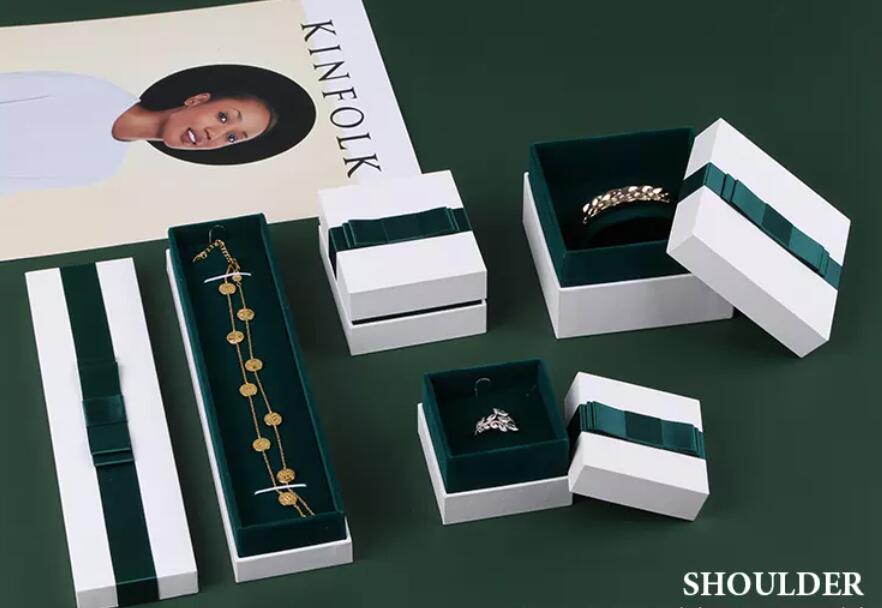
Two-Piece Lid and Base Boxes: The classic choice for rings, necklaces, and multi-piece sets[cite: 1, 2]. Constructed from dense greyboard (typically 1000gsm to 1200gsm), these rigid boxes offer superior crush resistance. Adding a contrasting inner shoulder (neck) creates an elevated unboxing experience.
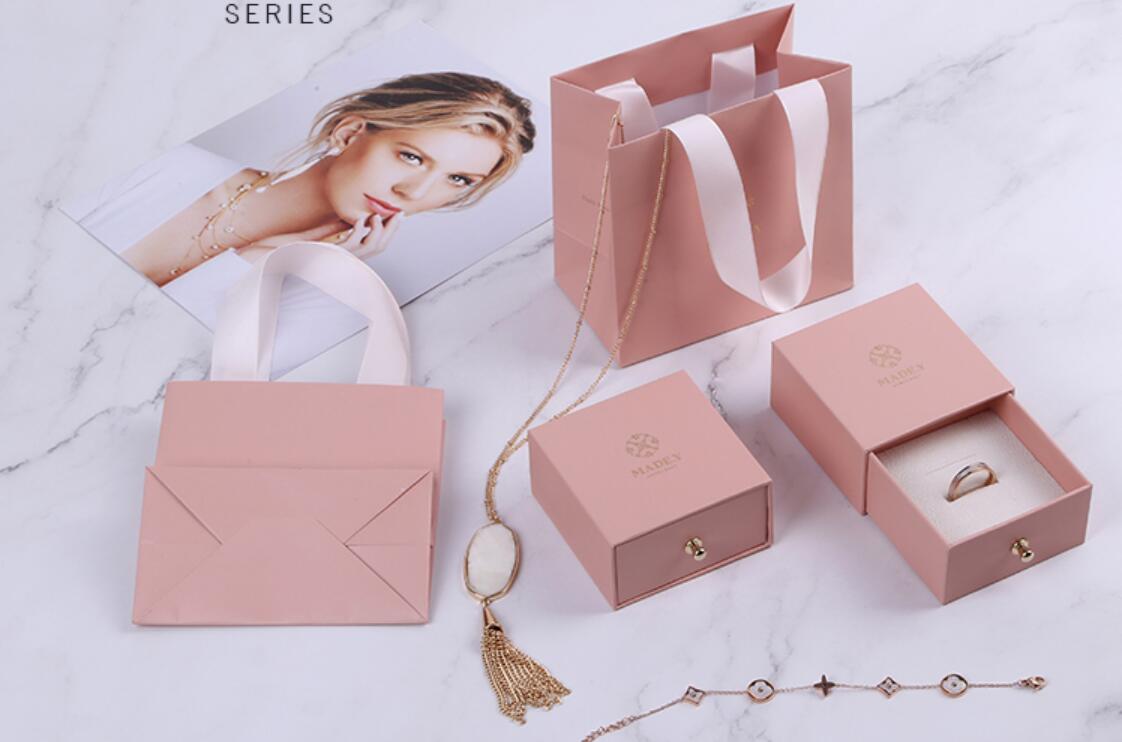
Sliding Drawer Boxes: Featuring an outer sleeve and a sliding inner tray with a ribbon pull, drawer boxes are highly interactive[cite: 1, 2]. They are space-efficient, stackable, and frequently used for earrings and bracelets.
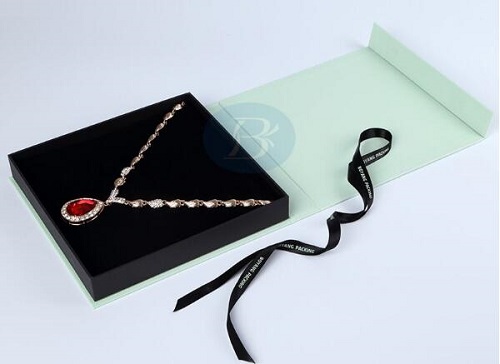
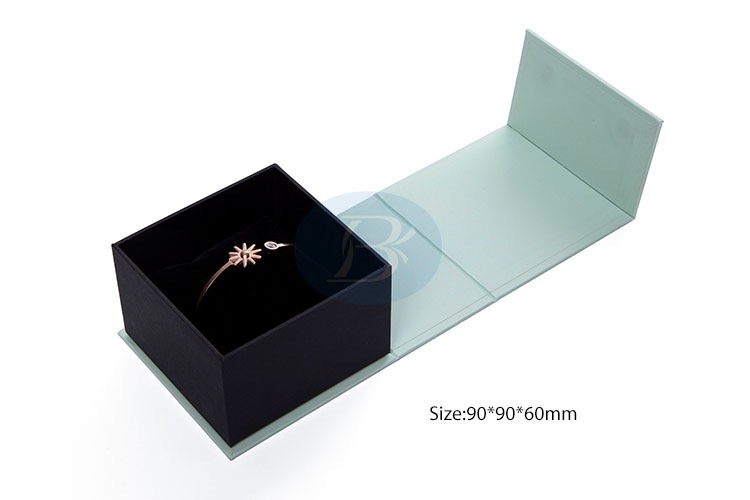
Magnetic Closure Boxes: These book-style boxes feature concealed magnets in the front flap. They emit a satisfying "snap" when closed and provide a wide presentation area, making them perfect for luxury statement pieces and bridal collections.
Partnering with an OEM manufacturer requires understanding the production workflow. Boyang Packaging follows a systematic process to ensure that the final bulk order exactly matches the brand's specifications.
The process begins with dieline creation, where structural engineers provide a 2D template for artwork placement. Following this, a pre-production sample (PPS) is manufactured. This sample allows the buyer to verify the exact Pantone color matching, logo placement, and the fitment of the custom inserts (such as velvet-flocked EVA foam) before mass production.
For fully customized packaging projects at Boyang Packaging, the standard Minimum Order Quantity (MOQ) is 1,000 pieces per design. This threshold ensures that setup costs—such as cutting dies and foil stamping molds—are efficiently amortized, providing a cost-effective wholesale price for B2B buyers.
What file format is required for custom logo printing?
To ensure the highest print quality and sharpest edges for techniques like foil stamping or Spot UV, manufacturers require vector-based artwork. Please provide your logo in Adobe Illustrator (.ai), vector PDF, or .eps format, with all fonts outlined.
What is the minimum order quantity (MOQ) for branded jewelry boxes?
At Boyang Packaging, the standard MOQ for fully customized jewelry boxes with your specific logo, dimensions, and structural design is 1,000 pieces per style.
Can I get a sample of my branded box before mass production?
Yes, obtaining a pre-production sample (PPS) is a standard and highly recommended step. The sample allows you to review the material quality, logo finishing, and insert fitment before authorizing the full 1,000-piece production run.
How do you ensure the jewelry inserts fit my products perfectly?
During the design phase, buyers must provide the exact dimensions of their jewelry pieces. The engineering team then uses die-cutting or CNC routing to create precise slits, holes, and cavities in the EVA foam or molded paperboard inserts, ensuring the jewelry remains securely in place.